Table of Contents
Launching a startup in the custom merchandise, signage, or personalization space? In 2026, vinyl cutting machines have evolved from simple craft tools into sophisticated production assets that can make or break your operational efficiency. The market has shifted dramatically, with AI-assisted workflows, IoT connectivity, and eco-conscious material handling becoming standard expectations rather than luxury features. Whether you’re bootstrapping from a garage or launching with seed funding, understanding the nuanced capabilities of modern vinyl cutters will determine how quickly you can scale from first order to fulfillment without costly equipment upgrades.
The landscape has matured beyond basic blade depth adjustments. Today’s startups need to evaluate machines as integrated business systems that connect with e-commerce platforms, manage design libraries in the cloud, and deliver precision that satisfies both Etsy customers and corporate B2B clients. Let’s dissect what actually matters when selecting equipment that grows with your ambition.
Top 10 Vinyl Cutting Machines For Startups
Detailed Product Reviews
1. VEVOR Vinyl Cutter 34Inch Bundle, Vinyl Cutter Machine Manual Vinyl Printer LCD Display Plotter Cutter Sign Cutting with Signmaster Software for Design and Cut,with Supplies, Tools

Overview: The VEVOR 34Inch Bundle positions itself as a professional-grade vinyl cutter for small businesses and serious hobbyists. With a substantial 34-inch cutting width and precision of +/-0.01mm, this machine handles large-format signage, vehicle graphics, and heat transfer projects. The bundled Signmaster software and included supplies create a ready-to-work package that eliminates guesswork for newcomers to the craft.
What Makes It Stand Out: The D-typed motherboard with 4M cache memory delivers stable performance during complex cuts, while the double spring pinch-rollers prevent material drift over long runs—a critical feature for production work. The adjustable pressure (20-500g) and speed (20-800mm/s) provide fine-tuned control across various materials from thin vinyl to thicker cardstock.
Value for Money: At its price point, this VEVOR significantly undercuts comparable Roland and Graphtec models while delivering 80% of the performance. For startup sign shops or side businesses, the included accessories and software represent substantial savings. However, hobbyists may find the manual operation and learning curve overkill for occasional use.
Strengths and Weaknesses: Strengths include impressive cutting precision, robust construction, large format capability, and comprehensive bundle. Weaknesses involve the manual positioning system requiring operator skill, Signmaster software being less intuitive than modern alternatives, and the lack of wireless connectivity.
Bottom Line: Ideal for entrepreneurs entering the sign-making business or advanced users needing large-format capability without industrial pricing. Casual crafters should consider smaller, more user-friendly options.
2. Likcut S41 Vinyl Cutter Machine with Print Then Cut - Essential Starter Bundle for DIY Crafts | Smart Sticker Maker Machine for Room Decor, HTV, Cardstock, Paper Crafts and School Supplies

Overview: The Likcut S41 targets the entry-level DIY market with a streamlined approach to vinyl cutting. This compact machine focuses on simplicity, offering an 8.5-inch cutting width perfect for stickers, cardstock projects, and small HTV applications. Its app-driven workflow and “Print Then Cut” functionality cater to beginners intimidated by complex software.
What Makes It Stand Out: The 3-step workflow dramatically reduces the learning curve, while micro-precision control with 0.2mm accuracy tolerance ensures clean cuts for detailed designs. Dual-mode connectivity (wired and wireless) provides flexibility, and the real-time status screen offers immediate feedback during operations—features rarely seen at this price tier.
Value for Money: Positioned as a budget-friendly alternative to Cricut Explore, the S41 delivers essential features without subscription fees. The included starter bundle makes it craft-ready out of the box. While limited in width, it punches above its weight for hobbyists focused on paper crafts and small decals.
Strengths and Weaknesses: Strengths include intuitive app interface, reliable wireless performance, compact footprint, and smart calibration system. Weaknesses are the narrow 8.5-inch cutting width restricting project size, app dependency limiting offline work, and inability to handle heavy-duty materials like thick leather.
Bottom Line: Perfect for students, beginners, and casual crafters prioritizing ease-of-use over size. Those needing larger format or commercial capacity should look elsewhere.
3. VEVOR Vinyl Cutting Machine, 12 in, Button-Controlled Vinyl Cutter, 5000+ Built-in Design Resources, Compatible with Mac, Windows, Android and iOS, for Creating Customized Crafts Cards, Home Decor
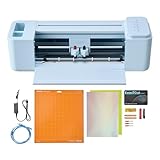
Overview: The VEVOR 12-inch Button-Controlled Vinyl Cutter bridges the gap between basic craft cutters and professional equipment. Designed for home-based creators, this multi-function device cuts, writes, and scores across various materials including vinyl, cardstock, and specialty papers. Its cross-platform compatibility and subscription-free software model appeal to cost-conscious hobbyists seeking versatility.
What Makes It Stand Out: With 5000+ built-in design resources and support for PNG, JPG, SVG, and TIF files, this machine eliminates creative barriers. The ability to work online or offline provides flexibility, while the cut/write/score trifunctionality rivals premium competitors. Compatibility with Mac, Windows, Android, and iOS devices ensures seamless integration into any digital ecosystem without compatibility headaches.
Value for Money: This VEVOR model directly challenges Cricut Maker’s dominance by offering similar versatility without mandatory subscription costs. The included software and design library represent significant long-term savings, though the button-controlled interface feels dated compared to touchscreen alternatives.
Strengths and Weaknesses: Strengths include excellent file format support, true multi-function capability, broad device compatibility, and zero subscription fees. Weaknesses involve the less intuitive button interface, 12-inch width limitation for larger projects, and occasional software glitches reported by Mac users.
Bottom Line: An outstanding choice for serious hobbyists seeking Cricut-like functionality without ongoing costs. The button control requires patience, but the feature set and value proposition are compelling.
4. VEVOR Vinyl Cutter 53 Inch Vinyl Cutter Machine Semi-Automatic DIY Vinyl Printer Cutter Machine Manual Positioning Sign Cutting with Floor Stand Signmaster Software

Overview: The VEVOR 53-Inch Vinyl Cutter represents the brand’s flagship large-format offering, designed for professional sign shops and production environments. This semi-automatic beast handles rolls up to 53 inches wide with precision of +/-0.01mm, making it suitable for vehicle wraps, window graphics, and large-scale advertisements. The included floor stand transforms it into a complete workstation ready for commercial use.
What Makes It Stand Out: The ARM motherboard with 4M cache maintains cutting accuracy over extended 3-meter feed lengths, while dual spring pinch-rollers and roughened steel rollers prevent costly material drift. Adjustable pressure (20-500g) and speed (20-800mm/s) accommodate everything from delicate window film to heavy reflective vinyl. The COMPIM, USB, and U-Disk interfaces ensure compatibility with legacy and modern systems.
Value for Money: While significantly more expensive than smaller cutters, this machine costs a fraction of comparable Roland or Mimaki models. For established businesses, the production capacity and reliability justify the investment. However, the semi-automatic operation requires skilled operators, making it poor value for casual users.
Strengths and Weaknesses: Strengths include massive cutting width, industrial-grade stability, versatile connectivity, and professional precision. Weaknesses are the substantial floor space requirement, lack of Mac compatibility, manual positioning learning curve, and noise levels unsuitable for home environments.
Bottom Line: A workhorse for serious sign-making businesses needing large-format capability on a budget. Home users and small crafters should avoid this industrial-grade machine.
5. LOKLiK Cutting Machine 2 by HTVRONT - 5 in 1 Vinyl Cutter Machine with 5X Cutting Force, Cuts 100+ Materials, AI Painting, 13’’ Smart Die Cutting Machine for All Crafts Cards 3D Arts Home Decor
 Machine for All Crafts Cards 3D Arts Home Decor](https://m.media-amazon.com/images/I/41OnPia6NnL._SL160_.jpg)
Overview: The LOKLiK Cutting Machine 2 by HTVRONT emerges as a feature-rich competitor to Cricut’s dominance in the smart cutting space. This 13-inch machine combines five functions—cutting, writing, scoring, deep cutting, and foil printing—with AI-powered design tools. Its ability to cut 100+ materials, including smart materials without a mat, positions it as a versatile powerhouse for ambitious hobbyists and small business owners.
What Makes It Stand Out: The integrated AI painting feature transforms text prompts into custom designs, while the 50,000+ free design library eliminates subscription fatigue. With 5X cutting force and print-then-cut accuracy of 0.5mm, it handles everything from delicate paper to 2mm faux leather. The upgraded step-motor system operates significantly quieter than competitors, enabling late-night crafting without household disruption.
Value for Money: Though priced at a premium, the LOKLiK undercuts Cricut Maker while offering more included content and no mandatory subscriptions. The AI features and matless cutting provide genuine innovation, though some advanced tools require separate purchases.
Strengths and Weaknesses: Strengths include exceptional material versatility, innovative AI integration, quiet operation, generous free content, and true multi-function capability. Weaknesses involve a newer brand with unproven long-term support, potential ecosystem lock-in with HTVRONT materials, and a smaller community than established competitors.
Bottom Line: Perfect for tech-savvy crafters wanting cutting-edge features without Cricut’s subscription model. The AI tools and quiet operation justify the premium for serious hobbyists.
6. VEVOR Vinyl Cutter Machine, Upgraded 28 Inch Paper Feed Cutting Plotter Bundle, Adjustable Force & Speed Vinyl Printer with Powerful Stepper Motors, Signmaster Software Compatible with Windows System

Overview: The VEVOR 28-inch Vinyl Cutter is a professional-grade plotter engineered for serious signage and commercial applications. This industrial-strength machine features a robust aluminum alloy body and powerful stepper motors that deliver a maximum cutting width of 24.8 inches with exceptional precision down to 0.01mm. The comprehensive bundle includes five 23x39-inch vinyl rolls in essential colors, multiple blades, holders, and utility tools, providing everything needed to launch a signage business or handle large-scale DIY projects immediately.
What Makes It Stand Out: This machine’s professional-grade specifications differentiate it dramatically from consumer cutters. The extraordinary cutting force range of 10-500g and rapid processing speeds up to 800mm/s enable it to handle everything from delicate window tint to heavy-duty sandblast mask materials. The SignMaster software compatibility, combined with DM/PL and HP/GL language support, ensures seamless integration into existing production workflows. Its ability to cut materials up to 0.4mm thick, including cardstock, craft paper, and paint masks, makes it versatile across advertising, decoration, and label-making applications.
Value for Money: For small sign shops and serious enthusiasts, this VEVOR cutter delivers remarkable ROI. Comparable Roland or Graphtec professional plotters cost 3-5 times more, making this an accessible entry point into commercial-grade vinyl cutting. The included accessories represent approximately $120 in additional value, while the machine’s durability and precision eliminate costly reworks and material waste. The absence of subscription fees further enhances long-term value.
Strengths and Weaknesses: Strengths include massive cutting area, industrial build quality, exceptional speed and force range, and professional software compatibility. The LCD panel offers intuitive real-time adjustments. However, Windows-only compatibility excludes Mac users, and the lack of wireless connectivity feels dated. The learning curve is steep for beginners, and SignMaster software, while functional, lacks the polish of premium alternatives. The machine’s size requires dedicated workspace.
Bottom Line: This VEVOR cutter is ideal for entrepreneurs launching sign-making businesses or serious hobbyists requiring industrial capabilities. It’s overkill for casual crafters but unbeatable for professional output at an entry-level price. If you need reliable, large-format cutting without premium brand costs, this machine is an exceptional investment.
7. LOKLiK Cutting Machine 2 by HTVRONT - 5 in 1 Vinyl Cutter Machine with 5X Cutting Force, Cuts 100+ Materials, AI Painting, 13’’ Smart Die Cutting Machine for All Crafts Cards 3D Arts Home Decor
 Machine for All Crafts Cards 3D Arts Home Decor](https://m.media-amazon.com/images/I/41x3OkITGkL._SL160_.jpg)
Overview: The LOKLiK Cutting Machine 2 redefines home crafting by eliminating subscription fees while delivering 5-in-1 professional functionality. This 13-inch smart cutter handles cutting, writing, deep cutting, scoring, and foil printing, making it a versatile creative hub. The companion LOKLiK IdeaStudio software provides unlimited access to 50,000+ designs and revolutionary AI painting technology that converts text descriptions into custom artwork instantly, removing the cost barriers that plague competing ecosystems.
What Makes It Stand Out: The subscription-free model saves users $120-180 annually compared to Cricut or Silhouette memberships. Its 5X cutting force and ability to slice through 100+ materials—from 0.1mm vinyl to 2mm faux leather—surpass most consumer machines. The matless cutting feature handles smart materials up to 21 feet long, perfect for banners and wall decals. Upgraded stepper motors and noise reduction technology make it significantly quieter than competitors, enabling late-night crafting without household disruption.
Value for Money: Exceptional long-term value proposition. The upfront cost is offset within a year by eliminated subscription fees, while the included design library and AI tools replace expensive third-party software. Capability to process materials up to 2mm thick reduces need for specialized equipment. For crafters producing regular projects, the ROI is compelling compared to subscription-based alternatives.
Strengths and Weaknesses: Strengths include revolutionary free software, impressive material range, quiet operation, precise 0.5mm accuracy, and innovative AI design assistance. The 5-in-1 versatility future-proofs your investment. However, deep-cut and foil printing tools require separate purchases. The 13-inch width limits some projects, and brand recognition remains developing. Software, while powerful, has fewer tutorials than established competitors.
Bottom Line: Perfect for cost-conscious crafters seeking premium features without ongoing fees. The LOKLiK 2 is ideal for serious hobbyists, small business owners, and beginners wanting maximum creative freedom. If you prioritize innovation, material versatility, and long-term savings over brand legacy, this machine is a brilliant choice.
8. Brother ScanNCut SDX125E Electronic DIY Cutting Machine with Scanner, Make Custom Stickers, Vinyl Wall Art, Greeting Cards and More with 682 Included Patterns,Titanium/Aqua
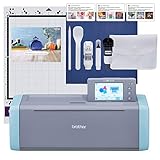
Overview: The Brother ScanNCut SDX125E is the only cutting machine with a built-in 300 DPI scanner, fundamentally changing the crafting workflow. This 12x12-inch electronic cutter transforms hand-drawn sketches, printed images, or physical objects into precise cut files without manual tracing or external software. The auto-blade system with true material sensor technology automatically detects thickness and adjusts cutting depth, eliminating guesswork and test cuts for most materials.
What Makes It Stand Out: The integrated scanner is a game-changer for crafters working with existing artwork or printed materials. It can directly cut pre-printed stickers and precisely place designs without manual alignment. With 682 built-in designs, 100 quilting patterns, 9 fonts, and wireless connectivity, it operates as a standalone creative station. The 5-inch touchscreen LCD enables on-device design customization without requiring a computer for most projects.
Value for Money: The premium price is justified by the scanner capability alone, which eliminates the need for separate scanning equipment and expensive design software. The auto-blade system reduces material waste from trial-and-error cutting. Included accessories—standard mat, pen holder, spatula, pattern collection, and sample materials—add approximately $80 value. For educators, quilters, and artists digitizing hand-drawn work, the time savings provide immediate ROI.
Strengths and Weaknesses: Strengths include revolutionary scanning functionality, true automatic material detection, extensive built-in design library, standalone operation, and ability to cut materials up to 3mm thick including balsa wood and chipboard. The wireless capability and USB port add flexibility. Weaknesses include a smaller cutting area than some competitors, less intuitive software interface, and higher price point for those who won’t utilize scanning features. Limited to 3mm thickness versus 2mm on some premium models.
Bottom Line: The ultimate convenience machine for crafters who value time-saving automation and scanning capabilities. Perfect for teachers, quilters, and artists needing to digitize physical designs. If you frequently work with hand-drawn elements or want the simplest cutting experience, this machine is worth the premium investment.
9. Likcut Vinyl Cutter Machine S501 - Smart Compact Sticker Maker for Vinyl & Paper Crafts, Portable Plotter DIY Cutting Machine for Sticker Joy Craft & Party Supplies, Gifts for Crafters
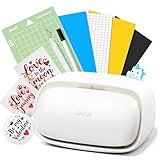
Overview: The Likcut S501 is a compact, Bluetooth-enabled vinyl cutter engineered for portability and rapid deployment. This smart sticker maker connects wirelessly in three seconds and cuts at speeds up to 3.2 inches per second, making it ideal for time-sensitive projects, batch production of party supplies, and mobile crafting applications. The integrated front cover storage cleverly organizes tools and materials, addressing workspace constraints common in home environments.
What Makes It Stand Out: The stable Bluetooth 5.0 connectivity provides reliable wireless operation without the interference issues plaguing older cutters. Its blade durability—rated for over 4,610 meters of cutting—ensures exceptional longevity for a machine in this class. The dual-mode operation supports both cutting and drawing functions with adjustable pressure settings, while compatibility with 50+ material types offers genuine versatility for a compact unit.
Value for Money: This portable cutter delivers professional-grade wireless performance at an entry-level price point. Access to over 1 million designs and 1,200 fonts through the Likcut Design Store provides immense creative resources without subscription costs. For party planners, small business owners, and educators needing reliable batch production capabilities, the combination of speed, connectivity, and design library offers compelling ROI.
Strengths and Weaknesses: Strengths include rock-solid Bluetooth stability, impressive cutting speed, intelligent storage design, extensive design library, and dual functionality. The compact footprint suits small workspaces. However, the cutting area is limited compared to desktop models, and brand recognition is still developing. Material compatibility, while good, doesn’t match premium machines. The software ecosystem has fewer advanced features than established competitors.
Bottom Line: An excellent entry point for beginners, students, and mobile crafters prioritizing wireless convenience and speed. The Likcut S501 excels at sticker making, party supplies, and school projects. If you need a reliable, portable cutter for smaller-scale projects without sacrificing connectivity or design resources, this machine delivers outstanding value.
10. Likcut Vinyl Cutter Machine, Upgrade Cutting Machine Glee S501 for DIY Joy, Portable Smart Cutting Tool for Crafter, Sticker Decal Maker Printing for Resin Charms, Arts, Crafts & Party Supplies

Overview: The Likcut Glee S501 is the aesthetically-enhanced variant of the S501, featuring a vibrant pink and white design that transforms functional equipment into workspace decor. This upgraded model retains core portability while adding AI-enhanced precision that automatically optimizes cutting parameters for different materials. Engineered for family crafting environments, it simplifies the learning curve for beginners while delivering clean, precise cuts across 46+ materials including vinyl, cardstock, iron-on transfers, and matless smart materials.
What Makes It Stand Out: The eye-catching design appeals to younger crafters and makes it an ideal gift, while the AI-assisted precision reduces the trial-and-error typically associated with new machines. Matless cutting capability for smart materials simplifies longer projects like banners and wall decals. The versatile connectivity across mobile, tablet, and PC platforms enables true anywhere crafting, supporting both sticker production and specialized applications like resin charm decals.
Value for Money: Positioned as a beginner-friendly machine with premium features, the Glee S501 offers exceptional value for families and entry-level crafters. The AI precision assistance replaces experience-based guesswork, saving material costs. Wireless connectivity and multi-device support typically command higher price points. For parents encouraging children’s creativity or new crafters exploring multiple disciplines, it provides professional capabilities without intimidating complexity or cost.
Strengths and Weaknesses: Strengths include attractive design, AI-enhanced user experience, straightforward setup, matless cutting convenience, and versatile connectivity. It’s lightweight and genuinely portable. Weaknesses include limited cutting area for large projects, developing brand ecosystem, and fewer built-in designs than market leaders. The pink color scheme, while appealing to many, may not suit all users. Maximum material thickness is less than professional models.
Bottom Line: The perfect starter machine for families, students, and gift-givers seeking an approachable yet capable cutter. The Likcut Glee S501 makes crafting accessible and enjoyable while producing professional-quality results. If you’re new to cutting machines or want an affordable, attractive option for light to medium projects, this upgraded cutter is an excellent investment that grows with your skills.
Understanding the Vinyl Cutting Landscape in 2026
The vinyl cutting industry has undergone a quiet revolution. We’re witnessing the convergence of traditional drag-knife mechanics with computer vision systems that automatically detect registration marks and material imperfections. For startups, this means the barrier to professional-quality output has dropped, but the complexity of choosing the right system has increased. Cloud-based subscription models now compete with traditional one-time purchases, and “smart” machines promise predictive maintenance that prevents costly downtime during your biggest orders.
Your decision in 2026 isn’t just about cutting power—it’s about ecosystem lock-in. Some manufacturers have built walled gardens where proprietary software, blades, and mats create recurring revenue at your expense. Others embrace open standards, allowing you to source materials competitively and integrate with third-party automation tools. Understanding these business models upfront prevents you from becoming trapped in a system that eats your margins as you scale.
Essential Features Startups Can’t Afford to Ignore
Cutting Force and Speed Dynamics
Cutting force, measured in grams, determines what materials you can handle. In 2026, entry-level machines start around 250g while industrial units exceed 5,000g. But here’s what spec sheets don’t tell you: force without speed control creates bottlenecks. A machine that cuts thick reflective vinyl at 10 inches per second might handle your current needs, but when a corporate client orders 500 die-cut decals, you’ll wish you’d prioritized consistent performance over peak power. Look for dynamic pressure adjustment that compensates for material variations in real-time—this feature alone can reduce waste by 15-20%.
Software Ecosystem Compatibility
Your cutter’s software is your daily interface, yet most buyers focus on hardware specs. In 2026, evaluate whether the included design suite offers native SVG import (critical for Illustrator workflows), cloud synchronization across team devices, and API access for Shopify/Etsy integration. Some platforms now feature AI-driven design cleanup that automatically converts raster images to cut paths—saving hours of manual tracing. Be wary of software that requires constant internet connectivity for offline work; a local backup mode is essential when Wi-Fi fails during a deadline crunch.
Material Versatility Requirements
Startups rarely stay in one niche. Today it’s matte vinyl for water bottles; tomorrow might be heat transfer vinyl for apparel, then magnetic sheets for vehicle signs. Modern machines advertise multi-material capability, but check the fine print: Does the machine auto-detect material thickness? Can it store pressure presets for 50+ material profiles? The best systems use optical sensors to map material topography, preventing blade drag on curled edges—a common cause of ruined sheets and blown budgets.
Budget Planning: Beyond the Sticker Price
Hidden Costs That Impact ROI
That $299 cutter seems startup-friendly until you factor in $40 proprietary mats that need monthly replacement, $25-per-blade holders with proprietary tips, and software subscriptions at $15/month. Over three years, a “budget” machine can cost 3x its purchase price in consumables. Calculate total cost of ownership: include blade life (measured in meters cut), mat longevity, software fees, and required accessories like roll feeders or trimming tools. Some manufacturers now offer “startup bundles” with 12 months of consumables included—negotiate these deals aggressively.
Financing Options for New Businesses
In 2026, equipment financing has evolved with revenue-based repayment models. Instead of traditional leases, some manufacturers offer pay-per-cut programs where your monthly payment scales with usage. This de-risks your investment but often includes higher interest rates. For VC-backed startups, consider how equipment depreciation affects your balance sheet; Section 179 deductions still apply, but new IRS rules in 2026 require IoT-enabled machines for full write-offs. Check if your target machine qualifies for green technology credits—energy-efficient servo motors now meet EPA certification standards.
Workspace Considerations for Growing Operations
Footprint vs. Throughput Trade-offs
Your first studio might be a 200 sq ft co-working space, but what happens when you land a wholesale account? Desktop cutters (under 24 inches wide) fit anywhere but limit you to 12-inch material rolls. Standalone units with 24-inch+ width require dedicated space but process rolls up to 50 yards, dramatically reducing loading time. The sweet spot for scaling startups: mid-range machines with detachable stands, allowing you to start desktop and convert to floor-standing when you move into proper warehouse space. Measure your doorways too—some 30-inch cutters won’t fit through standard 28-inch office doors.
Noise and Ventilation Factors
Decibel ratings matter when you’re sharing space. Older stepper motors operate at 70+ dB—conversation-disrupting levels in open offices. Modern servo motors drop this to under 50 dB, roughly refrigerator hum. More importantly, cutting PVC-based vinyl releases hydrogen chloride gas in trace amounts. While not hazardous in small quantities, OSHA’s updated 2026 guidelines require active ventilation for any commercial operation exceeding 4 hours of daily cutting. Budget for a fume extractor ($200-500) if you’re in enclosed spaces; some machines now integrate carbon filter systems directly into the chassis.
Precision and Quality Metrics That Matter
Tracking Force and Blade Technology
Tracking force—the downforce keeping material against the cutting strip—affects registration accuracy more than raw cutting power. Inconsistent tracking causes layers to misalign in multi-color designs, ruining expensive heat-transfer projects. Look for machines with adjustable electrostatic platens or vacuum systems that activate automatically during intricate cuts. Blade technology has also advanced: ceramic-coated blades last 5x longer than steel but cost 3x more. For startups, the math favors ceramic if you’re cutting abrasive materials like glitter HTV or reflective sheeting, where steel dulls after 20-30 meters.
Resolution and Repeatability Standards
Marketing materials boast “0.001-inch resolution,” but repeatability—the ability to return to the exact same position—is what determines production quality. Test this by asking manufacturers for their stepper motor backlash specifications; values under 0.005 inches ensure consistent cuts across 100-unit runs. Optical eye systems should detect registration marks within 0.1mm tolerance. In 2026, premium machines include closed-loop feedback where cameras verify each cut segment in real-time, automatically pausing if drift is detected. This prevents producing 99 perfect decals and one ruined sheet that wastes an entire roll.
Production Volume Planning
Scalability from Prototype to Bulk Orders
Your machine must handle both one-off custom jobs and 1,000-unit orders without reconfiguration. This requires adjustable pinch rollers that accommodate both sheet-fed prototypes and roll-fed production. Check the minimum cut size—some machines can’t reliably handle designs under 1 inch square, limiting your product range. The best systems feature “gang sheet” optimization AI that automatically nests multiple designs to minimize material waste, a feature that can improve margins by 8-12% on high-volume orders.
Batch Processing Capabilities
In 2026, batch processing means more than queuing files. Advanced machines integrate with inventory management systems, automatically pulling SKUs and quantities from your Shopify backend. Look for barcode scanning that loads correct cut settings for each job, preventing operator errors during 10-hour production runs. Some systems now offer “lights-out” operation with material auto-loading and finished-piece stacking—essential if you plan to run overnight shifts as you grow. Verify the machine’s buffer memory; 128MB is minimum for complex vector files, while 1GB+ allows storing entire job libraries locally.
Material Handling and Workflow Efficiency
Roll Feeders and Cutting Mats
Friction-fed roll feeders work for light vinyl but cause skewing on heavy materials. Startups should prioritize machines with pinch-roller systems that maintain even pressure across material widths. For specialty materials like thin window tint, consider machines with “slit-and-cut” capability that trim edges in real-time to prevent curling. Cutting mats should be self-healing and reversible; in 2026, nano-coating technology extends mat life by preventing adhesive buildup. Budget for three mats minimum: one for vinyl, one for HTV, and one for cardstock/paper to avoid cross-contamination.
Weeding and Transfer Process Integration
The cut is only half the battle—weeding (removing excess vinyl) and transfer application often consume 60% of labor time. Some machines now score rather than fully cut weeding lines, making excess material peel away in single sheets. Others integrate with transfer tape applicators that automate the final step. For startups, consider machines compatible with “weeding border” software that adds perforation cuts around designs, reducing weeding time by 40% on intricate jobs. This feature alone can justify a $500 price premium within the first quarter of operation.
Connectivity and Integration in Modern Workflows
Cloud-Based Design Management
Your design assets are intellectual property; how your cutter handles them matters. Cloud-integrated machines offer team collaboration features but raise data security questions. In 2026, GDPR compliance extends to design files containing customer logos—ensure your machine’s cloud storage offers end-to-end encryption and EU-based servers if serving European clients. Offline mode should cache your 50 most recent designs locally. The best systems use hybrid models: cloud for backup and sync, local processing for speed and security. Check export capabilities; you must own your design files, not be locked into a proprietary format.
API Access for Automation
True scalability requires API integration. Can your cutter receive webhooks from your e-commerce platform? Does it support Zapier or Make.com for no-code automation? In 2026, leading manufacturers provide RESTful APIs that let you query machine status, queue jobs remotely, and pull usage analytics for cost accounting. This enables building custom dashboards showing real-time production capacity—critical when promising customers delivery dates. Beware of “API-enabled” claims that only support reading status; you need write access to automate job submission. Test this during your evaluation period by requesting sandbox credentials.
Support and Community Resources
Warranty and Technical Support Quality
A one-year warranty is standard, but startup-friendly manufacturers now offer “business continuity” warranties with loaner machines during repairs. Evaluate support channels: 24/7 chat vs. business-hours phone support can mean the difference between meeting and missing a deadline. Check average repair turnaround times; regional service centers matter when shipping cross-country takes a week. In 2026, some brands provide remote diagnostic tools where technicians access your machine’s logs (with permission) to troubleshoot without an on-site visit. This can resolve 70% of issues within hours, not days.
User Community and Learning Resources
The best machine is useless if you can’t master it. Active Facebook groups, Discord servers, and manufacturer forums indicate strong community support. In 2026, evaluate the quality of video tutorials—are they updated for the latest software version? Do they cover advanced techniques like kiss-cutting or perforation? Some manufacturers offer “startup certification” programs, including live onboarding sessions and design templates. This accelerates your team’s proficiency, reducing the learning curve from months to weeks. Check if the community shares material setting presets; a robust library of 100+ material profiles saves countless hours of trial and error.
Safety and Compliance for Commercial Operations
Regulatory Standards to Watch
OSHA’s 2026 updates require commercial vinyl cutters to include emergency stop buttons accessible from three sides and light curtains that pause operation when hands enter the cutting area. CE and UL certifications aren’t optional—they affect your business insurance rates. Machines with built-in material safety data sheet (MSDS) databases that alert operators when cutting prohibited materials (like PVC in some jurisdictions) help maintain compliance. If you plan to sell children’s products, ensure the machine can document lot numbers and material batches for CPSIA tracking requirements.
Operator Safety Features
Beyond regulations, consider ergonomic safety. Machines with adjustable-height stands reduce repetitive strain injuries during loading. Blade changing should be tool-free and shielded—exposed blade holders cause frequent lacerations. In 2026, premium machines include RFID-tagged blades that prevent operation if dull or incorrectly installed. Dust extraction ports aren’t just for cleanliness; vinyl particulates are respiratory irritants. Ensure the machine includes standard 2.5-inch vacuum hose connections for shop vac integration.
Future-Proofing Your Investment
Modular Upgrade Paths
Your $800 machine shouldn’t become obsolete when you need laser etching capabilities. Some manufacturers offer modular heads that swap between drag knife, rotary blade, and even diode laser modules. This “platform” approach lets you expand capabilities without buying a second machine. Check if firmware updates add features—2026 machines should receive quarterly updates improving cut algorithms and adding material profiles. Avoid machines with locked hardware; user-replaceable motherboards and motor drivers extend lifespan beyond the typical 5-year depreciation cycle.
Emerging Technology Integration
2026 is seeing early adoption of AI-driven predictive maintenance that forecasts blade replacement needs based on cut patterns. Machines with machine vision can inspect cuts in real-time, rejecting pieces that don’t meet tolerance. Consider whether your target machine supports these emerging standards: Matter protocol for IoT integration, OPC-UA for industrial automation, or blockchain material provenance for luxury goods clients. While not immediately necessary, these features separate equipment that lasts three years from investments that serve you for a decade.
Frequently Asked Questions
What’s the realistic learning curve for a startup team with no vinyl cutting experience?
With modern software and AI-assisted setup, expect 20-30 hours of hands-on practice to achieve consistent, sellable quality. However, mastering material-specific settings and troubleshooting takes 3-6 months. Budget for initial material waste of 15-25% while your team builds proficiency. Many manufacturers offer accelerated onboarding programs that cut this timeline in half.
How do I calculate the true cost per cut for my business model?
Divide total monthly equipment costs (machine depreciation, consumables, software, electricity) by total linear inches cut. Most startups underestimate blade and mat costs—in 2026, expect $0.02-0.05 per linear foot in consumables alone. Track this monthly; if it exceeds $0.15/foot, you’re either underutilizing the machine or need to negotiate better material suppliers.
Can a single machine handle both vinyl decals and apparel HTV production?
Yes, but with caveats. You need minimum 400g force and a machine that maintains registration accuracy across 5+ foot lengths. HTV requires kiss-cutting precision that not all machines deliver consistently. Dedicate separate blades and cutting strips to each material type to prevent adhesive transfer contamination, which ruins apparel transfers.
What internet connectivity features are actually useful versus marketing fluff?
Essential: cloud backup, remote job monitoring, and over-the-air firmware updates. Fluff: social media sharing buttons, voice assistant integration, and designs that require constant connectivity. The test: Can you complete a full production run if your internet dies mid-job? If yes, the connectivity adds value. If no, it’s a liability.
How much should I budget for maintenance in year one?
Plan for 5-8% of machine cost. This includes replacement blades ($15-40 each), cutting strips ($20-50), and mats ($15-30). Unexpected costs arise from pinch roller wear ($80-150) and motherboards damaged by static electricity ($200-400). Purchase an anti-static mat and wrist strap—they’re $30 insurance against a $400 repair.
Is extended warranty coverage worth it for a startup on tight cash flow?
If the warranty includes loaner equipment and covers accidental damage, yes. Standard warranties exclude operator error, which causes 60% of startup failures. Calculate the cost of 5-7 days of downtime versus the warranty price. For machines over $1,500, extended coverage typically pays for itself with one prevented incident.
What’s the minimum cutting width needed for commercial viability?
14 inches handles 90% of startup applications. However, 24 inches unlocks bulk roll pricing and vehicle graphics. The breakpoint: If you plan to cut more than 20 yards monthly, the 24-inch machine’s material savings (15-20% cost reduction on rolls) typically justify its higher price within 6-8 months.
How do I evaluate cut quality when testing machines?
Cut a 2-inch circle in 3mm craft foam, then a 6-inch intricate mandala design in glitter HTV. The circle should rotate freely without weeding (perfect depth). The mandala should weed cleanly without tearing delicate bridges. Photograph both under magnification and check for blade chatter marks. Run the same test 10 times consecutively—any variation indicates poor repeatability.
Are refurbished commercial machines better than new desktop units for startups?
A three-year-old commercial machine with 10,000 hours often outperforms a new desktop unit, but verify the servo motors have been replaced (they wear at 15,000 hours). Ensure firmware is updatable and parts remain available. The risk: discontinued models lack software support for 2026’s file formats. Always get a 30-day performance guarantee and have a technician inspect it first.
What safety certifications do I need to show commercial clients or landlords?
Obtain a UL Listed or CE marked machine, then get it tagged by a certified electrician if hardwired. For commercial spaces, landlords increasingly require proof of fume extraction systems meeting ASHRAE standards. Keep Material Safety Data Sheets for all vinyl types on file. If employees operate the machine, document OSHA-compliant training—this becomes critical for workers’ compensation claims.
See Also
- 10 Vinyl Cutting Machine Recommendations for Beginners in 2026
- 10 Vinyl Cutting Machine Recommendations for Small Business Owners in 2026
- 10 Vinyl Cutting Machines Recommendations for Entrepreneurs in 2026
- The 10 Ultimate Best Portable Vinyl Cutting Machines for Crafters on the Go in 2026
- 10 Cricut Machine Recommendations for Etsy Sellers in 2026