Table of Contents
Investing in a premium paper trimmer isn’t just about upgrading your tools—it’s about elevating your entire creative process. Professional crafters understand that the difference between a good project and a breathtaking one often comes down to millimeter-perfect precision. While hobby-grade trimmers might suffice for occasional scrapbooking, serious artisans know that inferior cutting tools lead to frayed edges, misaligned layers, and wasted materials that cost far more in the long run. A truly professional-grade paper trimmer becomes an extension of your artistic vision, delivering clean, consistent cuts that make your work stand out in a crowded marketplace.
The world of premium paper trimmers is surprisingly complex, with innovations that go far beyond a simple blade and cutting surface. Today’s professional models incorporate self-sharpening mechanisms, laser-guided alignment systems, and aircraft-grade materials that maintain accuracy through thousands of cuts. Whether you’re creating wedding stationery, intricate papercut art, or high-end packaging prototypes, understanding what separates a worthwhile investment from an expensive mistake will transform both your workflow and your finished pieces. Let’s explore the features, technologies, and considerations that matter most when selecting a trimmer worthy of your craft.
Top 10 Paper Trimmers For Professionals
Detailed Product Reviews
1. CARL Professional Rotary Paper Trimmer 18 inch

Overview: The CARL Professional Rotary Paper Trimmer delivers precision cutting for professional environments. This 18-inch model handles up to 10 sheets of 20 lb paper, featuring a calibrated metal base that ensures stability during operation. The premium carbide blade paired with a patented rail mechanism guarantees accurate, clean cuts every time.
What Makes It Stand Out: The lifetime limited warranty sets this trimmer apart, demonstrating manufacturer confidence in its durability. Unlike competitors, it offers 11 interchangeable blade patterns (sold separately), transforming it from a simple cutter into a versatile crafting tool. The patented rail system firmly grips paper, eliminating shifting that causes miscuts.
Value for Money: Positioned in the mid-to-high range, this trimmer justifies its cost through exceptional build quality and the lifetime warranty. While the base capacity is modest at 10 sheets, the blade upgrade options extend its functionality significantly. For users prioritizing precision over volume, it offers better long-term value than cheaper alternatives that require frequent replacement.
Strengths and Weaknesses: Strengths include superior accuracy, rock-solid metal construction, versatile blade options, and excellent warranty coverage. Weaknesses are its limited 10-sheet capacity relative to price, and the hidden cost of additional blade patterns. The 18-inch length may also be excessive for casual home users.
Bottom Line: Ideal for design studios, print shops, and serious crafters who demand flawless precision. Not recommended for high-volume office environments requiring bulk cutting.
2. Swingline Paper Cutter, Guillotine Trimmer, 12" Cut Length, 10 Sheet Capacity, ClassicCut Lite (9312)
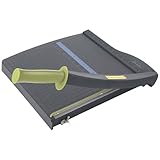
Overview: The Swingline ClassicCut Lite offers straightforward guillotine trimming for light-duty tasks. This 12-inch trimmer cuts up to 10 sheets at once, featuring a sturdy plastic base with an alignment grid for precision. Its lightweight design makes it highly portable for home or small office use.
What Makes It Stand Out: Safety features distinguish this budget-friendly option. The guard rail protects fingers during cutting, while the blade latch hook securely locks the arm when idle—crucial for households with children. The dual-scale ruler (inches and centimeters) adds versatility for various projects.
Value for Money: This is among the most affordable reliable trimmers available. For occasional users, it delivers adequate performance without unnecessary frills. While it lacks the durability of metal-based models, the price point makes replacement economical. Perfect for students, teachers, or home crafters with modest needs.
Strengths and Weaknesses: Strengths include low cost, portability, safety features, and simple operation. Weaknesses are the plastic base’s reduced stability compared to metal models, limited 12-inch cutting length, and basic 10-sheet capacity that may not suffice for larger projects. The guillotine blade requires manual sharpening over time.
Bottom Line: An excellent entry-level choice for infrequent trimming tasks. Choose this for home use, but invest in a heavy-duty model for daily professional demands.
3. CARL Heavy Duty Rotary Paper Trimmer - 12238, Black/Silver, 18inch
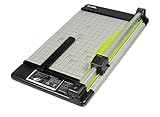
Overview: The CARL Heavy Duty Rotary Trimmer 12238 tackles demanding cutting jobs with professional-grade power. This 18-inch beast slices through up to 36 sheets of 20 lb paper in a single pass. The calibrated metal baseboard, adjustable magnetic paper guide, and integrated storage compartment create a complete cutting workstation for serious users.
What Makes It Stand Out: The massive 36-sheet capacity puts this trimmer in a different class from standard models. The patented locking rail mechanism ensures paper stays perfectly aligned, even under heavy stacks. The magnetic guide is both precise and convenient, while the built-in storage keeps accessories organized and accessible during projects.
Value for Money: While priced higher than entry-level models, the capacity-to-cost ratio is exceptional for high-volume users. Print shops, offices, and schools will quickly recoup the investment through time savings. The durable carbide blade maintains sharpness through thousands of cuts, reducing long-term maintenance costs significantly.
Strengths and Weaknesses: Strengths include unparalleled cutting capacity, exceptional stability, accurate alignment system, and thoughtful storage design. Weaknesses are its premium price point and substantial weight, which reduces portability. The 18-inch length may require significant desk space.
Bottom Line: The ultimate solution for high-volume environments. If you regularly cut thick stacks, this trimmer’s efficiency and durability make it worth every penny.
4. Dahle 552 Professional Rotary Trimmer, 20" Cut Length, 20 Sheet Capacity, Self-Sharpening, Dual Guide Bar, Automatic Clamp, German Engineered Paper Cutter

Overview: The Dahle 552 Professional Rotary Trimmer represents German engineering excellence in cutting technology. This 20-inch model handles up to 20 sheets with a self-sharpening blade that maintains its edge automatically. The sturdy metal base provides a solid foundation, while the automatic clamp ensures even pressure distribution across your materials.
What Makes It Stand Out: The self-sharpening mechanism is a game-changer, eliminating manual blade maintenance and ensuring consistent performance. The encased blade design maximizes safety without sacrificing visibility. Dual guide bars provide exceptional stability during cutting, and the automatic clamp prevents paper shift—a common issue with lesser trimmers that causes uneven edges.
Value for Money: This premium trimmer commands a higher price, but delivers professional-grade reliability. For daily users, the self-sharpening feature alone justifies the cost by eliminating blade replacement expenses. European manufacturing quality ensures a longer lifespan than budget alternatives, making it more economical over time.
Strengths and Weaknesses: Strengths include self-sharpening technology, superior safety features, automatic clamping system, and robust metal construction. Weaknesses are the high initial investment and larger footprint. The 20-sheet capacity, while adequate, lags behind heavy-duty models for bulk cutting tasks.
Bottom Line: Perfect for design professionals and offices requiring daily, precise cutting. The quality and convenience justify the premium for serious users.
5. Carl, Professional Rotary Paper Trimmer 15-inch, 15 Sheet Cutting Capacity, Black and Silver

Overview: The CARL Professional Rotary Paper Trimmer 15-inch balances precision and versatility for creative professionals. Cutting up to 15 sheets, it features a clear cutting window that shows exactly where the blade slices, eliminating guesswork and waste. The heavy-duty metal base ensures stability for various materials from cardstock to sublimation paper.
What Makes It Stand Out: The transparent cutting window is a standout feature, providing visual confirmation for perfect alignment. The removable magnetic guide and extension-calibrated base streamline batch cutting, making it ideal for repetitive tasks. Easy-to-find replacement blades and parts ensure long-term usability, addressing a common frustration with discontinued models.
Value for Money: This mid-range trimmer offers excellent versatility for its price. The combination of professional features—clear window, magnetic guide, metal base—at a moderate cost makes it accessible to small businesses and serious hobbyists. The availability of replacement parts protects your investment over time.
Strengths and Weaknesses: Strengths include the innovative clear window, stable metal construction, efficient batch-cutting features, and strong parts support. Weaknesses include a 15-inch length that may limit some projects and a 15-sheet capacity that falls between light and heavy-duty needs. The black/silver color scheme shows wear more visibly than lighter finishes.
Bottom Line: An excellent all-rounder for crafters, teachers, and small business owners. It handles diverse materials with confidence and precision.
6. Dahle 550 Professional Rotary Trimmer, 14" Cut Length, 20 Sheet Capacity, Self-Sharpening, Dual Guide Bar, Automatic Clamp, German Engineered Paper Cutter

Overview:
The Dahle 550 is a professional-grade rotary trimmer engineered in Germany for precision cutting applications. With a 14-inch cut length and 20-sheet capacity, it serves demanding office, studio, and educational environments where accuracy is paramount. The self-sharpening blade system cuts in both directions, maintaining a razor-sharp edge without manual intervention, ensuring consistent, clean edges on every pass.
What Makes It Stand Out:
The dual-barrel guide bar architecture delivers exceptional stability, completely eliminating the head wobble that compromises cheaper rotary models. The automatic clamp engages seamlessly as you cut, holding stacks securely to prevent shifting and ensuring perfectly even cuts from first to last sheet. Safety is engineered into every element—the blade housing fully encases the ground steel blade, while the sturdy metal base resists warping and maintains perfect alignment through years of heavy use.
Value for Money:
Positioned in the premium tier, the Dahle 550 justifies its price through German engineering and build durability that outlasts budget alternatives by years. While guillotine cutters offer higher capacity for less money, none match this trimmer’s precision and safety combination. For professionals, the cost-per-cut over its lifetime makes it exceptionally economical.
Strengths and Weaknesses:
Pros include unmatched cutting accuracy, self-sharpening convenience, robust safety features, stable metal construction, and clean bidirectional cutting. Cons are its 20-sheet capacity limitation versus guillotine alternatives, higher upfront cost, and the 14-inch length may be insufficient for large-format projects.
Bottom Line:
Ideal for design studios, architects, and professional offices prioritizing precision and safety over maximum capacity. The Dahle 550 is a long-term investment in quality that delivers reliable performance for years.
7. Westcott 12’’ TrimAir Wood Guillotine Paper Cutter & Paper Trimmer, 30 Sheet (15106)

Overview:
Westcott’s TrimAir wood guillotine paper cutter combines traditional lever-action power with modern titanium-bonded blade technology. Cutting up to 30 sheets of 20lb paper, this heavy-duty trimmer serves classrooms, offices, and craft rooms needing high-volume capacity in a compact 12-inch format. The contemporary wood base provides stability while maintaining a professional aesthetic that fits any workspace.
What Makes It Stand Out:
The titanium-bonded blade is three times stronger than standard stainless steel, retaining sharpness through extensive use on diverse materials including fabric, plastic, and cardboard. The protective handle guard is a critical safety enhancement, shielding fingers during operation without impeding cutting motion. Westcott’s century-long reputation for reliable cutting tools adds confidence to the purchase.
Value for Money:
This mid-range priced cutter delivers exceptional capacity for its cost class. The durable blade reduces replacement frequency, saving money long-term. While bulkier than rotary models, the 30-sheet capacity far exceeds similarly priced alternatives, making it economical for high-volume environments where time savings matter.
Strengths and Weaknesses:
Pros include impressive 30-sheet capacity, durable titanium blade, effective safety guard, versatile material handling, and brand reliability. Cons involve inherent guillotine safety risks despite the guard, wood base potential for wear over time, and limited 12-inch length restricting larger projects.
Bottom Line:
Perfect for teachers, office managers, and crafters needing reliable high-capacity cutting. The TrimAir balances power, safety, and value effectively for demanding daily use.
8. 12 Inch Heavy Duty Paper Cutter, Wood Guillotine Paper Cutter & Trimmer, 12-16 Sheets Capacity Cutting Board for Classroom, Crafting, Cardstock Black (Black)

Overview:
This generic 12-inch guillotine paper cutter targets budget-conscious buyers seeking professional features without premium pricing. With a 12-16 sheet capacity, it handles cardstock, photo paper, and craft materials using a 30Cr13 stainless steel blade. The solid MDF wood base provides stability for home, office, or classroom use, while the black finish gives it a professional appearance.
What Makes It Stand Out:
The included corner rounder and metal paper clips add unexpected versatility for crafters creating greeting cards or scrapbooks. The dual-scale ruler (inches/cm) and adjustable alignment grid enhance precision, while the auto-lift safety handle, safety latch, and protect board provide comprehensive protection. These bundled features are rare at this price point.
Value for Money:
Exceptionally affordable, this cutter delivers professional-style features and accessories that competitors charge extra for. While the blade steel isn’t premium-grade, the overall package offers outstanding value for light-to-medium use. It’s ideal for hobbyists and occasional office users who need versatility without breaking the bank.
Strengths and Weaknesses:
Pros include bonus accessories, strong safety features, dual-scale measurements, attractive price, and multi-functional design. Cons involve lower sheet capacity, unknown brand longevity, MDF base durability concerns versus solid wood or metal, and potential blade sharpening needs with heavy use.
Bottom Line:
An excellent entry-level choice for crafters, students, and home offices. The added tools and safety features make it a versatile, budget-friendly workhorse that punches above its weight class.
9. Rotatrim Pro 24 Inch Cut Professional Paper Cutter/Trimmer Precision Rotary Trimmer with Self-Sharpening Precision Steel Blades & Twin Stainless Steel Guide Rails (RCPRO24i)

Overview:
The Rotatrim Pro 24-inch represents the pinnacle of professional rotary trimming, handcrafted in England for maximum precision. This premium cutter handles materials up to 24 inches long and 3mm thick, accommodating everything from tissue paper to mountboard. The redesigned laminate grid baseboard with crosshair guides ensures perfect alignment for large-format projects, making it a favorite among print professionals.
What Makes It Stand Out:
Sheffield steel self-sharpening blades mounted on twin stainless steel guide rails eliminate head swivel entirely, delivering unmatched accuracy. Unlike competitors, no material thickness adjustment is needed—it automatically trims the thinnest films to 1/8-inch thick foam board. The all-metal cutting head and hand-assembled construction guarantee decades of reliable service in demanding production environments.
Value for Money:
This is a significant investment, but for print shops, framers, and professional photographers, it’s unparalleled. The cost is justified by exceptional accuracy, versatility across 25+ materials, and longevity that outlasts multiple cheaper trimmers. It’s a tool that pays for itself through reduced waste and professional results.
Strengths and Weaknesses:
Pros include extraordinary precision, large 24-inch capacity, self-sharpening blade, professional build quality, and material versatility. Cons are the premium price, substantial workspace requirements, and overkill for casual users who don’t need large-format capability.
Bottom Line:
The ultimate choice for professionals demanding flawless large-format cuts. The Rotatrim Pro is an investment in precision that delivers unmatched results and will serve your business for decades.
10. Firbon A4 Paper Cutter 12 Inch Titanium Paper Trimmer Scrapbooking Tool with Automatic Security Safeguard and Side Ruler for Craft Paper, Coupon, Label and Cardstock (Black)
, Coupon, Label and Cardstock (Black)](https://m.media-amazon.com/images/I/51IoM9rBW1L._SL160_.jpg)
Overview:
The Firbon A4 paper cutter is a compact, safety-focused guillotine trimmer designed for home and light office use. With a 12-inch cutting length and 10-sheet capacity (80gsm), it handles A3, A4, and A5 papers, photos, and lightweight laminated materials up to 1.5mm thick. The lightweight design emphasizes portability and user protection, weighing significantly less than professional models.
What Makes It Stand Out:
The automatic security safeguard is the star feature—the blade only operates when actively pressed, preventing accidental cuts and making it ideal for families with children. The integrated 45-to-90-degree angle measuring plate enables precise angled cuts for custom invitations and craft projects. This combination of safety and versatility is rare in budget trimmers.
Value for Money:
Very affordably priced, this cutter excels in safety-per-dollar value. While capacity is modest, the protective features and angle-cutting capability exceed expectations for the price point. It’s perfect for occasional users prioritizing safety over industrial performance, offering peace of mind that’s worth the modest investment.
Strengths and Weaknesses:
Pros include exceptional safety mechanism, portability, angle measurement guide, lightweight convenience, and low cost. Cons are limited 10-sheet capacity, lightweight construction may affect stability during heavy cuts, blade durability concerns with extended use, and restriction to thinner materials.
Bottom Line:
An outstanding choice for parents, students, and casual crafters who prioritize safety and portability. The Firbon delivers reliable performance for light-duty tasks where user protection is the primary concern.
Why Premium Paper Trimmers Are Essential for Serious Crafters
Professional crafting demands tools that deliver consistent results under heavy use. Premium paper trimmers offer superior blade retention, meaning the cutting edge stays sharp through hundreds or even thousands of sheets before requiring replacement. This consistency eliminates the frustration of ragged edges that ruin expensive cardstock or specialty papers. Moreover, professional-grade models maintain their alignment over time—cheaper trimmers often develop play in their mechanisms after months of regular use, leading to cuts that drift by millimeters, compounding errors across multi-layered projects.
The investment also pays dividends in efficiency. A premium trimmer’s smooth cutting action and precise measurement systems reduce the time spent measuring, marking, and re-cutting pieces. For crafters selling their work, this time savings directly translates to higher hourly earnings and the ability to take on more commissions. The confidence that each cut will be perfect allows you to work faster and with greater creative flow, without the constant stopping to check and adjust.
Understanding Different Trimmer Types
Rotary Trimmers
Rotary trimmers use a circular blade that rolls along a rail, making them ideal for detailed work and curved cuts. Premium rotary models feature tungsten carbide blades that slice through multiple layers like butter while maintaining a whisper-quiet operation. The cutting head glides on ball bearings, requiring minimal pressure and reducing hand fatigue during marathon crafting sessions. These trimmers excel at cutting delicate materials—vellum, thin washi paper, and even lightweight fabrics—without tearing or dragging.
Guillotine Trimmers
Guillotine trimmers employ a lever-action blade that comes down in a single, powerful motion. Professional-grade guillotines feature hardened steel blades with adjustable tension and precision-ground edges that create perfectly square cuts. The mechanical advantage of the lever system allows you to cut through thick stacks of paper—sometimes up to 30 sheets at once—while maintaining clean edges. Look for models with a clamping system that holds paper firmly in place, preventing shift during the cut.
Sliding Blade Trimmers
Sliding blade trimmers combine aspects of both rotary and guillotine designs, featuring a straight blade that slides along a track. Premium versions use self-lubricating bushings and hardened steel rails that eliminate wobble. These trimmers offer exceptional visibility of the cutting line, making them perfect for precise trimming of printed pieces where alignment with existing graphics is critical. The blade replacement process is typically tool-free on professional models, allowing for quick changes between different blade types.
Key Features That Define Premium Quality
Blade Material and Sharpness
The blade is the heart of any trimmer, and premium models use materials that hobby-grade tools simply can’t match. High-carbon tool steel, tungsten carbide, and even ceramic blades offer vastly superior edge retention. Professional trimmers often feature blades hardened to Rockwell C-scale ratings of 60-65, ensuring they stay sharp through thousands of cuts. The sharpening angle matters too—premium blades are ground to precise angles optimized for paper cutting, typically between 30-35 degrees, which provides the ideal balance between sharpness and durability.
Cutting Capacity and Thickness
Cutting capacity isn’t just about the number of sheets—it’s about consistent performance across different materials. Premium trimmers specify their capacity in both sheet count and mil thickness, giving you accurate expectations for specialty papers, chipboard, and laminated materials. Professional models maintain cutting quality throughout their rated capacity, while cheaper trimmers often struggle with the upper limits of their claims. Look for trimmers that can handle at least 15-20 sheets of 20lb paper while still delivering clean edges on single sheets of delicate handmade paper.
Measurement Systems and Grids
A premium trimmer’s measurement system is a work of engineering in itself. Laser-etched grids on steel or aluminum bases won’t wear off like printed measurements. Professional models feature dual-scale measurements (metric and imperial) with clear, precise markings down to 1/32 inch or 0.5 millimeter. The grid should include common paper sizes marked clearly—A4, A5, letter, and photo sizes—as well as angle guides for diagonal cuts. Some premium trimmers incorporate LED backlighting that illuminates the grid from below, making measurements visible even in dim studio lighting.
Build Quality and Materials
The chassis of a premium trimmer tells you everything about its longevity. Cast aluminum or steel bases provide the mass and stability needed for accurate cuts—they don’t flex under pressure and won’t warp with humidity changes. The cutting rail should be machined from hardened steel with tight tolerances, ensuring the blade travels the same path every time. Premium trimmers often feature non-slip feet made from silicone or rubber that grip your work surface without leaving marks, and these feet are replaceable rather than molded into the base.
The Cutting Mechanism: What Sets Professionals Apart
Self-Sharpening Technology
Self-sharpening trimmers use a clever mechanism where the blade sharpens itself with each cut. As the blade travels along its rail, it passes through a sharpening stone or ceramic honing element that maintains the edge at optimal sharpness. This technology extends blade life by 5-10 times compared to standard blades, making it a game-changer for high-volume crafters. The sharpening angle is precisely calibrated to the blade’s geometry, ensuring material isn’t unnecessarily removed while keeping the edge razor-sharp.
Interchangeable Blade Systems
Professional trimmers often feature modular blade systems that allow you to swap between different cutting styles—straight, perforating, scoring, and wavy edges—without needing separate tools. Premium systems use quick-release mechanisms that let you change blades in under 30 seconds, with secure locking that prevents accidental dislodging during use. The blade cartridges themselves are precision-machined to ensure perfect alignment every time they’re installed, eliminating the need for recalibration.
Safety Features Worth Paying For
Finger Guards and Safety Shields
Premium trimmers incorporate transparent safety shields that allow you to see your work while keeping fingers safely away from the blade path. These shields are made from polycarbonate that won’t shatter if impacted and are designed to be easily lifted for material placement but automatically return to the protective position. The finger guard on guillotine models extends the full length of the blade and includes a spring-return mechanism that prevents the blade from falling accidentally.
Blade Locking Mechanisms
When not in use, premium trimmers lock the blade in a retracted position, preventing curious children or pets from accessing a sharp edge. The lock mechanism should be robust enough to withstand accidental bumps but easy enough for an adult to operate one-handed. Some professional models include keyed locks for shared studio spaces, ensuring only authorized users can operate the equipment.
Size Matters: Choosing the Right Cutting Length
Compact Desktop Models
Compact premium trimmers, typically 12-15 inches in cutting length, are perfect for card makers and papercrafters working with standard paper sizes. Despite their smaller footprint, professional compact models don’t compromise on features—they include the same high-quality blades and measurement systems as their larger counterparts. These trimmers excel at precision work and can be easily stored when not in use, making them ideal for crafters with limited studio space.
Large Format Trimmers
For scrapbookers, poster makers, and those working with oversized art papers, large format trimmers offer cutting lengths of 24 inches or more. Premium large format models maintain the same rigidity and precision as smaller units through reinforced rails and heavier bases. They often include extension tables that support long sheets and prevent sagging, which is crucial for maintaining a straight cut across the entire length. The investment in a large format trimmer pays off when you need to trim full-size watercolor sheets or create seamless backgrounds for photo albums.
Precision and Accuracy: The Non-Negotiables
Alignment Guides and Magnifying Features
Premium trimmers go beyond simple grid lines with features like adjustable paper stops that lock precisely at your desired measurement. These stops often include micro-adjustment knobs that let you dial in perfect alignment for repeatable cuts. Some professional models incorporate magnifying lenses above the measurement scale, enlarging the markings for easy reading and reducing eye strain during detailed work. Laser guides project a bright red line exactly where the blade will cut, eliminating parallax errors that plague standard trimmers.
Calibration and Adjustment Capabilities
Even the best trimmers can drift out of alignment over time, but premium models include user-accessible calibration adjustments. These typically involve hex screws that let you fine-tune the blade’s squareness to the base and adjust the zero point of the measurement scale. Professional trimmers ship with calibration tools and clear instructions, empowering you to maintain factory-level precision throughout the tool’s lifetime. This ability to self-service is a hallmark of equipment built for serious craftspeople.
Maintenance and Longevity
Cleaning and Upkeep Routines
Premium trimmers are designed for easy maintenance. The base should be smooth and non-porous, allowing adhesive residue and paper dust to wipe away with a damp cloth. Removable cutting mats protect the base and can be replaced when worn, extending the trimmer’s life indefinitely. Professional models include cleaning kits with specialized brushes for removing debris from the blade channel and lubricants for the rail system that won’t attract dust.
Blade Replacement Indicators
High-end trimmers often feature wear indicators that show when blade replacement is necessary. These might be visual markers on the blade itself or mechanical indicators that engage when cutting resistance increases beyond optimal levels. This prevents the frustration of trying to diagnose why your cuts have degraded and ensures you always work with optimal sharpness. The replacement process on premium models is typically tool-free and takes less than two minutes.
Cost vs. Value: Making the Investment Work
Understanding Price Tiers
Premium paper trimmers typically fall into three investment tiers: professional ($150-300), studio-grade ($300-600), and industrial ($600+). The professional tier offers significant upgrades over hobby tools with excellent value for most serious crafters. Studio-grade models add features like interchangeable blade systems, larger cutting capacities, and enhanced durability for daily use. Industrial trimmers are overkill for most crafters but become worthwhile for those running production-level operations or cutting extremely thick materials regularly.
Calculating Cost Per Cut
To justify the investment, calculate the cost per cut over the trimmer’s lifespan. A $250 premium trimmer that delivers 50,000 clean cuts costs half a cent per cut. Compare this to a $50 hobby trimmer that needs replacement after 5,000 cuts and costs a penny per cut while delivering inferior results. Factor in the cost of ruined materials from imprecise cuts, and the premium trimmer quickly proves its economic value. Professional crafters should also consider the hourly rate saved by faster, more accurate cutting—if a premium trimmer saves just 15 minutes per day, it pays for itself in months.
Common Mistakes When Choosing Premium Trimmers
Many crafters overbuy capacity they don’t need, spending extra on a 30-sheet guillotine when they primarily cut single sheets of specialty paper. Others underestimate their future needs, purchasing a 12-inch trimmer only to discover their work evolves to require larger formats. Some focus solely on blade quality while ignoring base stability—a rock-solid blade on a flexing base still produces poor results. Avoid trimmers with plastic measurement grids, as these wear off quickly with regular use. Finally, don’t overlook weight and portability if you attend crafting retreats or workshops; some premium trimmers are substantial and require dedicated studio space.
Expert Tips for Maximizing Your Investment
Always cut on a self-healing mat placed on top of your trimmer’s base for materials that might leave marks, such as adhesive-backed papers. Keep a dedicated blade for delicate materials like vellum and another for heavy cardstock to extend edge life. Invest in a trimmer with a removable blade carriage that you can send for professional sharpening—this service costs a fraction of replacement blades and restores factory sharpness. Store your trimmer covered when not in use to protect the rail system from dust, which is the primary cause of premature wear. Finally, practice the “score first” technique on thick materials: make a light initial pass to create a guide groove, then follow with a full-pressure cut for perfectly clean edges.
Industry Trends and Innovations
The latest premium trimmers incorporate smart features like digital measurement displays that eliminate parallax errors and can store preset dimensions for common projects. Some models now include USB connectivity for firmware updates that improve performance over time. Sustainable design is emerging as a key differentiator, with manufacturers using recycled aluminum bases and offering blade recycling programs. Magnetic cutting surfaces are gaining popularity, allowing you to use custom jigs and stops that hold ferrous materials in place without clamps. The integration of LED lighting systems that provide shadowless illumination of the cutting line represents a significant ergonomic improvement for crafters working in home studios with variable lighting.
Integrating Your Trimmer Into a Professional Workspace
Position your premium trimmer at a comfortable height that allows your forearm to rest parallel to the cutting surface when operating the blade. This reduces fatigue and improves control. Create a dedicated cutting station with task lighting positioned to eliminate shadows across the measurement grid. Store frequently used blade types in magnetic strips mounted nearby, and keep a small waste bin directly under the trimmer’s edge to catch trimmings. If you use multiple trimmers, color-code them with tape or paint—assign one color for standard paper, another for adhesive materials, and a third for fabric or mixed media—to prevent cross-contamination and extend blade life.
Warranty and Support: The Premium Difference
Premium trimmer manufacturers stand behind their products with warranties that reflect their confidence in durability. Look for at least a 5-year warranty on mechanical components and a 1-year warranty on blades and consumable parts. The best manufacturers offer lifetime warranties on the base and rail system, which should never wear out under normal use. Evaluate the company’s support reputation before purchasing—do they offer phone support from knowledgeable technicians? Is there a network of authorized service centers? Can you easily purchase replacement parts directly? A premium trimmer is a long-term investment, and the manufacturer’s commitment to ongoing support is as important as the tool’s initial quality.
Frequently Asked Questions
What’s the difference between a $50 trimmer and a $300 trimmer?
The difference lies in materials, precision, and longevity. A $300 trimmer uses hardened steel blades that stay sharp 10 times longer, machined aluminum bases that don’t flex, and measurement systems accurate to 1/32 inch. The cutting action is smoother, requiring less force and reducing hand fatigue. While a $50 trimmer might work for occasional use, it will develop play in the mechanism, lose alignment, and require frequent blade replacements under professional use.
How often should I replace the blade on a premium trimmer?
With regular use cutting cardstock, expect to replace the blade every 6-12 months. If you’re cutting abrasive materials like glitter cardstock or adhesive-backed papers, you might need replacement every 3-4 months. Self-sharpening models can extend this to 18-24 months. The key indicator is when you notice fibers on the cut edge or need to apply significantly more pressure—don’t wait until the blade is completely dull, as this stresses the mechanism.
Can premium trimmers cut materials other than paper?
Yes, most professional trimmers handle lightweight chipboard, thin acetate, vellum, and certain fabrics. Always check the manufacturer’s specifications for maximum mil thickness. Some premium models offer specialty blades for cutting leather, cork, or balsa wood. However, cutting non-paper materials will accelerate blade wear, so consider dedicating a separate blade for these tasks.
What’s the best trimmer type for card making?
For card making, a 12-15 inch sliding blade or rotary trimmer offers the best combination of precision and versatility. The ability to see exactly where you’re cutting is crucial for aligning with printed elements. Choose a model with a scoring blade option for clean folds, and ensure it has precise measurement increments for creating standard card bases (A2, A6, etc.).
How do I know if my trimmer is cutting square?
Cut a 6-inch square from cardstock, then flip one half over and align the cut edges. Any gap indicates the blade isn’t square to the base. Premium trimmers include calibration adjustments to correct this. You can also use a machinist’s square to check the blade’s relationship to the cutting edge—professional-grade trimmers should be accurate within 0.5 degrees.
Are self-sharpening trimmers really worth the extra cost?
For high-volume crafters, absolutely. Self-sharpening mechanisms extend blade life by 5-10 times, reducing replacement costs and downtime. They maintain consistent cutting quality without the gradual degradation you experience with standard blades. The technology pays for itself within the first year for anyone cutting daily, and the convenience of always having a sharp blade is invaluable.
What’s the ideal workspace setup for a large format trimmer?
Large format trimmers need a stable, level surface at waist height. Allow at least 12 inches of clearance on either side for material support. Install task lighting above and slightly in front of the trimmer to eliminate shadows. Keep a clear zone of 24 inches behind the trimmer for pulling through long sheets. Consider mounting the trimmer on a sliding drawer if space is limited, allowing you to pull it out for use and store it away after.
Can I sharpen the blade myself instead of replacing it?
While you can hone a blade with a fine sharpening stone, this requires skill to maintain the correct angle and risks damaging the blade’s geometry. Most premium manufacturers advise against user sharpening as it can void warranties. Instead, look for manufacturers offering professional sharpening services or blade exchange programs. These services use precision equipment to restore the original edge geometry for a fraction of replacement cost.
How important is the weight of a premium trimmer?
Weight directly correlates with stability and cutting quality. A heavier base (15+ pounds for a 12-inch trimmer) absorbs vibration and won’t shift during use. However, if you travel to workshops or retreats, consider a mid-weight model (8-12 pounds) that balances stability with portability. Premium trimmers achieve light weight without sacrificing stability through the use of advanced materials like magnesium alloys, but these command higher prices.
What safety certifications should I look for in a premium trimmer?
Look for CE marking (European conformity) and UL listing (Underwriters Laboratories) which indicate the trimmer meets rigorous safety standards. For guillotine models, ensure they comply with EN 13889 standards for hand-operated cutting tools. Premium manufacturers often exceed these minimums with additional safety features like dual-trigger operation and automatic blade return springs. In professional studio settings, these certifications may be required for insurance purposes.