Table of Contents
The tactile revolution has officially reached our walls. In 2026, modern weaving kits have evolved from quaint craft-box nostalgia into sophisticated portals for contemporary artistic expression. We’re witnessing a renaissance where fiber art transcends its bohemian roots, becoming a legitimate medium for minimalist statement pieces, bold geometric compositions, and texture-rich installations that rival painted canvases. Whether you’re a design-conscious homeowner seeking that perfect bespoke accent or a budding fiber artist ready to explore three-dimensional wall art, today’s weaving kits offer an unprecedented fusion of traditional technique and cutting-edge innovation.
What makes this moment particularly exciting is how these kits have democratized textile art. No longer do you need access to a professional studio or years of apprenticeship to create gallery-worthy pieces. The modern weaving kit of 2026 arrives as a curated ecosystem—meticulously sourced fibers, precision-engineered looms, digital pattern libraries, and immersive tutorial platforms—all designed to guide your hands in creating wall art that genuinely reflects contemporary aesthetic sensibilities. But with this abundance comes the challenge of discernment: not all kits are created equal, and the difference between a frustrating weekend project and a fulfilling artistic journey lies in understanding what separates exceptional kits from mediocre ones.
Top 10 Weaving Kits For Wall Art
Detailed Product Reviews
1. Large Wooden Weaving Loom Kit for Beginners | Adjustable Vertical Loom Frame with Tools | DIY Hand Weaving Craft Kit for Wall Art, Tapestry, and Yarn Projects

Overview:
This large wooden weaving loom kit positions itself as a serious tool for beginners venturing into textile arts. The substantial 20×16.5-inch frame with a 14.5×14-inch working area provides ample space for creating wall hangings, tapestries, and home décor pieces. Constructed from solid wood with a smooth finish, the loom promises durability and stability during weaving sessions.
What Makes It Stand Out:
The adjustable wooden frame distinguishes this kit, allowing crafters to modify the weaving space based on project requirements. Unlike fixed-frame looms, this flexibility enables experimentation with various textile sizes and techniques. The inclusion of essential tools—wooden dowels, needle, and comb—creates a complete starter package without requiring immediate additional purchases.
Value for Money:
Priced competitively for a solid wood loom, this kit represents a sound investment for committed beginners. The durable construction ensures years of use, making it more economical than cheaper alternatives that might warp or break. While it doesn’t include yarn, the quality frame justifies the cost compared to purchasing tools separately.
Strengths and Weaknesses:
Strengths include the generous working area, robust wooden construction, adjustable design, and professional feel that grows with your skills. The smooth finish prevents yarn snagging. Weaknesses are the lack of included yarn or instructional materials, requiring separate purchases. The larger size may challenge those with limited storage space.
Bottom Line:
Ideal for dedicated beginners seeking a professional-quality loom that won’t require immediate upgrading. Perfect for adults and teens serious about learning traditional weaving techniques.
2. NATIONAL GEOGRAPHIC Wooden Arts and Crafts Loom Weaving Kit - Yarn and 3 Fun Designs for Easy Weaving, Child Weaving Set with Loom

Overview:
National Geographic’s entry into the weaving kit market targets young crafters with an educational, project-based approach. This all-in-one kit includes a sturdy wooden loom, over 150 feet of yarn in 13 vibrant colors, and materials for three specific projects. Designed for children, it emphasizes skill progression through guided instruction.
What Makes It Stand Out:
The three progressive designs—rainbow, sunset, and waterfall—provide a clear learning path that builds confidence and technique. The National Geographic brand backing ensures quality educational content and reliable customer service. With substantial yarn included, kids can start immediately without additional supplies.
Value for Money:
Excellent value for parents seeking a complete, engaging activity. The reusable loom extends value beyond initial projects, and the generous yarn supply allows for experimentation. Compared to generic kits, the brand reputation and educational focus justify a slightly higher price point.
Strengths and Weaknesses:
Strengths include kid-friendly instructions, quality wooden loom, abundant colorful yarn, and progressive project difficulty. The educational component promotes patience and fine motor skills. Weaknesses include the relatively small loom size that may limit project scope as skills advance. Some children might find the prescribed projects restrictive after mastering basics.
Bottom Line:
A top-tier choice for introducing children to weaving. The thoughtful progression and quality materials make it worth the investment for families prioritizing educational toys and creative development.
3. Craft Crush Latched Wall Hanging Craft Kit - DIY Kits for Home Decor - Includes Latch Hook, Braiding & Weaving Tools - Art & Craft Activity for Adults & Teens - Makes 8 x 20 Canvas Wall Hanging Kit

Overview:
The Craft Crush Latched Wall Hanging Kit diverges from traditional weaving, offering a latch-hook approach to create modern textile art. This kit produces an 8×20-inch canvas wall hanging using a specialized technique that combines latch hooking with braiding and weaving elements. Targeted at teens and adults, it emphasizes decorative outcomes over traditional weaving skills.
What Makes It Stand Out:
The contemporary design aesthetic sets this apart, featuring trendy colors and patterns that integrate seamlessly with modern décor. The latch-hook method is more accessible than traditional weaving for many beginners, requiring less setup time. The kit includes everything needed—printed canvas grid, latch hook tool, yarn bundles, and metal hanger.
Value for Money:
As a single-project kit, value depends on your décor goals rather than long-term tool investment. The price is reasonable for a complete decorative art project, though the loom isn’t reusable for traditional weaving. For those seeking wall art rather than a new hobby, it delivers good value.
Strengths and Weaknesses:
Strengths include fashionable designs, clear step-by-step instructions, and all-inclusive materials. The technique is forgiving for beginners. Weaknesses include limited creative freedom compared to traditional looms, non-reusable frame, and restriction to latch-hook projects only. The 13+ age rating excludes younger crafters.
Bottom Line:
Perfect for teens and adults wanting stylish wall décor without committing to learning traditional weaving. Less suitable for those seeking a versatile, reusable weaving tool.
4. WILLOWDALE Weaving Loom, 16.5" L x 15.7" W Wooden Loom Kit,Tapestry Loom for Creative DIY Weaving Art & Crafts, Ideal for Kids, Beginners, Adults

Overview:
The WILLOWDALE Weaving Loom emphasizes safety and natural materials in a versatile package suitable for all ages. Crafted from 100% natural beech wood, this 16.5×15.7-inch loom features an innovative adjustable stand for table-top use. The eco-friendly, non-toxic construction appeals to health-conscious families.
What Makes It Stand Out:
The adjustable stand represents a unique ergonomic feature, allowing comfortable weaving at any table without clamping. The heddle bar inclusion enables more advanced techniques typically absent in beginner kits. Smooth, flat grooves prevent yarn damage and reduce injury risk, making it exceptionally kid-friendly while remaining functional for adults.
Value for Money:
Positioned in the mid-range, the beech wood construction and adjustable stand justify the price premium over basic pine looms. The included heddle bar and shuttles add value for those wanting to explore beyond basic weaving without separate purchases.
Strengths and Weaknesses:
Strengths include premium beech wood, safety-focused design, adjustable stand, heddle bar for advanced techniques, and comprehensive tool set. It promotes developmental skills effectively. Weaknesses include a slightly smaller working area than some competitors and potentially complex assembly for non-mechanical users. The stand may feel unstable on uneven surfaces.
Bottom Line:
An outstanding choice for families prioritizing safety, quality materials, and ergonomic design. The adjustable stand and heddle bar make it versatile enough to grow from beginner to intermediate projects.
5. Cra-Z-Art Wonderful Weaves (Packaging May Vary)

Overview:
Cra-Z-Art Wonderful Weaves offers the most simplified introduction to weaving, targeting young children with a loop-based system. This basic kit includes a loom, hook tool, and 120 fabric loops for creating dimensional crafts. The “loop weave tie and finish” approach eliminates complex warping and threading, focusing on instant gratification rather than skill development.
What Makes It Stand Out:
Extreme simplicity makes this uniquely accessible for ages 5 and up. The fabric loops create textured, dimensional projects instantly without yarn management skills. The low price point removes financial barriers for parents testing their child’s interest in textile crafts. Its packaging may vary, suggesting widespread retail availability.
Value for Money:
Highly affordable, representing minimal investment for basic craft exploration. However, limited materials mean projects remain small and simple. The reusable loom extends value slightly, but the technique’s simplicity may lead to quick boredom. For the price, it’s a low-risk trial.
Strengths and Weaknesses:
Strengths include unbeatable simplicity, low cost, immediate gratification for young kids, and minimal setup. It’s an excellent motor skills exercise. Weaknesses include non-traditional technique that doesn’t transfer to real weaving, limited creative potential, flimsy construction, and vague packaging details. The 120 loops restrict project size significantly.
Bottom Line:
Suitable only for young children needing the simplest possible craft introduction. Serious beginners or older kids should invest in a proper yarn-based loom. Treat this as a toy rather than a learning tool.
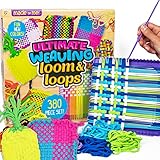
6. Made By Me Ultimate Weaving Loom, Includes 378 Craft Loops & 1 Weaving Loom with Tool, Makes 25 Projects, 9 Rainbow Colors of Weaving Loops, Hook & Loop Potholder Kit, DIY Weaving Kit
Overview:
The Made By Me Ultimate Weaving Loom is a comprehensive starter kit designed specifically for children, offering everything needed to create up to 25 woven projects. This 380-piece set centers around a 7.5-inch square plastic loom and includes 378 soft polyester loops in nine vibrant rainbow colors, making it an ideal introduction to textile crafts for young creators.
What Makes It Stand Out:
This kit excels in its no-sew design, featuring easy-connect pegs that prevent slipping and a simple hook tool that even small hands can master. The educational benefits are substantial—it develops fine motor skills, pattern recognition, color identification, and hand-eye coordination while providing a screen-free creative outlet. The super-soft polyester loops are gentler on fingers than traditional cotton bands.
Value for Money:
At its price point, this kit delivers exceptional value by including enough materials for 25 complete projects. Comparable children’s craft kits typically offer fewer finished items, making this a cost-effective choice for parents seeking sustained engagement. The reusable loom extends the value beyond the initial loops.
Strengths and Weaknesses:
Strengths include child-friendly design, clear illustrated instructions, genuine educational value, and vibrant color variety. The reusable loom grows with the child’s skills. Weaknesses are the limited 7.5-inch project size, plastic construction that may feel less premium than wood, and polyester loops that create thicker, less traditional fabric than yarn-based alternatives.
Bottom Line:
Perfect for children ages 6 and up, this kit successfully balances simplicity with creative potential. It’s an excellent entry point into weaving that builds confidence and skills before advancing to more complex textile arts.
7. Lemonfilter Weaving Loom Kit, 9" x 11" DIY Hand-Knitting Loom Kit, Wooden Multi-Craft Weaving Loom Tapestry Loom Large Frame for Adult and Beginners Handcraft Loom,Gift for Birthday Christmas

Overview:
The Lemonfilter Weaving Loom Kit is a thoughtfully crafted wooden loom set designed for both adult beginners and supervised children. Measuring 9 by 11 inches, this natural wood frame loom comes complete with 12 colored yarn skeins, a gradient yarn roll, weaving combs, crochet hooks, metal rods, and comprehensive instructions for creating tapestries, scarves, and coasters.
What Makes It Stand Out:
The kit’s premium natural polished wood construction ensures safety with splinter-free edges while providing the sturdy tension needed for quality weaving. Its portability and user-friendly design make it accessible for true beginners, and the inclusion of both solid and gradient yarns allows for sophisticated color blending in projects. The detailed instruction manual removes the intimidation factor from learning this ancient craft.
Value for Money:
This kit represents solid mid-range value, combining a durable wooden loom with substantial yarn quantities (290g total) that would cost significantly more if purchased separately. While pricier than plastic alternatives, the natural materials and expandable capabilities justify the investment for serious beginners.
Strengths and Weaknesses:
Key strengths include high-quality wood construction, comprehensive tool set, generous yarn supply, and excellent beginner guidance. The loom’s size is versatile for small to medium projects. Weaknesses include yarn quantities that may be limiting for larger tapestries, basic loom features that lack advanced adjustments, and instructions that might still challenge absolute beginners without supplemental videos.
Bottom Line:
An excellent choice for adults and older children ready to explore traditional weaving with natural materials. It offers room for skill growth while remaining approachable for newcomers.
8. FREEBLOSS DIY Macrame Wall Hanging Kit Woven Tassel Tapestry DIY Cotton Rope Boho Wall Decor Macrame Kit with Instructions for Adults Beginners, 40cm/15.7" Wide

Overview:
The FREEBLOSS Macrame Wall Hanging Kit provides everything needed to create bohemian-style tapestry art, featuring 100 meters of white and brown cotton rope, a 40-centimeter wooden stick, and complete tools. Designed for adult beginners, this kit produces a 15.7-inch wide decorative piece that complements various interior styles from modern farmhouse to Nordic aesthetics.
What Makes It Stand Out:
This kit distinguishes itself through its dual-color rope scheme, allowing for subtle tonal variation in finished pieces. The high-quality cotton rope delivers professional-looking results with excellent durability. Extremely detailed instructions empower complete novices to achieve impressive outcomes, while the bohemian aesthetic taps into current home décor trends. The finished product serves as genuine wall art rather than a simple craft project.
Value for Money:
The kit offers reasonable value, with 100 meters of quality cotton rope representing the bulk of the cost. While wooden dowels and rope could be sourced cheaper individually, the curated materials and comprehensive guidance save time and eliminate guesswork for beginners. It’s competitively priced against similar macrame starter kits.
Strengths and Weaknesses:
Strengths include premium cotton rope quality, clear beginner instructions, on-trend design aesthetic, and complete tool inclusion. The neutral color palette ensures broad décor compatibility. Weaknesses are the single wooden stick limiting multiple projects, minimal color options for those wanting vibrant pieces, and rope quantities that allow only one major project before restocking.
Bottom Line:
Ideal for home décor enthusiasts seeking to create trendy wall art without prior knotting experience. It delivers a satisfying, display-worthy result that justifies the investment.
9. Wooden Weaving Loom Kit for Kids,Arts and Crafts Mini Weaving Loom with Colorful Weaving Yarns,11.4" x 7.5" Frame Looms for DIY Tapestry,Coaster,Art Projects,DIY Weaving Kit for Beginners and Adults

Overview:
This Wooden Weaving Loom Kit offers a ready-to-use crafting solution with an 11.4 by 7.5-inch natural pine wood frame that requires no assembly. The comprehensive set includes a wood shuttle, heddle bar, wooden and plastic needles, a black plastic comb, 12 multi-color yarns, rainbow yarn, six white warp threads, metal spokes, and instructions—everything needed for immediate tapestry, coaster, and small scarf projects.
What Makes It Stand Out:
The kit’s primary advantage is its out-of-the-box readiness, eliminating setup frustration for eager young weavers. The natural pine wood construction provides an authentic weaving experience while remaining smooth and safe for small hands. The inclusion of both a heddle bar and shuttle introduces proper weaving techniques, making it more educational than simpler kits. The substantial yarn variety with dedicated warp threads demonstrates thoughtful design.
Value for Money:
This kit presents excellent value by including professional-grade accessories like a heddle bar and shuttle that are often sold separately. The complete material package means no additional purchases are necessary, saving both money and shopping time. It’s competitively priced against similar wooden loom kits while offering superior component variety.
Strengths and Weaknesses:
Strengths include immediate usability, authentic weaving tools, safety-conscious wood finishing, comprehensive material selection, and educational value. The loom size is perfect for small hands while producing usable items. Weaknesses include limited loom size restricting project dimensions, basic instructions that may not cover advanced techniques, and plastic comb quality that doesn’t match the wood components.
Bottom Line:
A superior choice for introducing children and beginners to traditional weaving techniques. Its ready-to-weave design and authentic tools create an engaging, educational experience that builds genuine skills.
10. RQWZBCHX DIY Macrame Wall Hanging Kits, 3 Patterns Macrame DIY Wall Hangers for Beginners, Home Decor with 200 Meters Macrame Cord, 3 PCS Wooden Dowels and Instruction Booklet for Macrame Starters

Overview:
The RQWZBCHX Macrame Kit is a comprehensive learning system offering three distinct wall hanging patterns, 200 meters of 3mm creamy white macrame cord, three wooden dowels, and extensive instructional support including a 35-page booklet and three video tutorials. Designed specifically for adult beginners, this kit enables the creation of multiple bohemian décor pieces.
What Makes It Stand Out:
This kit’s standout feature is its three-pattern variety, allowing skill progression from simple to more complex designs. The extensive 200-meter cord supply is substantially more generous than competitors, enabling practice and multiple projects. The combination of detailed written instructions with video tutorials accommodates different learning styles. The creamy white cord provides a clean, versatile aesthetic suitable for any room.
Value for Money:
Exceptional value derives from the triple-pattern design and abundant cord supply. Single-pattern kits at similar prices offer less material and learning potential. The 200 meters of cord would cost nearly the kit price alone if purchased separately, making this a budget-friendly entry into macrame. The three wooden dowels allow immediate creation of all patterns without additional hardware purchases.
Strengths and Weaknesses:
Strengths include pattern variety, generous cord quantity, multi-format instructions, and natural color versatility. The kit grows with the user’s skills. Weaknesses are the single color option limiting creative variety, potential cord waste if patterns aren’t completed, and the lack of advanced pattern challenges for quick learners.
Bottom Line:
The ultimate starter kit for macrame newcomers seeking variety and value. It removes all barriers to learning while providing enough material for sustained practice and multiple finished pieces.
The Evolution of Modern Weaving Kits
Traditional Craft Meets Contemporary Design
The weaving kit landscape has undergone a radical transformation in recent years. We’ve moved beyond simple wooden frames and acrylic yarn bundles toward thoughtfully designed systems that honor traditional warp-and-weft mechanics while embracing modern design principles. The contemporary kit recognizes that wall art demands different considerations than functional textiles—tension consistency becomes paramount for flat hanging, fiber choice shifts toward visual impact over durability, and pattern complexity often prioritizes negative space and architectural lines.
What “Modern” Means in 2026
In 2026, “modern” in weaving kits signifies several non-negotiable elements: sustainable material transparency, digital integration capabilities, and design-forward pattern libraries. Modern kits anticipate that you’ll want to share your process on social platforms, so they include photography-friendly work-in-progress staging tools. They understand that your wall art needs to complement mid-century furniture or industrial loft aesthetics, not just cottagecore interiors. The modern kit is a design partner, not just a supplier of raw materials.
Key Features That Define Premium Kits
Loom Innovations and Frame Quality
The loom is your foundation, and 2026’s best kits feature frames engineered with the same precision as fine furniture. Look for tensioning systems that allow micro-adjustments—cam-lever or ratchet mechanisms that maintain even warp tension across widths exceeding 24 inches. Premium kits include modular components that let you expand from small sampler sizes to statement pieces without purchasing entirely new equipment. The wood itself matters: sustainably harvested hardwoods like maple or birch offer superior stability compared to pine, preventing warping that can ruin weeks of work.
Material Curation and Fiber Technology
Fiber selection separates artistic tools from toy craft sets. Premium kits provide materials chosen specifically for wall art impact: roving wools with intentional loft for cloud-like texture, reflective metallics that catch gallery lighting, and plant-based fibers like banana silk or rose petal yarn that offer luminous sheen. The 2026 standard includes QR-coded fiber samples that link to sourcing stories and care instructions, ensuring you understand the provenance and behavior of each strand before you commit it to your piece.
Understanding Skill Level Classifications
Beginner-Friendly Elements to Look For
True beginner kits in 2026 don’t just simplify—they scaffold. Look for pre-warped looms that eliminate the most time-consuming setup phase while still teaching you the concept through transparent design. The best kits include “fix-it” insurance: extra warp thread and detailed diagrams for correcting common mistakes like skipped threads or tension inconsistencies. They’ll feature texture-first projects where success doesn’t depend on perfect technique but still yields sophisticated results through clever material combinations.
Intermediate Challenges for Skill Growth
Intermediate kits should introduce controlled complexity without overwhelming. This means pattern guides that teach reading draft notation alongside visual charts, and materials that require specific handling—like slippery silk noil or springy alpaca—that force technique refinement. The sweet spot includes projects with intentional “decision points” where you choose color pathways or texture emphasis, developing your artistic voice while following a reliable framework.
Advanced Techniques Without Intimidation
Advanced 2026 kits assume you understand basic structure but want to explore contemporary methods: supplemental warp for floating elements, inlay for pictorial imagery, or variable density weaving for sculptural relief. These kits provide technical precision tools like pick-up sticks with measurement markings and heddle bars for creating secondary sheds, but pair them with minimalist design briefs that prevent creative paralysis. The focus shifts from “can you execute?” to “what will you express?”
Material Matters: Fiber Guide for Wall Art
Sustainable and Ethical Sourcing Trends
Sustainability in 2026 goes beyond “natural fibers.” Look for kits featuring regenerative agriculture wool, where sheep grazing actively restores grassland ecosystems. Traceability is standard: blockchain-verified silk from cruelty-free cocoon harvesting, recycled cotton from closed-loop textile recycling, and innovative materials like mycelium leather strips for structural elements. Premium kits include impact metrics—water saved, carbon sequestered, artisan-hours supported—turning your purchase into a values statement.
Texture and Visual Impact Considerations
Wall art weaving lives in raking light, making texture as important as color. Modern kits educate you on fiber behavior: how superwash wool blooms versus how linen holds crisp lines, or how recycled sari silk creates irregular slubs that catch light dynamically. The best kits include “texture sampler” mini-projects that let you experience these properties before committing to your main piece. They’ll explain the concept of “tactile contrast”—pairing matte with sheen, dense with airy—to create pieces that reward close inspection.
Digital Integration in Modern Kits
AR Pattern Preview and Virtual Assistance
2026’s standout feature is augmented reality pattern previewing. Kits with this capability let you point your phone at your warped loom and see the finished pattern superimposed, allowing colorway adjustments before you waste hours weaving. Virtual assistance means AI-powered troubleshooting that analyzes photos of your work to identify tension issues or pattern deviations, offering corrective guidance specific to your exact problem. This isn’t gimmicky—it’s the difference between abandoning a project and successfully completing it.
Online Community Access and Digital Tutorials
The kit itself is just the beginning; the digital ecosystem determines long-term value. Premium kits include lifetime access to pattern libraries updated quarterly with contemporary designs, video tutorials shot from multiple angles showing hand positioning, and moderated community forums where you can get feedback within hours. Look for kits featuring “designer office hours” where professional fiber artists host live Q&A sessions, effectively giving you a masterclass with your purchase.
Design Complexity and Pattern Libraries
Modern wall art demands patterns that feel current, not colonial. The best 2026 kits offer libraries influenced by digital art, architecture, and global contemporary textile movements—think generative design patterns, brutalist geometry, or biomorphic abstraction. They provide both digital files for tablet display and beautifully printed pattern charts for those who prefer analog. Crucially, they include “deconstruction guides” that show you how to modify patterns, teaching you to adapt rather than just replicate.
Size and Scale: Choosing Your Canvas
Scale dramatically affects both technique and visual impact. Small-format kits (8x10 inches) excel for exploring dense, intricate patterns and make excellent gifts. Medium formats (16x20 inches) represent the sweet spot for statement pieces that don’t overwhelm standard wall space. Large-format kits (24x36 inches and beyond) require specific loom features like detachable legs for floor-standing work and include planning tools for managing multiple yarn sources. The key is choosing a size that matches your available time—larger isn’t always better if it means months of unfinished work haunting your studio.
Color Theory and Palette Curation
2026’s premium kits treat color as a curriculum. They include physical color wheels specific to fiber optics, since yarn behaves differently than paint. You’ll find curated palettes based on contemporary color forecasting—maybe “Algorithmic Amber” featuring digital-inspired yellows and grays, or “Regenerative Greens” showcasing the full spectrum of sustainable fiber dyes. Advanced kits provide “color mixing through plying” experiments, where you combine thin strands to create optical blends, expanding your palette exponentially without cluttering your stash.
Tool Quality and Ergonomic Design
Your hands will repeat motions thousands of times; tool quality directly impacts both comfort and outcome. Look for shuttles sanded to a glass-smooth finish that won’t snag delicate fibers, tapestry needles with slightly curved tips for navigating tight sheds, and beaters with weighted tines that provide consistent compression. Ergonomic considerations include loom height adjustability for comfortable posture and shed sticks with textured grips that prevent slippage during long sessions. The best kits include tool maintenance supplies—beeswax for wood conditioning and micro-abrasive pads for keeping shuttles smooth.
Instructional Content: Beyond Basic Booklets
The instruction manual in a 2026 premium kit resembles a design monograph more than a pamphlet. It includes essays on contemporary fiber art movements, interviews with artists pushing the medium, and philosophical prompts about your creative intentions. Step-by-step photography uses macro lenses to show thread paths clearly, and QR codes link to slow-motion video of complex manipulations. Most importantly, instructions are printed on waterproof, tear-resistant paper—because craft tables involve coffee and cats.
Price Tiers and Value Assessment
Entry-level kits ($50-$90) focus on completion and confidence, using quality but accessible materials. Mid-tier kits ($100-$180) introduce specialty fibers and tool upgrades, balancing cost with artistic growth. Premium kits ($200-$400) function as portable studios, including modular looms, extensive fiber libraries, and lifetime digital access. The 2026 innovation is subscription-enhanced kits, where your initial purchase includes quarterly fiber drops that expand your palette and technique repertoire, spreading cost while maintaining momentum.
Community Support and Maker Networks
The isolation of crafting can stall creativity. Forward-thinking kits include onboarding to moderated maker networks with regional meetup coordination, virtual “stitch-and-bitch” sessions focused on technique sharing, and annual challenges with juried exhibitions. Some partner with contemporary galleries, offering pathways for your work to be shown. This network effect transforms your kit purchase into a citizenship—access to a creative ecosystem that sustains long after the first project is hung.
Project Timelines and Time Investment
Honest timeline communication is a hallmark of quality kits. They break down projects into “sessions” rather than hours, acknowledging that modern life is fragmented. A “weekend project” might mean six 2-hour sessions, while a “masterwork piece” could span 40 sessions over three months. They include progress preservation tools like warp covers that protect your work during dormant periods and session checklists that help you resume without losing your place. This respect for your time investment prevents the discouragement of unrealistic expectations.
Storage Solutions and Portability
Wall art projects often exceed the footprint of traditional craft storage. Innovative 2026 kits include modular loom breakdown systems that pack flat for under-bed storage, fiber organizers with humidity control packets to prevent wool degradation in urban apartments, and portable project totes that keep your warp tensioned during transport. For those without dedicated studios, look for kits advertising “dining table compatibility”—designed to be set up and broken down within 15 minutes without damaging surfaces.
Finishing Techniques and Hanging Hardware
The final 10% of a project determines 90% of its wall-worthiness. Premium kits include professional finishing supplies: archival-quality mounting boards that prevent sagging, invisible stitch thread for securing loose ends, and gallery-style hanging hardware with adjustable tensioners. They provide step-by-step guidance on blocking—wet-finishing your weaving to perfect dimensions—and offer multiple hanging style options: traditional sleeve, floating mount, or frame integration. This ensures your finished piece looks intentional, not crafty.
Frequently Asked Questions
How long does a typical modern wall art weaving project take?
Most 2026 kits structure projects in sessions rather than continuous hours. A beginner-friendly 12x16 inch piece typically requires 8-12 sessions of 90 minutes each, spread across 2-3 weeks. Intermediate designs with complex patterns might need 20-30 sessions over 6-8 weeks. Advanced sculptural pieces can span 40+ sessions across several months. The key is that modern kits are designed for stop-and-go creativity, with tools that protect your work between sessions so you never lose progress.
Can I create professional-looking art with a beginner kit?
Absolutely, if you choose wisely. The best 2026 beginner kits are specifically engineered to yield sophisticated results through material quality rather than technical complexity. They’ll pair luxurious roving wool with simple plain-weave technique, letting the fiber’s natural beauty do the heavy lifting. Look for kits advertising “gallery-ready results” that include professional finishing hardware. The secret is that modern beginner kits teach you to curate texture and color relationships—skills that matter more than advanced manipulations for wall art impact.
What’s the difference between weaving for wall art versus functional items?
Wall art weaving prioritizes visual and textural drama over structural durability. You’ll use more delicate fibers, looser tension for drape and movement, and techniques that create dimensional surface interest. Functional weaving demands tight, even tension and hard-wearing materials. Modern kits for wall art include specialized instruction on “pictorial tension”—strategically varying tightness across the piece to create relief effects. They also provide blocking boards and mounting hardware specific to display purposes, which functional weaving kits omit.
How do I know if a kit’s materials are truly sustainable?
Look beyond buzzwords. Legitimate 2026 kits provide blockchain-based traceability codes for each fiber batch, showing supply chain transparency. They’ll include specific metrics: grams of CO2 sequestered (for wool from regenerative farms), liters of water saved (for recycled fibers), or fair-wage hours supported. Watch for third-party certifications like Climate Beneficial Wool or GRS (Global Recycled Standard). True sustainability also means durability—kits should include care instructions that extend your art’s lifespan for decades, preventing replacement waste.
Are digital features like AR preview and AI assistance worth the extra cost?
For most weavers, yes—especially if you’re visual or self-taught. AR pattern preview prevents costly color mistakes, saving hours of re-weaving. AI troubleshooting acts like a patient mentor available at 11 PM when you’re stuck. The value compounds over time: digital pattern libraries replace dozens of individual pattern purchases, and virtual community access provides education equivalent to multiple workshops. Consider the premium a subscription to ongoing creative support rather than a one-time feature upgrade.
What size loom is best for creating statement wall pieces?
For most homes, a 20x24 inch weaving creates presence without overwhelming the wall. This size fits standard 24-inch loom frames and yields a finished piece large enough to anchor a gallery wall or stand alone above a console table. If you have high ceilings or expansive walls, consider modular systems that expand to 36 inches. The 2026 trend leans toward “triptych weaving”—creating three coordinated 12x16 inch panels that hang together, offering flexibility in arrangement and easier transport than one massive piece.
How do I maintain and clean my finished wall weaving?
Modern fiber technology makes maintenance simpler than you’d expect. Most 2026 kits include fibers treated with natural antimicrobial compounds derived from silver or chitosan, preventing dust mite accumulation. For cleaning, use the included micro-vacuum attachment monthly—gentle suction removes surface dust without disturbing fibers. For deeper cleaning, professional textile conservators recommend the “snow method”: place your weaving in a sealed bag with a cup of baking soda, shake gently, let sit overnight, then vacuum. Never wet-clean unless your kit specifically includes superwash-treated fibers.
Can I mix materials from different kits or suppliers?
Yes, and advanced weavers do this constantly. The key is understanding material compatibility. Mix fibers with similar elasticity to maintain even tension—pair wools with wools, linens with cottons. Modern kits include “compatibility charts” showing which fibers play nicely together. Be mindful of differential shrinkage: if you plan to wet-finish, ensure all fibers have similar shrink rates (kits should provide these percentages). The 2026 best practice is to create small “swatch marriages” before committing, testing how fibers interact in a 2x2 inch sample.
What if I make a mistake mid-project—is my piece ruined?
Mistakes in weaving are almost always correctable, and 2026 kits treat this as a learning feature, not a failure. Most include “mistake recovery” tools like fine-tipped tweezers for thread manipulation and “undo” picks that let you carefully unweave without damaging warp threads. The instruction manuals dedicate sections to reading your fabric structure so you can identify where the error began and how to backtrack systematically. Many contemporary designs actually incorporate intentional irregularities, so small mistakes can become design features. Document your error with a photo—sometimes the most interesting artistic discoveries come from “mistakes.”
How has weaving kit technology changed between 2024 and 2026?
The leap has been transformative. 2026 kits feature smart looms with embedded tension sensors that connect to apps, alerting you to inconsistencies before they become problems. Fiber science has delivered plant-based “wools” with identical properties to animal fiber but 90% lower environmental impact. Pattern libraries now use generative AI to customize designs to your exact color palette and dimensions. Perhaps most significantly, there’s been a philosophical shift: kits are no longer “projects to complete” but “creative systems to inhabit,” with ongoing content updates and community features that extend their value indefinitely. The result is a medium that’s simultaneously more accessible and more sophisticated than ever before.