Table of Contents
If you’ve ever found yourself wrestling with a pair of scissors through a 30-page stack of worksheets five minutes before the bell rings, you already understand the quiet power of a reliable paper trimmer in the classroom. These unsung heroes of teacher supplies do far more than slice paper—they transform prep time, enable creative projects, and quietly support the thousand tiny tasks that make modern education run smoothly. Yet, despite their importance, most educators default to whatever budget model appears in the back-to-school catalog, only to discover mid-year that the blade dulls quickly, the measurements are imprecise, or the safety features leave much to be desired when twenty-eight curious third graders are within arm’s reach.
Choosing the right cutting tool isn’t just about finding something that fits in your supply budget. It’s about investing in a piece of equipment that will withstand daily use, protect your students, and deliver clean, professional results through thousands of cuts. Whether you’re managing a kindergarten craft station or prepping laminated resources for high school exams, understanding the nuances of trimmer design will save you time, money, and frustration while elevating the quality of your classroom materials.
Top 10 Paper Trimmers For Classroom Supplies
Detailed Product Reviews
1. Swingline Paper Cutter, Guillotine Trimmer, 12" Cut Length, 10 Sheet Capacity, ClassicCut Lite (9312)
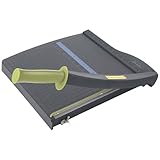
Overview: The Swingline ClassicCut Lite delivers straightforward paper trimming for light-duty tasks. This 12-inch guillotine-style cutter handles up to 10 sheets of 20-pound paper, making it suitable for home offices and occasional crafting. Its plastic construction keeps weight down while providing adequate stability for basic projects. The compact footprint suits small desks and storage spaces.
What Makes It Stand Out: Simplicity defines this trimmer. The integrated alignment grid and dual-scale ruler (inches and centimeters) ensure precise measurements without complicated setup. The safety guardrail and locking blade latch demonstrate thoughtful design for households with children, addressing primary safety concerns effectively. The transparent cutting guide helps visualize cuts before committing.
Value for Money: Positioned as an entry-level option, this trimmer offers excellent affordability for users with modest needs. While professional models deliver higher sheet capacity and metal bases, this provides reliable performance at a fraction of the cost. It’s ideal for those upgrading from scissors or testing their first dedicated cutter without significant investment.
Strengths and Weaknesses: Strengths include lightweight portability, intuitive operation, and solid safety features. The alignment grid enhances accuracy for photos and documents. Weaknesses involve the 10-sheet limitation, which struggles with thicker cardstock or multi-page projects. The plastic base, while portable, lacks the durability of metal alternatives for heavy daily use and may show wear over time.
Bottom Line: Perfect for students, home offices, and casual crafters prioritizing simplicity and safety over heavy-duty performance. It won’t replace industrial equipment but excels at everyday trimming tasks without breaking the budget.
2. Evteck Paper Cutter 12 Inch Paper Trimmer Slider Crafting Scrapbooking Supplies for A4 Vinyl Photo Cardstock with Security Blade and Foldable Ruler
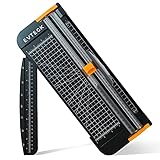
Overview: The Evteck 12-inch Paper Trimmer introduces a modern slider mechanism that prioritizes user safety without sacrificing functionality. Designed for A4 and smaller formats, this compact tool cuts various materials including photos, cardstock up to 1.2mm thick, and vinyl sheets. Its foldable ruler and angle plate cater to scrapbookers and students needing geometric precision.
What Makes It Stand Out: The press-to-activate blade system represents a significant safety innovation, preventing accidental cuts—especially valuable for families with young crafters. Six anti-slip sponge feet provide exceptional stability on any surface, including glass desks. The integrated 45-to-90-degree angle measuring plate expands creative possibilities beyond straight cuts.
Value for Money: This mid-priced trimmer justifies its cost through unique safety engineering and versatility. While traditional guillotines might cut slightly cleaner on thick stacks, the Evteck’s child-friendly design offers peace of mind that cheaper models can’t match. It’s a smart investment for classrooms or homes where safety is paramount.
Strengths and Weaknesses: Strengths include superior safety features, quiet slider operation, excellent stability, and angle-cutting capability. The compact, foldable design enhances portability. Weaknesses involve limited capacity compared to guillotine models, and the slider mechanism may require more frequent blade replacements with heavy use. Thick cardboard can challenge its 1.2mm maximum.
Bottom Line: An excellent choice for parents, teachers, and safety-conscious users who need reliable performance for light-to-medium crafting projects. The innovative blade activation makes it stand out in a crowded market.
3. Firbon 12" Guillotine Paper Cutter with Hidden Ruler, Compact Heavy Duty 12-Sheet Capacity Trimmer for Cardstock, Photos, Scrapbooking, Office, Classroom, Studio (Purple)
 12-Sheet Capacity Trimmer for Cardstock, Photos, Scrapbooking, Office, Classroom, Studio (Purple)](https://m.media-amazon.com/images/I/31+AkdbeGoL._SL160_.jpg)
Overview: The Firbon 12-inch Guillotine Paper Cutter balances compact portability with professional-grade cutting power. Engineered with a hidden extending ruler, this trimmer handles A4, A5, and B-series papers while storing easily in tight spaces. Its 3Cr13 stainless steel blade powers through 12 sheets of 80gsm paper cleanly, making it versatile for offices, classrooms, and creative studios.
What Makes It Stand Out: The retractable side ruler cleverly extends cutting capacity without increasing storage size—a boon for small workspaces. The premium stainless steel blade maintains sharpness longer than standard alternatives, while non-slip rubber feet provide stability during operation. Clear guardrails and automatic blade lock deliver robust safety.
Value for Money: This mid-range trimmer outperforms budget options with superior blade quality and thoughtful design features. While costing slightly more than basic plastic models, the extended ruler and enhanced durability justify the premium. It competes favorably with more expensive brands for moderate-volume users.
Strengths and Weaknesses: Strengths include clean cutting performance, space-saving design, dual measurement scales, and reliable safety mechanisms. The 12-sheet capacity handles most projects comfortably. Weaknesses include a plastic base that may flex under extreme pressure and capacity limitations for high-volume commercial use. The purple color, while attractive, may not suit all office aesthetics.
Bottom Line: A versatile workhorse for users needing more than entry-level performance without professional-grade bulk. Ideal for teachers, small business owners, and dedicated hobbyists seeking precision and portability.
4. Westcott TrimAir Guillotine Paper Cutter, Paper Trimmer with Sharp and Durable Titanium-Bonded Blade, Maximum Safety Features, 18-Inch, Back to School, School Supplies, Classroom

Overview: The Westcott TrimAir represents the premium tier of paper cutters, featuring an expansive 18-inch cutting length and formidable 30-sheet capacity. Its patented titanium-bonded blade—three times stronger than stainless steel—tackles heavy-duty tasks across classrooms, offices, and craft rooms. The ergonomic soft-grip handle reduces fatigue during extended use.
What Makes It Stand Out: Unmatched cutting power defines this trimmer. The titanium blade slices through thick cardstock stacks effortlessly while maintaining sharpness through thousands of cuts. The generous 18-inch length accommodates oversized materials like construction paper and poster board. Integrated safety guard and blade lock provide professional-grade protection.
Value for Money: While commanding a premium price, this trimmer delivers exceptional value for high-volume users. Cheaper alternatives require frequent replacement and struggle with capacity. For teachers processing daily worksheets or crafters handling bulk projects, the durability and performance offset the initial investment. It replaces multiple lower-capacity tools.
Strengths and Weaknesses: Strengths include extraordinary 30-sheet capacity, durable titanium blade, comfortable ergonomic handle, and large cutting surface. The robust construction ensures years of reliable service. Weaknesses involve significant desk space requirements and weight that limits portability. The higher cost may be excessive for occasional users. Some may find the industrial aesthetic uninspired.
Bottom Line: The ultimate solution for power users who prioritize performance over portability. Essential for busy classrooms, print shops, and serious crafters. The investment pays dividends through time saved and consistent results.
5. Firbon 12" Guillotine Paper Cutter with Hidden Ruler, Compact Heavy Duty 12-Sheet Capacity Trimmer for Cardstock, Photos, Scrapbooking, Office, Classroom, Studio (Pink)

Overview: The Firbon 12-inch Guillotine Paper Cutter in pink offers identical performance to its purple counterpart, combining compact design with robust cutting capability. This trimmer handles A4 and smaller formats with its 12-inch blade, processing up to 12 sheets of 80gsm paper cleanly. The hidden extending ruler maximizes versatility while minimizing storage footprint.
What Makes It Stand Out: Beyond the vibrant pink aesthetic, this model features the same premium 3Cr13 stainless steel blade and space-saving retractable ruler as other Firbon variants. The color choice makes it particularly appealing for creative studios, classrooms, or home offices seeking personalized equipment. The dual-scale measurement system and alignment grid ensure precision.
Value for Money: Sharing the same mid-range price point as its sibling, this trimmer delivers excellent value for users wanting performance with personality. The color option doesn’t inflate the cost, making it competitive with generic alternatives. For those who appreciate coordinated workspaces, the aesthetic value adds intangible benefit without compromising function.
Strengths and Weaknesses: Strengths mirror the purple version: clean cutting, stable non-slip base, effective safety guardrail, and clever extending ruler. The 12-sheet capacity suits most moderate tasks. The plastic base provides portability though sacrifices some heft. Weaknesses include identical capacity constraints—unsuitable for heavy commercial use—and potential color fading with prolonged sun exposure.
Bottom Line: Choose this version if you value both functionality and style. Perfect for teachers, crafters, and small office users who want reliable performance with a pop of color. The pink variant proves professional tools can be both effective and expressive.
6. Firbon 12" Guillotine Paper Cutter, Heavy Duty 12-Sheet Capacity Trimmer for Cardstock, Photos, Scrapbooking, Office, Classroom, Studio (Gray)

Overview: The Firbon 12" Guillotine Paper Cutter delivers robust cutting performance in a versatile package designed for professional and creative environments. This heavy-duty trimmer handles up to 12 sheets of 80gsm paper with its precision-engineered 3Cr13 stainless steel blade, while the 12-inch cutting length accommodates A4, A5, B5, and B6 formats. The gray finish provides a professional aesthetic suitable for office, classroom, or studio settings, making it a practical choice for users who need reliable daily cutting power.
What Makes It Stand Out: The combination of power and safety distinguishes this cutter. The curved blade edge ensures smooth, effortless cuts without fraying, while the integrated guard rail and blade latch hook create a comprehensive safety system that protects fingers during operation and prevents accidents when stored. The dual-scale measurement grid with clear inch and centimeter markings delivers professional-grade accuracy, and the non-slip rubber feet maintain stability during repetitive cuts.
Value for Money: Positioned in the mid-range segment, this cutter offers exceptional value by delivering commercial-grade features at an accessible price. The 12-sheet capacity exceeds most competitors in this bracket, while the durable stainless steel construction ensures longevity. The safety features alone justify the modest investment over basic models, making it cost-effective for frequent users who prioritize both performance and protection.
Strengths and Weaknesses: Strengths include excellent 12-sheet capacity, superior safety features, versatile size support, durable blade construction, and stable operation. The curved blade design minimizes maintenance and ensures clean edges. Weaknesses include a plastic base that may show wear under extreme heavy use, and the 12-sheet limit might not suffice for high-volume commercial applications. The gray color is practical but offers limited aesthetic variety.
Bottom Line: This Firbon cutter is an excellent choice for teachers, crafters, and office professionals seeking a reliable, safe, and precise cutting tool. Its blend of performance, safety, and versatility makes it a top contender in its class.
7. MAKEASY Paper Cutter 12 Inch, 8 Sheet Capacity, Heavy Duty Paper Cutter for Cardstock, Guillotine Paper Trimmer for Crafting, Classroom and Office

Overview: The MAKEASY Paper Cutter targets light to medium-duty users with its compact 12-inch design and 8-sheet capacity. This trimmer serves crafters, teachers, and home office users who prioritize safety and portability over maximum cutting power. The upgraded steel blade and precise alignment grid promise clean cuts across various paper sizes, while the lightweight construction makes it easy to transport and store when not in use.
What Makes It Stand Out: The dual-layer safety system is the primary differentiator. The transparent guard rail features an integrated paper lock that actively secures materials during cutting, preventing dangerous slips. Combined with the secure latch hook mechanism, it offers exceptional protection for classroom environments. The ergonomic handle enhances comfort during extended use, while the portable plastic base design emphasizes mobility without sacrificing basic accuracy.
Value for Money: As a budget-conscious option, this cutter delivers solid performance for its price tier. While the 8-sheet capacity is modest, this limitation actually extends blade longevity—an often-overlooked cost benefit. The included customer service promise with 24-hour response adds reassurance, though the plastic construction indicates it’s best suited for moderate rather than heavy-duty applications.
Strengths and Weaknesses: Strengths include superior safety with the paper-locking guard rail, excellent portability, comfortable ergonomic handle, responsive customer support, and clean performance on lighter materials. Weaknesses are the limited 8-sheet capacity restricting bulk efficiency, potential plastic base durability issues under heavy use, and optimistic size claims that may not hold true for larger formats like A3.
Bottom Line: Ideal for occasional users and safety-conscious environments like classrooms, this MAKEASY cutter excels at light crafting and office tasks. Choose it for portability and protection, but consider alternatives if you regularly cut thick stacks or heavy cardstock.
8. Firbon 12" Guillotine Paper Cutter, Heavy Duty 12-Sheet Capacity Trimmer for Cardstock, Photos, Scrapbooking, Office, Classroom, Studio (Pink)

Overview: The Firbon 12" Guillotine Paper Cutter in pink offers identical robust performance to its gray counterpart, combining heavy-duty functionality with a vibrant aesthetic. This 12-sheet capacity trimmer tackles cardstock, photos, and office documents with precision, while the eye-catching pink finish adds personality to classrooms, craft rooms, or creative studios. The 12-inch cutting length supports multiple paper sizes from A4 to B6, maintaining full versatility.
What Makes It Stand Out: Beyond its cheerful colorway that resists the institutional look of standard office equipment, this cutter delivers professional-grade features including a 3Cr13 stainless steel curved blade ensuring clean, fray-free edges. The comprehensive safety system—guard rail plus blade latch hook—remains a standout feature, while the dual-scale measurement grid provides accuracy for detailed projects. The pink finish also effectively hides minor wear marks.
Value for Money: The pink variant typically commands no price premium over the standard gray model, making it an excellent value for those wanting performance with personality. You receive identical 12-sheet capacity, durable construction, and safety features. For crafters and teachers who appreciate color-coded organization or simply want tools that inspire creativity, this offers full functionality with enhanced aesthetic appeal at no extra cost.
Strengths and Weaknesses: Strengths include the same high cutting capacity, excellent safety features, versatile size support, and durable blade as the gray version, plus an attractive pink finish that’s easy to locate in busy environments. The vibrant color makes it particularly suitable for creative spaces and educational settings. Weaknesses mirror the gray model: the plastic base may show stress over time, and 12 sheets might not suffice for commercial volumes. Limited color options within the line may not suit all preferences.
Bottom Line: This pink Firbon cutter is perfect for users who refuse to compromise between performance and style. It delivers the same reliable, safe operation as the standard model while adding a fun, distinctive look to your workspace.
9. Firbon 12" Guillotine Paper Cutter with Hidden Ruler, Compact Heavy Duty 12-Sheet Capacity Trimmer for Cardstock, Photos, Scrapbooking, Office, Classroom, Studio (Gray)

Overview: The Firbon 12" Guillotine Paper Cutter with Hidden Ruler reimagines the standard trimmer with a space-saving design that maintains full capability. This compact model features an innovative extendable side ruler that increases effective cutting length while reducing storage footprint. With the same 12-sheet capacity and 3Cr13 stainless steel blade as larger models, it serves users needing heavy-duty performance in constrained spaces like small apartments, mobile craft stations, or crowded classrooms.
What Makes It Stand Out: The retractable hidden ruler is a clever engineering solution that addresses storage limitations without sacrificing functionality. This feature, combined with the compact base design, makes it ideal for mobile professionals. The trimmer retains Firbon’s signature safety elements—clear guardrail and blade lock—while adding enhanced portability. The dual-scale measurement system with 1/2-inch gridlines offers precision typically found in larger, stationary models.
Value for Money: This compact version typically matches the price of standard models while offering superior storage efficiency. The space-saving design provides genuine value for users with limited desk space or those who need to transport their tools. You’re not paying extra for the compact innovation, making it a smart choice if portability and storage are priorities. The durable construction ensures you’re not sacrificing longevity for convenience.
Strengths and Weaknesses: Strengths include innovative hidden ruler design, excellent portability, full 12-sheet capacity despite compact size, robust safety features, and stable non-slip operation. The space-saving form factor is genuinely useful for small workspaces. Weaknesses include the compact base potentially feeling less substantial during heavy use, the hidden ruler mechanism could be vulnerable to damage if handled roughly, and the smaller footprint might require more frequent cleaning of paper scraps.
Bottom Line: Choose this Firbon model if storage space is at a premium but you can’t compromise on cutting power. It’s an ingenious solution for small workspaces that delivers full-size performance in a compact package.
10. Paper Cutter,Paper Shredder,Paper Cutter Slider with Ruler,A4 Cardboard Cutter,Office School Classroom Teacher Scrapbook Supplies,File Organizer Accessories,Cardstock Wrapping Paper Trimmer

Overview: This confusingly-named product is primarily a 12-inch guillotine paper cutter bundled with crafting accessories, despite the title suggesting multiple devices. The A4-compatible trimmer features an automatic security safeguard and side ruler for precise measurements. Marketed as a complete solution, it includes supplementary items like scissors, tape, and vinyl cards, targeting teachers and beginners who want an all-in-one starter kit rather than a professional-grade standalone tool.
What Makes It Stand Out: The comprehensive accessory bundle distinguishes this from dedicated cutters, offering immediate utility for classroom or craft room setup. The automatic security safeguard provides enhanced safety, while the included extras eliminate separate purchases. The guillotine-style design ensures straight cuts, and the ergonomic construction reduces hand fatigue. It’s positioned as a convenience package rather than a specialized cutting instrument.
Value for Money: As a bundled package, this offers reasonable value for beginners establishing a new workspace. The included accessories add convenience, though their quality likely doesn’t match professional-grade separate purchases. The price reflects added items rather than superior cutter construction. For experienced users who already own crafting supplies, the value proposition diminishes compared to dedicated, higher-quality trimmers with clear specifications.
Strengths and Weaknesses: Strengths include the convenient all-in-one package, safety-focused design, suitability for light to medium use, and inclusion of basic crafting necessities. The side ruler aids accuracy for simple projects. Weaknesses include questionable durability of the cutter itself, likely lower-quality bundled accessories, misleading product title that overpromises, and unclear specifications on cutting capacity. The plastic construction probably limits it to 6-8 sheets maximum. The “paper shredder” claim is inaccurate and confusing.
Bottom Line: Best suited for teachers needing a starter kit or occasional crafters prioritizing convenience over quality. Serious users should invest in a dedicated heavy-duty cutter and purchase accessories separately. This is a compromise solution that prioritizes completeness over excellence.
Understanding the Role of Paper Trimmers in Modern Classrooms
Beyond Basic Cutting: Multifunctional Classroom Applications
Today’s educators use paper trimmers for far more than trimming worksheets. These tools become essential for creating interactive notebooks, resizing anchor charts, preparing standardized test materials, crafting bulletin board displays, and supporting student art projects. A versatile trimmer handles cardstock, laminated pouches, construction paper, and even thin foam sheets for STEM activities. The right tool becomes an extension of your teaching methodology, enabling precision that scissors simply cannot achieve while reducing hand fatigue during marathon prep sessions.
The Hidden Cost of Inadequate Tools
A subpar trimmer creates ripple effects across your workflow. Dull blades tear rather than cut, wasting expensive laminated materials and creating frustrating do-overs. Inaccurate measurements mean misaligned graphic organizers and crooked borders that undermine the professional appearance of your classroom displays. Perhaps most costly is the time drain—five extra minutes per day wrestling with a faulty trimmer adds up to nearly two full instructional hours lost over a school year. When viewed through this lens, investing in quality becomes a professional decision that directly impacts your effectiveness.
Guillotine vs. Rotary: Decoding the Two Main Categories
Traditional Guillotine Mechanics and Classroom Suitability
Guillotine trimmers operate with a hinged blade that slices downward in a single powerful motion. Their mechanical advantage allows them to cut through thick stacks efficiently, making them ideal for high-volume environments like copy rooms or teachers who prep entire units at once. The cutting action creates a clean, straight edge with minimal effort, though the blade’s exposed position during operation demands robust safety features. Modern educational models incorporate spring-action blades that retract automatically and finger guards that prevent accidental contact.
Rotary Systems: Precision for Diverse Materials
Rotary trimmers use a circular blade that rolls along a rail, offering exceptional precision for detailed work. These systems excel at cutting single sheets or small stacks with perfectly square corners and clean edges. Their enclosed blade design inherently provides better safety for younger learners, making them popular in elementary settings. However, the cutting capacity typically maxes out at fewer sheets than guillotine models, and the blade mechanism requires more frequent maintenance to prevent skipping or uneven cuts. For teachers focused on crafting, scrapbooking-style projects, or intricate die-cut preparation, rotary systems offer unmatched accuracy.
Safety First: Non-Negotiable Features for Educational Settings
Finger Guards and Protective Housing
Any trimmer destined for classroom use must include comprehensive finger guards that extend beyond the blade’s cutting path. Look for models with transparent guards that allow visual alignment while creating a physical barrier. The guard should be sturdy enough to withstand curious poking yet designed so it doesn’t obstruct your view of cut lines. Some premium designs feature dual-layer protection: an outer guard plus an inner mechanism that prevents blade operation unless paper is properly positioned.
Locking Mechanisms and Child-Resistant Designs
The best classroom trimmers include blade locks that secure the cutting arm in a closed position when not in use. This prevents unauthorized use during unsupervised periods and protects the blade from damage during storage. Key-lock systems offer maximum security for shared supply rooms, while spring-loaded automatic locks provide convenience for personal classroom use. Consider whether the lock can be easily engaged with one hand—a feature you’ll appreciate when juggling armfuls of materials.
Safety Certifications to Look For
Educational institutions should prioritize trimmers meeting ASTM or EN safety standards for school equipment. These certifications ensure the tool has undergone rigorous testing for blade retraction speed, guard effectiveness, and structural integrity under stress. Some manufacturers submit products for additional CPSIA (Consumer Product Safety Improvement Act) testing, particularly important for elementary environments where younger children may have contact with the equipment.
Blade Technology and Longevity Considerations
Self-Sharpening vs. Replaceable Blade Systems
Self-sharpening mechanisms, typically found in higher-end guillotine models, maintain edge alignment through a honing action that occurs during each cut. These systems dramatically extend blade life, often delivering clean cuts through tens of thousands of sheets before replacement becomes necessary. Replaceable blade systems offer lower initial cost but require periodic swapping—factor in replacement blade prices when calculating total ownership cost. Some rotary models feature tungsten carbide blades that resist wear exceptionally well, though they command premium pricing upfront.
Material Composition and Edge Retention
High-carbon steel blades hold their edge longer than stainless steel alternatives, though they’re more susceptible to corrosion if exposed to moisture. Titanium-coated blades represent the gold standard, combining exceptional hardness with corrosion resistance. For classroom environments where the trimmer may cut through adhesive-backed materials or laminated plastics, non-stick coated blades prevent gumming and maintain smooth operation. The blade’s bevel angle also matters—steeper angles cut cleaner but dull faster, while shallower angles maintain durability but may struggle with thick materials.
Cutting Capacity: Matching Volume to Classroom Needs
Sheet Count Ratings: What the Numbers Really Mean
Manufacturers rate cutting capacity in sheets of 20-pound bond paper, but classroom realities often involve mixed weights. A trimmer rated for 30 sheets may handle 15 sheets of cardstock or 10 laminated pages. For elementary teachers primarily cutting construction paper and worksheets, a 15-20 sheet capacity proves sufficient. Middle and high school educators prepping exam booklets or heavy visual aids should target 30+ sheet ratings. Remember that consistently cutting at maximum capacity accelerates blade wear, so choose a model rated slightly above your typical needs.
Material Versatility Beyond Standard Paper
Consider your actual cutting requirements. Do you regularly trim bulletin board border rolls? You’ll need a trimmer with an extended base and rail system. Work with foam sheets for science fair displays? Look for models specifically rated for non-paper materials. Some trimmers include adjustable pressure settings that prevent crushing delicate materials while providing sufficient force for dense stacks. The ability to handle plastic sleeves, vinyl letters, and even thin balsa wood for STEM projects transforms your trimmer from a single-purpose tool into a versatile classroom workstation.
Workspace Integration: Size and Portability Factors
Base Dimensions and Storage Constraints
Measure your available workspace before falling in love with any trimmer. A 18" base might fit perfectly on your desk but prove impossible to store in standard classroom cabinets. Many teachers opt for 12" models that handle most tasks while storing vertically in supply closets. Consider the “footprint plus swing”—the space needed for the cutting arm to open fully. Some innovative designs feature folding arms or detachable bases that reduce storage size by 40% without compromising cutting length.
Weight Considerations for Mobile Teachers
Traveling teachers who move between classrooms need lightweight yet stable trimmers. Models under 5 pounds offer easy portability but may shift during aggressive cutting. Look for trimmers in the 6-8 pound range that include rubberized feet or suction cup bases for stability. The weight distribution matters—a trimmer that’s heavy at the base but light at the arm prevents tipping while remaining manageable. For art teachers or specialists who truly need mobility, consider a protective carrying case that prevents blade damage during transport between buildings.
Precision Tools: Measurement and Alignment Systems
Grid Quality and Visibility
The printed measurement grid on your trimmer’s base should feature high-contrast markings in both imperial and metric units. Faded or poorly printed grids force you to rely on external rulers, defeating the tool’s purpose. Premium models embed the grid beneath a clear acrylic surface, preventing wear from repeated use. Look for grid lines extending to the trimmer’s edges and including common paper sizes (letter, legal, A4) marked for quick alignment. Some advanced systems feature backlit grids or LED alignment lights that prove invaluable in dim classrooms or for teachers with vision challenges.
Extendable Arms and Specialty Guides
For cutting oversized materials, extendable measuring arms provide accuracy impossible with standard grids. These arms should lock securely at common lengths and include clear, easy-to-read markings. Specialty guides—such as circle cutters, scoring blades for fold lines, or perforation wheels—expand your trimmer’s capabilities. While these accessories add initial cost, they eliminate the need for separate tools and enable projects like creating custom flashcards with rounded corners or foldable booklets with crisp creases.
Durability Standards for High-Traffic Environments
Construction Materials and Stress Points
Classroom trimmers face daily use, occasional drops, and the inexplicable forces that elementary students exert on any accessible tool. Look for solid metal construction in the cutting arm and base, particularly at hinge points where plastic components often fail first. The blade mounting system should use metal fasteners rather than plastic clips that crack under pressure. Examine the trimmer’s “feel”—quality models exhibit tight tolerances with no wobbling in the blade arm or flexing in the base during cuts.
Testing Methodologies for Classroom Endurance
Reputable manufacturers test their educational models through simulated classroom conditions: thousands of repetitive cuts, exposure to temperature fluctuations common in unheated classrooms overnight, and drop tests from desktop height. While you can’t conduct these tests yourself, look for explicit mentions of “commercial-grade” or “school-tested” in product descriptions. Warranty length often indicates manufacturer confidence—a five-year warranty suggests rigorous testing, while a 90-day warranty raises durability concerns.
Budget Strategy: Total Cost of Ownership Analysis
Initial Purchase Price vs. Long-Term Value
A $40 trimmer that requires replacement after one school year costs more than an $80 model that lasts five years. Calculate cost-per-cut by estimating your annual usage divided by the trimmer’s expected lifespan. Teachers cutting 100 sheets weekly will execute roughly 3,600 cuts annually. A quality trimmer rated for 50,000 cuts before blade replacement delivers a cost-per-cut of less than a penny even at premium pricing. Factor in your time value—if a better trimmer saves 10 minutes weekly, that’s nearly 7 hours annually of reclaimed planning time.
Blade Replacement Economics
Replacement blade costs vary wildly, from $8 for basic steel to $35 for titanium-coated options. Some proprietary blade systems lock you into expensive manufacturer replacements, while standardized designs accept affordable third-party blades. Before purchasing, research blade availability and pricing. A trimmer that seems like a bargain becomes expensive if replacement blades cost half the original price and require replacement twice yearly. Some manufacturers offer blade sharpening services at reduced rates, extending blade life economically.
Bulk Purchasing for Departmental Savings
If your department or grade-level team coordinates purchases, bulk buying can reduce costs 15-25%. Many suppliers offer educational discounts when purchasing five or more units. Consider splitting a multi-pack of replacement blades among colleagues to leverage volume pricing. Some schools allocate supply funds at the department level—presenting a unified request for professional-grade trimmers demonstrates fiscal responsibility and ensures consistent quality across classrooms.
Maintenance Protocols for Long-Term Reliability
Daily Cleaning Routines
Paper dust and adhesive residue accumulate quickly in classroom trimmers, degrading performance. Develop a habit of brushing cutting channels daily with a soft paintbrush to remove debris. For rotary models, a single drop of sewing machine oil on the rail weekly maintains smooth blade travel. Avoid compressed air, which can force particles into internal mechanisms. Instead, use a slightly damp cloth on the base and a dry brush on the blade housing. Never submerge your trimmer or use harsh chemical cleaners that degrade plastic components.
Blade Replacement Procedures
Learn the proper blade replacement procedure before purchase—some models require specialized tools or disassembly that proves frustrating. Quality trimmers feature tool-free blade swaps using a simple lever or button release. Always wear cut-resistant gloves when handling blades, and establish a “blade bank” in your classroom for safe disposal of used blades. Keep replacement blades in their original packaging until needed; unprotected storage leads to nicks that compromise cut quality. Mark your calendar for proactive blade replacement before the start of major project seasons rather than waiting for performance to degrade.
Professional Servicing Options
For high-end trimmers used in school-wide production environments, some manufacturers offer annual servicing programs. These services include blade realignment, deep cleaning, and replacement of worn bushings or springs. While costing $30-50 annually, professional servicing can extend a trimmer’s functional life by several years. For most classroom teachers, however, proper daily maintenance eliminates the need for professional intervention.
Environmental Responsibility in Supply Selection
Recyclable Materials and Sustainable Manufacturing
Increasingly, manufacturers respond to educational sustainability initiatives with trimmers constructed from recycled metals and plastics. Look for products with Environmental Product Declarations (EPDs) that quantify environmental impact. Some companies operate take-back programs for old trimmers, ensuring proper recycling of metal blades and plastic components. While these eco-friendly options may cost 10-15% more, they align with school-wide green initiatives and provide teachable moments about sustainable consumption.
Energy Efficiency in Powered Models
Electric trimmers offer convenience for teachers with mobility limitations or repetitive strain injuries, but they consume standby power continuously. Look for models with automatic shutoff after 30 minutes of inactivity. Some innovative designs use rechargeable batteries that eliminate cord clutter while providing 200+ cuts per charge. Solar-powered models, while niche, work well in classrooms with abundant natural light. For most educators, manual trimmers remain the environmentally superior choice, eliminating energy consumption entirely while providing better control.
Ergonomic Design and Accessibility Features
Handle Design and Hand Fatigue Prevention
The cutting mechanism’s handle design directly impacts comfort during extended use. Look for padded, contoured grips that distribute pressure across your palm rather than concentrating it on pressure points. Some advanced models feature rotating handles that adjust to your natural wrist angle, reducing strain during repetitive cuts. The activation force should be smooth and consistent—jerkiness indicates poor engineering and leads to imprecise cuts. For teachers with arthritis or carpal tunnel syndrome, lever-action handles require significantly less force than traditional press-down designs.
Accommodating Teachers with Physical Limitations
Electric trimmers with one-touch operation provide accessibility for educators with limited hand strength or mobility challenges. Look for models with large, easy-to-press buttons and audible completion signals. Some trimmers offer foot-pedal operation, freeing both hands for material handling. The base height matters—trimming on a too-low surface forces hunching, while a too-high base causes shoulder strain. Consider a trimmer with adjustable feet or use a sturdy platform to achieve elbow-height operation, the ergonomic sweet spot for most adults.
Warranty and Support: What to Expect from Manufacturers
Standard Warranty Periods for Educational Purchases
Quality classroom trimmers typically carry warranties ranging from two to seven years, with some commercial models offering lifetime coverage on mechanical components. Read warranty terms carefully—many exclude blades as consumables, while others prorate coverage after the first year. Educational warranties should explicitly cover “institutional use,” as standard consumer warranties may void when used in classroom settings. Keep original receipts and register your product online within 30 days of purchase to ensure full coverage.
Customer Service Responsiveness
Before committing to a purchase, test the manufacturer’s customer service by calling with a pre-sales question. Response time and knowledge level indicate the support you’ll receive when needing warranty service. Look for companies with dedicated educational support lines staffed during school hours. Some manufacturers assign account managers to school districts, streamlining bulk purchases and warranty claims. Online support resources matter too—video tutorials for blade replacement and maintenance demonstrate a commitment to user success.
Common Pitfalls in Teacher Purchasing Decisions
Overbuying Capacity You’ll Never Use
Many educators select trimmers rated for 40+ sheets, imagining efficient bulk cutting sessions that never materialize. In reality, cutting more than 20 sheets at once requires significant force and often produces uneven edges as paper shifts during the cut. A 20-25 sheet capacity trimmer handles 95% of classroom needs while offering better control and safety. Oversized trimmers also consume valuable desk space and cost significantly more. Honestly assess your typical cutting volume—most teachers cut 5-10 sheets at a time, making mid-capacity models ideal.
Ignoring Replacement Part Availability
That imported trimmer with glowing reviews becomes a paperweight when you can’t source replacement blades. Stick to brands with established distribution through educational supply catalogs like School Specialty or Discount School Supply. Check that replacement parts remain available for at least five years after model discontinuation—reputable manufacturers maintain parts inventories for legacy models. Some third-party blade companies produce compatible blades for popular models, offering cost savings and availability insurance.
Prioritizing Price Over Safety Features
When budgets tighten, it’s tempting to select the cheapest functional trimmer. However, inadequate safety features create liability risks and anxiety every time you use the tool around students. A trimmer lacking proper finger guards or with a flimsy locking mechanism isn’t worth any amount of savings. Consider this: one accident involving a student could cost far more in medical and legal terms than the $30 difference between a basic model and one with comprehensive safety features. Your peace of mind and your students’ safety deserve budget priority.
Future-Proofing Your Classroom Investment
Scalability for Growing Programs
If your teaching assignment might change or your program is expanding, choose a trimmer that adapts. Modular designs allow you to add extensions for longer cuts or swap blade types for specialty applications. Some manufacturers design their trimmers to share accessories across models, so investing in a circle cutter for one trimmer works with others in the same product family. Consider whether the trimmer can handle emerging materials—thicker synthetic papers, new laminating films, or even thin circuit boards for STEM applications.
Technology Integration and Digital Compatibility
While manual trimmers remain classroom staples, some modern designs incorporate digital measurement displays or laser alignment guides that project a cutting line onto your material. These features reduce measurement errors and speed up repetitive cuts. Bluetooth-enabled trimmers can connect to classroom tablets, allowing you to program cut dimensions and track usage for inventory management. While not essential for most teachers, tech-forward features benefit educators managing makerspaces or digital fabrication labs where precision and documentation matter.
Frequently Asked Questions
What’s the difference between a paper trimmer and a paper cutter, and which do teachers need?
The terms are often used interchangeably, but “paper cutter” typically refers to larger, heavy-duty guillotine-style machines found in copy rooms, while “paper trimmer” encompasses both compact guillotine and rotary models designed for desktop use. Most teachers need a paper trimmer for daily classroom tasks. Choose a trimmer rated for your typical volume—only department heads managing school-wide copying should consider full-sized paper cutters.
How many sheets should a classroom paper trimmer realistically handle?
For individual classroom use, a 15-25 sheet capacity meets nearly all needs. Cutting more than 20 sheets at once often produces uneven results as paper shifts. Elementary teachers primarily cutting construction paper and worksheets will find 15 sheets adequate. Middle and high school educators prepping exam packets or laminated resources benefit from 25-30 sheet capacity. Remember that consistently cutting at maximum capacity accelerates blade wear, so select a model rated slightly above your typical use.
Are rotary or guillotine trimmers safer for elementary classrooms?
Rotary trimmers generally offer superior safety for elementary settings due to their fully enclosed blade design. The circular blade retracts into a housing, exposing only a small cutting edge during operation. However, modern guillotine trimmers with robust finger guards, automatic blade retraction, and lockable arms can be equally safe when used under direct supervision. For student-accessible stations, rotary trimmers are preferable. For teacher-only use in upper elementary, a safety-enhanced guillotine provides better efficiency.
How often should I replace my trimmer blade in a classroom setting?
Blade life depends on usage and material type. A typical classroom trimmer blade lasts 2,000-5,000 cuts through standard paper. For most teachers, this translates to blade replacement every 18-24 months. However, cutting adhesive materials, laminated plastic, or cardstock reduces lifespan significantly. Replace the blade when you notice tearing rather than clean cuts, when increased force is required, or when the blade leaves fibers on cut edges. Proactive replacement before major project seasons prevents mid-unit frustration.
Can I sharpen my paper trimmer blade myself, or should I always replace it?
While professional sharpening services exist for expensive commercial trimmers, DIY sharpening of classroom trimmer blades is not recommended. The precise bevel angles and edge geometry require specialized equipment. Attempting to sharpen blades with files or stones typically damages the edge further and creates safety hazards. Self-sharpening trimmer models maintain their edge automatically through honing mechanisms. For standard trimmers, replacement blades are inexpensive enough that professional sharpening rarely makes economic sense.
What’s a reasonable budget for a quality classroom paper trimmer?
Expect to invest $60-120 for a professional-grade classroom trimmer that will last 5+ years. Budget models under $40 often lack essential safety features and durable construction. Premium models above $150 offer diminishing returns for typical classroom use unless you require specialized features like extra-long cutting lengths or powered operation. Remember to factor in replacement blade costs—budget $15-25 annually for blade replacements. Many schools qualify for educational pricing that reduces costs 10-20%, so inquire with suppliers about institutional accounts.
How do I clean and maintain my classroom trimmer properly?
Daily, brush paper dust from the cutting channel and blade housing using a soft paintbrush. Weekly, wipe the base with a slightly damp cloth and dry thoroughly. Monthly, apply a single drop of sewing machine oil to rotary trimmer rails. Never use compressed air, which forces debris into internal mechanisms. Avoid harsh chemical cleaners that degrade plastic components. Inspect blade mounting screws quarterly, tightening if loose. Store trimmers with the blade locked and covered to prevent dust accumulation and unauthorized use.
What safety features are absolutely essential for any classroom trimmer?
Non-negotiable safety features include: a finger guard that extends beyond the blade path, a lockable blade arm that secures when not in use, automatic blade retraction on guillotine models, and non-slip feet that prevent sliding during cuts. For elementary classrooms, add a blade housing that completely encloses the cutting edge. Look for safety certifications from ASTM or equivalent testing bodies. The trimmer should feel stable and require intentional force to operate—no hair triggers or loose mechanisms.
Can classroom trimmers handle materials other than standard paper?
Most quality trimmers cut cardstock, laminated sheets, vellum, and thin plastic sheets up to their rated capacity. For specialty materials like foam core, thin chipboard, or vinyl, verify the manufacturer’s specifications. Cutting these materials dulls blades faster than paper, so dedicate a separate trimmer or plan for more frequent blade changes. Never attempt to cut metal, rigid plastic, or materials containing abrasive particles like glitter cardstock—these can chip or irreparably damage the blade.
What should I do if my trimmer starts making uneven or ragged cuts?
First, clean the trimmer thoroughly to remove paper dust and adhesive residue that can interfere with blade movement. Check that the blade is properly seated and mounting hardware is tight. Test with a small stack of standard paper—if cuts remain uneven, the blade is likely dull and requires replacement. For guillotine trimmers, verify the blade aligns parallel to the cutting edge; misalignment indicates a need for professional adjustment. If problems persist after blade replacement, the cutting mat or base may be worn unevenly, requiring professional service or replacement.