Table of Contents
After-school hours can feel like a daily puzzle—how do you keep children engaged, learning, and away from screens without adding another item to your already overwhelming to-do list? The answer lies in the humble craft kit, a deceptively simple solution that transforms idle time into a symphony of creativity, skill-building, and quiet concentration. Unlike passive entertainment, quality craft kits activate multiple areas of development simultaneously, giving kids the satisfaction of creating something tangible while you reclaim precious time for household tasks or simply catch your breath.
But not all craft kits are created equal. Walk down any toy aisle or scroll through online marketplaces and you’ll encounter everything from glitter bombs that leave your dining room looking like a unicorn exploded to sophisticated sets that gather dust because they’re too complex for independent work. The secret to after-school success isn’t just buying any kit—it’s understanding what makes a craft kit truly valuable for your child’s age, interests, and developmental needs. This guide will arm you with the expertise to evaluate options like a seasoned educator, ensuring every purchase delivers maximum fun, learning, and peace of mind.
Top 10 Kids Craft Kits
Detailed Product Reviews
1. Skillmatics 3D Art Kit - Aqua Puffs Princesses & Unicorns, Mess-Free Paint by Number Craft, DIY Color & Inflate Activity, Creative Valentine’s Day Gift for Girls & Boys Ages 4, 5, 6, 7, 8, 9, 10

Overview: The Skillmatics Aqua Puffs Princesses & Unicorns kit transforms traditional coloring into a magical 3D experience for children ages 4-10. This mess-free craft set includes 15 pre-designed aqua puffs featuring whimsical princess and unicorn themes, 10 markers, 2 water pens, 6 keychains, and string for display.
What Makes It Stand Out: The revolutionary water-activation technology creates an impressive puff effect without glue or mess. Simply color, apply water with the special pen, and watch designs expand into tactile 3D art in minutes. As a 2025 Parents Best Toys Award winner, it offers dual value: creative activity plus functional accessories kids can proudly display on backpacks or in bedrooms.
Value for Money: Priced competitively against premium craft kits, this set delivers 15 complete projects with display accessories included. The cost per project is reasonable considering the proprietary puff material and award-winning design. Compared to traditional paint-by-number sets, the mess-free aspect saves parental cleanup time, adding hidden value.
Strengths and Weaknesses: Strengths include truly mess-free operation, quick results that maintain children’s engagement, and the magical transformation that builds excitement. The included keychains and string maximize display options. Weaknesses are the fixed theme selection that may not appeal to all children, required drying time that tests patience, and limited reuse potential once designs are completed.
Bottom Line: An excellent choice for creative children fascinated by magical themes. The unique puff effect and display-ready results make it stand out in the crowded craft kit market, ideal for gifting or rainy-day activities.
2. Skillmatics 3D Art Kit - Aqua Puffs Animals, Mess-Free Paint by Number Craft for Kids, DIY Color & Inflate Activity, Travel & Creative Valentine’s Day Gift for Girls & Boys Ages 4, 5, 6, 7, 8, 9, 10

Overview: This animal-themed variant of the Skillmatics Aqua Puffs line delivers the same magical 3D transformation for children ages 4-10. The kit includes 15 animal-design aqua puffs, 10 markers, 2 water pens, 6 keychains, and string—everything needed to create puffed-up animal art that doubles as accessories.
What Makes It Stand Out: The universal animal theme appeals to a broader range of children compared to character-specific sets. Using identical award-winning water-activation technology, kids color cute animals then watch them magically expand. The 2025 Parents Best Toys Award recognition validates its engaging, developmentally appropriate design for both independent and guided play.
Value for Money: Identical in price and components to its princess counterpart, this version offers better value for families with mixed interests or those seeking gender-neutral options. The cost-per-project remains competitive, especially considering the high-quality markers and proprietary puffing material. Travel-friendly packaging adds value for on-the-go entertainment.
Strengths and Weaknesses: Strengths include the widely appealing animal designs, mess-free operation, and quick, satisfying results. The dual-purpose nature as both craft and accessory extends its lifecycle. Weaknesses mirror the line’s limitations: single-use designs, drying time requiring patience, and the 15-project limit means repeat purchase needed for extended fun.
Bottom Line: A superior choice for families seeking inclusive, engaging craft activities. The animal theme’s broad appeal, combined with the innovative puff technology, makes this an ideal gift for any creative child.
3. 12 Bulk Craft Kits for Kids 8-12, STEM Activities Science Projects for Girls, Fiber Optic Light Experiments, Simple Electric Circuits Classroom Gifts for Class 2nd 3rd 4th Grade Activity

Overview: Designed specifically for classroom or group settings, this bulk kit provides 12 individual fiber optic light experiments for students in grades 2-4. Each kit contains components for building simple electric circuits with LED bulbs and fiber optic bundles, teaching fundamental STEM principles through hands-on assembly.
What Makes It Stand Out: The bulk packaging of 12 complete kits makes this uniquely suited for teachers, homeschool co-ops, or party activities. It transforms abstract electrical concepts into tangible, glowing results. The updated instruction manual addresses previous connection issues, demonstrating responsive product improvement. Each student receives their own complete project, eliminating sharing conflicts.
Value for Money: Exceptional value for educators at approximately $2-3 per kit, far cheaper than sourcing individual components. However, the requirement for 12 AA batteries (not included) adds $8-12 to the total cost. Compared to single STEM kits priced at $15-20 each, this bulk option saves significant money for group instruction.
Strengths and Weaknesses: Strengths include comprehensive bulk packaging, clear STEM learning outcomes, and the “wow” factor of illuminated fiber optics. The individual packaging simplifies distribution. Weaknesses are the battery requirement increasing total cost, potential need for adult assistance with wire connections, and limited reuse once assembled. Some components may be delicate for younger builders.
Bottom Line: An outstanding resource for teachers seeking engaging, affordable STEM activities. Despite minor assembly challenges and battery costs, the educational value and bulk pricing make it essential for elementary science classrooms.
4. Arts & Crafts Supplies Kits & Materials Set for Kids, Toddler - Carl & Kay
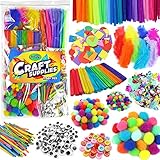
Overview: Carl & Kay’s all-inclusive craft bundle delivers a massive assortment of fundamental art supplies suitable for toddlers through elementary ages. The kit includes approximately 1,650 pieces: 100 pipe cleaners, 50 popsicle sticks, 100 matchsticks, 50 buttons, 100 googly eyes, 150 pom poms, 100 feathers, 100 foam stickers, and 1,000 sequins.
What Makes It Stand Out: The sheer volume and variety provide limitless creative possibilities beyond single-project kits. Clever packaging with individual zipper bags for each material type, all stored in one large carrier bag, solves craft organization chaos. This open-ended approach nurtures imagination rather than following rigid instructions, promoting genuine artistic exploration.
Value for Money: Outstanding value at pennies per piece, significantly cheaper than purchasing items separately. The storage system alone justifies the cost, eliminating the need for separate containers. For classrooms, daycares, or craft-heavy households, this replaces multiple smaller supply purchases with one comprehensive solution.
Strengths and Weaknesses: Strengths include incredible variety, excellent storage solutions, and age versatility. The satisfaction guarantee reduces purchase risk. Weaknesses involve approximate counts (packed by weight), lack of project guidance for beginners, and potential choking hazards requiring supervision for toddlers. Some materials may be consumed quickly in high-use environments.
Bottom Line: Essential for any setting where children create regularly. The organizational system and bulk quantity make this a practical, economical choice that empowers endless imaginative projects.
5. Worgree DIY Wooden Magnets, 36 pcs Wooden Art Craft Supplies Painting Kit for Kids Party Favors for Boys Girls Ages 4-8 8-12 Birthday Easter Crafts Gifts Toys Basket Goodie Bag Stuffers

Overview: Worgree’s wooden magnet kit provides 36 natural wood cutouts across diverse themes—animals, fruits, insects, Easter, and Christmas—plus 12 colored pens and 36 adhesive magnets. Designed for ages 4-12, this kit transforms simple painting into functional refrigerator art suitable for parties, classrooms, or family craft time.
What Makes It Stand Out: The functional end product distinguishes this from decorative-only crafts. Kids create lasting, usable art rather than disposable projects. The natural wood construction offers superior quality to paper or foam alternatives, with smooth, splinter-free surfaces ready for painting. Seasonal design variety extends usability throughout the year.
Value for Money: Excellent value for 36 complete magnet projects, especially for party favors or classroom prizes. The inclusion of magnets and pens eliminates additional purchases. Compared to single wooden craft kits at $5-8 each, this bulk set costs under $1 per piece, making it ideal for large groups.
Strengths and Weaknesses: Strengths include functional outcomes, quality wood construction, diverse designs, and party-ready quantity. The smooth surface accepts various art mediums. Weaknesses are the limited 12-color pen set restricting creativity, small pieces requiring supervision for younger children, and lack of paint brushes for those preferring paint over markers.
Bottom Line: Perfect for party favors, classroom rewards, or functional art projects. The quality wood and practical end results make this a smart choice for budget-conscious buyers seeking meaningful craft activities.
6. Made By Me Create Your Own Window Art, Paint Your Own Suncatchers, DIY Arts & Crafts Idea, Craft Kits for Kids, Crafts for Kids & Toddlers, Toddler Arts and Crafts
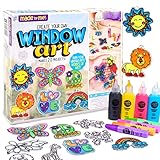
Overview: This window art kit transforms ordinary glass into a vibrant gallery of 20 colorful creations. Designed for young artists, it includes 12 pre-shaped suncatchers and materials for custom window clings, complete with child-friendly paint pens and display hardware that makes installation effortless.
What Makes It Stand Out: The dual-format approach sets this apart—you get ready-to-paint suncatchers plus an acetate sheet for completely original designs. The paint pens are specifically sized for small hands, eliminating messy brushes and palettes. The instant display system with suction cups and string means artwork goes from creation to exhibition in minutes, providing immediate gratification that keeps kids engaged through the entire process.
Value for Money: With 20 projects in one box, this kit delivers substantial entertainment per dollar. Competing sets often include fewer pieces or require separate paint purchases. The inclusion of both structured suncatchers and freeform cling materials essentially provides two different craft experiences, maximizing creative mileage before needing replenishment.
Strengths and Weaknesses: Strengths include mess-free paint pens, immediate display capability, and the blend of guided and open-ended creativity. The variety of paint volumes ensures enough material for all projects. Weaknesses include paint that may require adult supervision for younger children to avoid staining, and suction cups that can lose adhesion over time on textured windows. The glitter paint pen quantity is limited for multiple projects.
Bottom Line: An excellent choice for screen-free creative time that brightens both windows and moods. Perfect for ages 4-10 with occasional adult assistance.
7. Klever Kits Gel Art Drawing Board- Window Craft and Stickers, Arts and Crafts for Kids 6+, Drawing Board with 4 Filling Pens, 2 Tracing Pens and Storage Case, Educational Gifts for Toddler by Jova

Overview: This innovative gel art board combines drawing practice with sticker creation in a portable, self-contained kit. Children can trace designs to build skills, then graduate to original artwork that peels off as window decals, offering a 2-in-1 creative and educational experience that grows with ability.
What Makes It Stand Out: The detachable drawing panel and integrated storage case solve the perennial problem of lost craft supplies. Unlike traditional window clings, the gel medium creates vibrant, reusable stickers that adhere to multiple surfaces. The progression from tracing templates to freeform drawing builds artistic confidence systematically, making it more pedagogically sound than free-play-only alternatives.
Value for Money: The reusable drawing board and comprehensive supply set justify the mid-range price point. While initially pricier than single-use craft kits, the ability to create unlimited designs without repurchasing materials provides long-term value. The portability adds practical worth for families who travel or attend playdates frequently.
Strengths and Weaknesses: Major strengths are the organized storage, skill-building tracing component, and multi-surface display options. The gel medium is less messy than paints and dries to a satisfying texture. Weaknesses include a learning curve for achieving proper gel thickness, and younger children may need help peeling finished designs without tearing. The board size limits artwork dimensions compared to freeform options.
Bottom Line: A thoughtfully designed kit that grows with your child’s abilities while keeping supplies neatly contained. Ideal for ages 6-12.
8. Dan&Darci Arts and Crafts Vault - Craft Supplies Kit in a Box - Gift for Kids Ages 4 5 6 7 8 9 10 11 & 12 Year Old Girls & Boys - Crafting Set Kits - Gift Ideas for Kid Art Activity Gifts
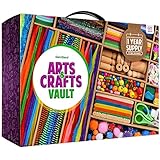
Overview: This comprehensive craft supply repository delivers an impressive assortment of 20+ material types in an organized two-drawer case. Designed as an open-ended creativity engine, it provides the raw ingredients for countless projects rather than prescriptive kits, serving children from preschool through pre-teen years with endless possibilities.
What Makes It Stand Out: The sheer variety and quality of materials distinguish this from dollar-store alternatives. The elegant storage case transforms loose supplies into a manageable system, encouraging independent creation. Unlike single-project kits, this vault fosters divergent thinking—children can move from jewelry-making to sculpture to mixed-media art without artificial limits, supporting developmental progression naturally.
Value for Money: While the upfront cost exceeds basic craft sets, the volume and diversity of materials represent significant savings over individual purchases. The reusable storage case alone adds value. For families seeking ongoing creative engagement rather than one-time entertainment, this investment pays dividends across multiple children and years of use.
Strengths and Weaknesses: Unmatched material variety and quality storage are primary strengths. Inclusion of real scissors and needles (with adult supervision) builds authentic skills. Weaknesses include the absence of project guides that may intimidate less creative children or time-pressed parents. Some materials like glue and glitter glue quantities may deplete quickly. The bead hole sizes vary, requiring coordination children may find frustrating initially.
Bottom Line: The ultimate craft foundation for imaginative families who value process over product. Best for ages 5-12 with creative encouragement.
9. Taba Squishy Making Kit for Kids - Kids Crafts - 6 7 8 9 10 11 12 Year Old Girl Birthday Gift - Easter Gifts - Squishies Craft Kits - Arts and Crafts for Kid for 8-12 - Toys for Girls Ages 5-7

Overview: This specialized kit brings the satisfying world of DIY squishy toys into the home with scientific flair. Children mix “Goops,” add colors and special effects, then mold six distinct characters—from a capybara to a doughnut—creating personalized sensory toys with unique textures and properties they can customize.
What Makes It Stand Out: The chemistry-meets-craft approach demystifies how squishies are made, adding an educational layer absent in pre-made toys. The six diverse molds offer both cute characters and food shapes, appealing to varied interests. Special effect powders (glitter, glow-in-the-dark, flocking) elevate creations beyond simple foam toys, allowing kids to experiment with material properties and finishes scientifically.
Value for Money: While priced higher than basic craft kits, the specialized materials and molds justify the cost. Comparable DIY squishy kits often include fewer molds or effects. The satisfaction of creating functional, durable toys provides value beyond decorative crafts. However, once Goops are used, replenishment requires purchasing another kit, limiting repeatability.
Strengths and Weaknesses: Strengths include the fascinating creation process, high-quality molds, and genuinely satisfying final product texture. The detailed instruction guide ensures successful results. Weaknesses include limited working time once Goops are mixed, creating time pressure. Molds require careful cleaning between uses. The kit serves one child optimally; sharing reduces individual output significantly. Some users report slight chemical odor during mixing.
Bottom Line: A unique STEM-craft hybrid that produces genuinely enjoyable toys. Perfect for ages 8-12 with adult supervision during mixing.
10. Melissa & Doug Created By Me! Paint & Decorate Your Own Wooden Magnets Craft Kit – Butterflies, Hearts, Flowers - Kids Craft Kits, Great Activity For Rainy Days And Party Favors, Ages 4+

Overview: This classic magnet decorating kit offers a focused, manageable craft experience with 12 wooden magnets across three nature-inspired themes. Each set includes self-contained decorating materials, making it ideal for party distribution or quiet afternoon activities for preschoolers and early elementary children seeking quick, satisfying results.
What Makes It Stand Out: Melissa & Doug’s reputation for quality wooden components shines through—the magnets are sturdy with smooth edges and strong magnetic backing. The thematic grouping creates cohesive collections perfect for gifting. The compact, all-in-one packaging eliminates setup time, making this a go-to choice for parents needing instant engagement without preparation or supervision.
Value for Money: Positioned as an affordable entry-level craft, this kit offers excellent per-project value. While simpler than mega-kits, the quality materials and finished product utility (functional magnets) exceed many disposable crafts. Perfect for party favors, where cost-per-child matters, yet maintains enough substance to feel substantial and useful.
Strengths and Weaknesses: Primary strengths are the durable wooden pieces, mess-contained design, and immediate usability. Paint pots are perfectly sized for small projects, and gem stickers add bling without complexity. Weaknesses include limited creative freedom due to pre-cut shapes and small paint quantities. The single paintbrush per set requires cleaning between colors, slowing impatient artists. Designs lack the “wow” factor of more complex crafts.
Bottom Line: A reliable, no-fuss craft that produces usable art. Ideal for ages 4-8, parties, and beginner crafters seeking quick success.
Why Craft Kits Are the Ultimate After-School Solution
The magic of craft kits extends far beyond simple entertainment. They represent a carefully curated ecosystem where creativity meets structure, giving children the freedom to explore within safe boundaries. After a long day of following classroom rules and rigid schedules, kids crave activities that feel playful yet provide enough guidance to prevent frustration.
The Educational Power of Hands-On Creativity
When children manipulate materials—whether threading beads, molding clay, or folding paper—they’re not just making crafts; they’re building neural pathways. Each snip of scissors strengthens hand-eye coordination. Every color choice exercises decision-making skills. The process of following sequential instructions mirrors the logic needed for coding and mathematics. Research from the National Endowment for the Arts shows that consistent engagement with hands-on creative activities correlates with improved problem-solving abilities and higher academic performance across subjects.
Building Independence Through Structured Play
Well-designed craft kits hit the sweet spot between too much freedom and overly rigid directions. They teach kids to become self-starters—reading instructions, organizing materials, and troubleshooting problems without immediate adult intervention. This independence builds confidence that spills over into homework time and other responsibilities. The key is finding kits with age-appropriate challenge levels that keep kids in what psychologists call the “zone of proximal development”—tasks difficult enough to be engaging but achievable enough to prevent meltdowns.
Age-Appropriate Crafting: Matching Kits to Developmental Stages
A kit that thrills an eight-year-old will either bore a twelve-year-old or overwhelm a preschooler. Understanding developmental milestones helps you select projects that meet kids exactly where they are.
Toddlers (Ages 2-4): Sensory Exploration First
For the youngest crafters, the goal isn’t a perfect finished product—it’s sensory discovery. Look for kits emphasizing process over outcome: chunky crayons that fit unsteady grips, clay that squishes satisfyingly, or stickers that peel easily. Avoid small parts entirely. The best toddler kits include materials that engage multiple senses simultaneously—think textured papers, scented doughs, or tools that make interesting sounds. Projects should be completable in 10-15 minutes to match their attention spans.
Preschoolers (Ages 4-6): Building Confidence with Simple Projects
This age group craves mastery and loves showing off completed work. Kits with clear, visual instructions using photos rather than text work best. Seek out projects with 3-5 steps max—like decorating pre-cut masks or assembling foam shapes—that allow for creative choices within a structured framework. Peel-and-stick adhesives eliminate messy glue while still teaching the concept of assembly. The sweet spot here is projects that take 20-30 minutes, giving them enough time to feel accomplished without losing interest.
Early Elementary (Ages 6-8): Introduction to Real Techniques
First and second graders are ready for their first “grown-up” art supplies. They can handle blunt metal scissors, liquid glue, and simple weaving looms. Kits that introduce foundational techniques—basic embroidery stitches, watercolor painting, or simple jewelry making—build real skills they’ll use for years. At this stage, kids can follow written instructions with picture support and manage projects lasting 45 minutes to an hour. Look for kits that include practice materials so mistakes don’t derail the entire experience.
Tweens (Ages 9-12): Complex Projects for Growing Skills
Middle childhood brings the patience for multi-day projects and the dexterity for detailed work. Tweens appreciate kits that teach legitimate artistic techniques—tie-dye chemistry, polymer clay conditioning, or acrylic painting methods. They’re ready for tools that require safety awareness, like low-temperature glue guns or basic woodburning pens with proper supervision. The best kits for this age group produce items they’re proud to gift or use themselves, from hand-bound journals to functioning electronics projects.
Teens (Ages 13+): Professional-Quality Materials and Self-Expression
Teenagers view crafting through a different lens—it’s either a potential hobby worth investing in or a quick creative outlet between activities. Kits aimed at this group should feature artist-grade materials: professional watercolor pans, quality yarn, or real leatherworking tools. Projects should offer extensive customization options since teens prioritize self-expression. Many appreciate kits that connect to trending aesthetics or social media-worthy outcomes, but the underlying value comes from mastering skills they might pursue independently.
Key Features That Separate Great Kits from Mediocre Ones
Beyond age recommendations, specific design elements determine whether a kit becomes a beloved activity or future clutter.
All-Inclusive vs. Supplemental: What’s Actually Included?
The word “complete” on packaging rarely tells the full story. Premium kits include everything down to the last googly eye and a smock to protect clothes. Others require you to supply basics like scissors, glue, or batteries—fine if you’re stocked up, frustrating if you’re not. Check the fine print for “household items required” and decide whether the convenience of true all-inclusivity justifies a higher price point.
Mess Factor Assessment: Realistic Cleanup Considerations
Every craft creates some mess, but the degree varies wildly. Evaluate kits based on the cleanup they’ll require: paint-by-number sets with minimal palettes versus pour-painting kits needing tarps. Water-based, washable materials are non-negotiable for indoor after-school use. The best kits include built-in mess management—trays to contain spills, no-mix paint formulas, or materials that stick to themselves rather than surfaces.
Instructional Quality: From Picture Guides to Video Tutorials
Poor instructions turn excitement into tears within minutes. High-quality kits offer multiple learning modalities: printed booklets with clear photos, QR codes linking to video tutorials, and even online communities for troubleshooting. Instructions should anticipate common mistakes and include a “what if” section. For younger kids, look for visual-only guides that use numbered steps and actual-size diagrams.
Replay Value: Can the Fun Continue After the Project Ends?
The most economical kits offer extended play beyond the initial project. Does the kit include reusable tools? Can materials be repurposed for open-ended creation? Some science-based craft kits include experiment variations, while art sets provide enough supplies for multiple masterpieces. Consider whether the finished product has lasting appeal or if the components can be disassembled and reimagined.
The Educational Benefits Hidden in Every Craft Kit
While kids see fun, parents can witness developmental milestones in action. Each craft session is a stealth learning opportunity.
Fine Motor Skills Development: More Than Just Scissor Practice
Beyond the obvious hand strengthening, craft kits develop in-hand manipulation (rotating objects with fingers), bilateral coordination (using both hands together), and proprioceptive feedback (understanding pressure and force). Activities like beading improve the pincer grip needed for writing, while lacing cards teach hand dominance and sequencing. These skills transfer directly to classroom tasks like tying shoes, using rulers, and managing lunch containers.
STEM Integration: The Science Behind the Art
Modern craft kits increasingly embed scientific concepts. Crystal growing kits teach supersaturation. Soap-making projects explore chemical reactions and pH levels. Electronics crafts introduce circuitry and resistance. Even traditional activities like weaving demonstrate mathematical patterns and engineering principles. Look for kits that include a “learn more” section connecting the activity to real-world applications, transforming craft time into STEM enrichment.
Emotional Intelligence and Mindfulness Through Creation
The repetitive motions in many crafts—looping yarn, painting strokes, sanding wood—induce a meditative state that regulates emotions. Completing a challenging step builds frustration tolerance. Deciding how to personalize a project exercises decision-making and identity exploration. Group craft kits encourage collaboration and compromise. Perhaps most importantly, the tangible outcome provides a self-esteem boost that screen time simply cannot replicate.
Safety First: What Parents Must Know Before Buying
No amount of educational value compensates for safety risks. Understanding industry standards helps you make informed decisions.
Non-Toxic Certifications: Decoding AP Seals and ASTM Standards
The “non-toxic” label is largely unregulated marketing fluff. Instead, look for specific certifications: the ACMI Approved Product (AP) seal indicates art materials have been evaluated by toxicologists. ASTM D-4236 compliance means potentially hazardous components are properly labeled. For European-made kits, CE marking is essential. For cosmetics-based crafts (lip gloss, bath bombs), FDA compliance for skin contact matters. Don’t hesitate to contact manufacturers for Material Safety Data Sheets if certifications aren’t clearly displayed.
Choking Hazards and Age Recommendations: The Real Story
Age guidelines on craft kits reflect safety testing, not just skill level. Small parts choking hazards aren’t limited to obvious items like beads—watch for button batteries, magnetic pieces, and even broken crayon chunks. For households with mixed ages, consider kits with removable small parts that can be saved for older siblings. Some manufacturers offer “big kid” expansion packs for the same project, allowing safe family crafting without dumbing down the experience.
Supervision Requirements: Finding Your Comfort Zone
Be realistic about how much hands-on help you can provide. Kits requiring constant adult participation won’t work for busy after-school periods. Assess your child’s ability to read warnings, handle tools safely, and recognize when they need help. Heat-required projects, chemical reactions, and sharp tools demand proximity but not necessarily hovering—the goal is teaching safety awareness alongside creativity.
Storage and Organization: Keeping the Creativity Contained
Nothing kills the after-school craft vibe faster than spending twenty minutes hunting for supplies. Smart storage strategies keep enthusiasm high.
Portable Solutions for On-the-Go Crafting
For families who shuttle between activities, portable craft kits are game-changers. Look for kits with built-in storage trays, magnetic closures, and durable carrying cases. The best designs keep materials sorted during transport and provide a work surface that contains mess. Consider kits that fit in a backpack for creative downtime at siblings’ sports practices or during travel.
Long-Term Organization Systems for Craft Enthusiasts
If your child falls in love with a particular craft type, invest in modular storage that grows with their hobby. Clear, stackable containers with dividers keep beads sorted by color. Tool rolls organize paintbrushes and sculpting tools. Pegboards with adjustable hooks accommodate evolving interests. Teach kids to inventory supplies before starting projects—this pre-activity routine builds planning skills and prevents mid-project discovery of missing essentials.
Budget Considerations: Getting Maximum Value
Craft kits span from dollar-store impulse buys to investment-level sets. Understanding value metrics prevents disappointment.
Price Per Project: The Hidden Metric
A $25 kit that creates one decoration seems expensive compared to a $15 kit with ten projects—but calculate the cost per hour of engagement. Single-project kits often include higher-quality materials and tools that last beyond the initial activity. Multi-project sets may use cheaper components but offer extended play. For after-school routines, consider whether you want a weekend-long immersive experience or quick daily activities spread across weeks.
Subscription Services vs. One-Time Purchases
Monthly craft subscriptions deliver novelty but risk accumulating unused projects. They work best for kids who thrive on variety and families with consistent after-school schedules. One-time purchases allow selective buying based on current interests and school curriculum connections. Some families hybridize—subscribing during summer months when time is abundant and buying specific kits during the structured school year.
Making the Final Decision: Your Personalized Buying Checklist
Before clicking purchase, run through this customized evaluation: Does this kit match my child’s current skill level while offering slight challenge? Are all materials included for immediate after-school use? Is the mess level compatible with my available space and patience? Does the project align with my child’s interests to ensure engagement? Are safety certifications clearly displayed? Can my child complete this independently or with minimal help? Does the kit offer educational value beyond basic entertainment? Will the finished product be something my child values? Is the storage solution practical for our home? Does the price reflect the engagement time and replay value?
Trust your instincts—nobody knows your child’s frustration tolerance and interests better than you. The perfect craft kit isn’t the trendiest or most expensive; it’s the one your child reaches for repeatedly without prompting.
Frequently Asked Questions
What age should kids start using craft kits independently?
Most children can begin simple independent crafting around age 5-6, but this varies by individual maturity and kit complexity. Start with sticker-based or no-glue projects that can’t go irreparably wrong. True independence—reading instructions, troubleshooting, and cleaning up—typically develops by age 8 for straightforward kits and age 10 for more complex projects requiring tools.
How do I handle craft kit failures when my child gets frustrated?
Frame mistakes as design opportunities. Keep a “craft rescue kit” with extra supplies for fixing errors. Choose kits that include practice materials or have built-in flexibility. For major disappointments, pause the activity and return later, or pivot to an open-ended creation using the kit materials without following instructions. The goal is process over product.
Are digital or video-based craft kit instructions better than printed ones?
The best approach combines both. Video tutorials excel for demonstrating techniques like knots or brush strokes, while printed guides allow kids to work at their own pace without pausing. Look for kits with QR codes linking to short, specific video clips for tricky steps rather than full video-only instruction, which can be hard to reference mid-project.
How can I tell if a craft kit is truly educational versus just busywork?
Examine the learning objectives. Educational kits explicitly connect activities to skills—mentioning geometry in origami, chemistry in slime, or engineering in model building. They include extension ideas and explain the “why” behind techniques. Busywork kits focus solely on cute outcomes without context. Check if the kit aligns with any educational standards or includes a parent guide highlighting developmental benefits.
What’s the best way to organize multiple craft kits in a small space?
Use a vertical file organizer to store flat kits in their original packaging. Transfer loose materials from opened kits into clear, stackable shoebox-sized containers labeled by craft type (painting, beading, paper crafts). Keep a dedicated “in-progress” basket for partially completed projects. Mount a pegboard for reusable tools, and store everything in a closet or under-bed rolling cart to maximize space.
Should I prioritize craft kits that match my child’s current interests or ones that introduce new skills?
Aim for an 80/20 split: 80% kits aligned with established interests to ensure engagement, 20% skill-stretching kits that gently push boundaries. If your child loves animals, start with animal-themed kits that introduce new techniques (like needle felting or clay sculpting) rather than forcing unrelated topics. This balance maintains enthusiasm while fostering growth.
How do I evaluate the safety of craft kits made outside the US or Europe?
International kits require extra scrutiny. Look for specific safety standard numbers (like ASTM or EN71) rather than generic “safety tested” claims. Avoid kits with strong chemical odors upon opening. For cosmetics or food-related crafts, verify ingredients lists. When in doubt, contact the seller for certification documentation before purchasing. Reputable importers will have this information readily available.
Can craft kits really help with my child’s anxiety or attention issues?
Absolutely. The repetitive, tactile nature of many crafts activates the parasympathetic nervous system, reducing cortisol levels. For attention challenges, the immediate visual feedback keeps kids engaged. Occupational therapists often use craft activities to build focus endurance. Choose kits with predictable patterns for anxiety relief (like loom knitting) or those requiring sustained attention for ADHD support (like detailed painting). Start with shorter sessions and gradually extend time.
What’s the environmental impact of craft kits, and are there eco-friendly options?
Traditional craft kits generate plastic waste and use synthetic materials. Eco-conscious options feature FSC-certified wood, recycled paper, biodegradable glitters, and natural dyes. Some companies offer refill packs to reuse tools and containers. Consider kits that create useful items (beeswax wraps, fabric bags) rather than disposable decorations. After completion, repurpose leftover materials for collages or donate unused components to schools.
How do I prevent craft kits from becoming clutter if my child loses interest?
Implement a “one in, one out” rule: for every new kit, an old one must be donated or completed. Store kits in visible, accessible locations so they’re not forgotten. Schedule a monthly “craft afternoon” to work through backlogged kits. If interest wanes permanently, salvage reusable tools and materials for your general craft supply, then recycle packaging. For subscription services, pause deliveries during busy seasons rather than letting boxes accumulate.