Table of Contents
Gone are the days of spending countless hours hunched over a cutting mat with a rotary cutter, painstakingly measuring and slicing each piece for your quilt blocks. Electronic cutting machines have revolutionized the quilting landscape, transforming what was once a labor-intensive process into a precise, efficient, and surprisingly creative experience. Whether you’re a seasoned quilter tackling complex foundation paper piecing or a beginner eager to jump into applique without the intimidation factor, these digital workhorses offer a level of accuracy and repeatability that manual cutting simply cannot match.
But here’s the thing: not all electronic cutting machines speak the language of quilters. While many devices excel at cardstock and vinyl, quilting demands specific capabilities—fabric handling, seam allowance intelligence, and the delicate balance between power and finesse. This comprehensive guide dives deep into the features, technologies, and considerations that matter most when selecting a cutting machine specifically for your quilting practice. We’ll explore everything from blade mechanics to software ecosystems, helping you understand what separates a true quilting companion from a generic craft cutter that’ll leave your batik bundles frayed and frustrated.
Top 10 Electronic Cutting Machines For Quilting
Detailed Product Reviews
1. Brother ScanNCut DX SDX325 Electronic Cutting Machine

Overview: The Brother ScanNCut DX SDX325 represents the pinnacle of electronic cutting machines for serious crafters and quilters. With over 1,300 built-in designs and advanced fabric-cutting capabilities, this machine eliminates the need for separate cartridges or design subscriptions, letting you start creating immediately.
What Makes It Stand Out: The Blade Sensor Technology automatically detects material thickness up to 3mm, adjusting cut settings without manual intervention. The 5-inch color LCD touchscreen offers robust on-screen editing—resize, rotate, weld, and scan custom designs directly on the device. Wireless connectivity untethers you from cables, while the Thin Fabric Auto Blade precisely cuts fabric layers for quilting applications.
Value for Money: Positioned as a premium cutting machine, the SDX325 justifies its price through eliminating ongoing design costs and delivering professional-grade fabric cutting. Compared to manual cutting or entry-level machines requiring expensive cartridges, it pays for itself through time savings and unlimited design potential.
Strengths and Weaknesses: Strengths include exceptional design library, automatic material sensing, wireless capability, and fabric-cutting precision. The generous touchscreen simplifies complex edits without a computer. Weaknesses involve a steeper learning curve for beginners and a higher upfront investment. Some users may find the 0.5mm fabric thickness limitation restrictive for heavier materials.
Bottom Line: Perfect for dedicated quilters and multi-crafters seeking professional results. The extensive built-in library and fabric-cutting prowess make it worth the premium price for those who’ll utilize its full capabilities.
2. Brother ScanNCut SDX125EGY Electronic DIY Cutting Machine with Scanner, Plus Rotary Auto Blade Kit and Fabric Mat

Overview: This bundled DIY cutting machine combines Brother’s signature scanning technology with a comprehensive accessory package. The SDX125EGY lets you transform hand-drawn sketches and printed materials into precise cut files, making it ideal for personalized crafting projects without requiring design software expertise. Start creating immediately with 682 built-in designs.
What Makes It Stand Out: The built-in scanner is the star feature—no other cutting machine series offers this integration. The Auto Blade with true material sensor technology eliminates guesswork by automatically detecting thickness up to 3mm. This bundle includes a Rotary Auto Blade Kit and Fabric Mat, expanding versatility for fabric projects right out of the box without additional purchases.
Value for Money: The included accessories add significant value, saving approximately $100 in separate purchases. With 682 built-in designs and wireless capability for importing free patterns, it offers strong value for DIY enthusiasts who want scanning functionality without paying for the top-tier model’s larger design library. The no-subscription model keeps long-term costs low.
Strengths and Weaknesses: Strengths include unique scanning capability, true auto-blade technology, and the valuable bundle accessories. The 5" touchscreen enables easy customization. Weaknesses include fewer built-in designs than the SDX325, and the rotary blade requires separate purchase of other specialty blades. The scanner may have limitations with highly detailed or shaded images, requiring some trial and error.
Bottom Line: An excellent choice for crafters prioritizing scanning functionality and convenience. The bundle provides immediate value, making it ideal for personalized projects and moderate fabric work. Perfect for those wanting professional results without professional complexity.
3. SINGER Quantum Stylist 9960 Computerized Sewing & Quilting Machine – Metal, Plastic, with Extension Table, Hard Case & Accessories, 600 Stitches, Lettering, LED Light, 1-Step Buttonhole
 & Quilting Machine – Metal, Plastic, with Extension Table, Hard Case & Accessories, 600 Stitches, Lettering, LED Light, 1-Step Buttonhole](https://m.media-amazon.com/images/I/31KsU3r05xL._SL160_.jpg)
Overview: The SINGER Quantum Stylist 9960 is a feature-packed powerhouse designed for sewists seeking maximum versatility. With 600 built-in stitches and comprehensive accessories, this machine handles everything from fashion sewing to intricate quilting, making it a true all-in-one solution for creative projects of any scale.
What Makes It Stand Out: The extensive stitch library includes 1,172 stitch applications with mirror imaging and elongation capabilities for unlimited creativity. Thirteen presser feet—including a walking foot for quilting—come standard. The automatic needle threader and top drop-in bobbin system minimize setup time, while 13 one-step buttonhole styles ensure professional finishes across various fabric types.
Value for Money: Offering industrial-level features at a consumer price point, the 9960 delivers exceptional value. Comparable machines with similar stitch counts and accessory packages often cost significantly more. The included extension table and hard case add professional utility without extra expense, making it a complete studio solution.
Strengths and Weaknesses: Strengths include incredible stitch variety, comprehensive accessory package, time-saving automatic features, and robust customization options. The metal frame ensures durability and stable stitching. Weaknesses include complexity that may overwhelm absolute beginners, and the LED light could be brighter for detailed work. Some users report tension adjustment learning curves with certain fabrics.
Bottom Line: Ideal for intermediate to advanced sewists wanting maximum creative options. The vast stitch selection and professional accessories justify the investment for those ready to explore its full potential and grow their skills.
4. Brother CS7000X Computerized Sewing and Quilting Machine, 70 Built-in Stitches, LCD Display, Wide Table, 10 Included Feet, White

Overview: The Brother CS7000X strikes an impressive balance between functionality and affordability for hobbyist sewers and quilters. With 70 built-in stitches and thoughtful design improvements, this machine provides reliable performance without overwhelming beginners with unnecessary complexity, making it an ideal upgrade from basic models.
What Makes It Stand Out: The improved automatic needle threader works more reliably than previous models, while the jam-resistant drop-in top bobbin system simplifies setup and monitoring. The metal frame with fixed needle bar ensures stable, even stitching at any speed. A generous needle-to-arm workspace accommodates large quilting projects, and the included wide table expands support for bulkier fabrics and blankets.
Value for Money: Positioned as a mid-range machine, the CS7000X delivers exceptional bang for your buck. It includes 10 presser feet, a quilt guide, and protective hard case—accessories often sold separately with competitors. For casual to intermediate users, it offers professional features without premium pricing, representing a smart long-term investment.
Strengths and Weaknesses: Strengths include reliable automatic threading, stable metal construction, spacious workspace, and comprehensive included accessories. The LCD display simplifies stitch selection. Weaknesses include limited decorative stitches compared to high-end models, and the 7 buttonhole styles may feel restrictive for advanced users. No automatic thread cutter is included.
Bottom Line: A smart choice for hobbyists seeking quality and versatility on a budget. The CS7000X offers reliable performance and generous accessories, making it perfect for growing sewing skills without breaking the bank.
5. Little Rebel Sewing and Quilting Machine with Built-in Stitch Regulation (Little Rebel)

Overview: The Little Rebel targets serious quilters with its specialized free-motion capabilities and built-in stitch regulation. This hybrid machine seamlessly transitions between standard sewing and professional quilting, offering features typically found in long-arm systems at a fraction of the cost and physical footprint required for dedicated quilting setups.
What Makes It Stand Out: Built-in stitch regulation ensures perfectly even stitches during free-motion quilting—a game-changer for consistent results. The massive 13" x 8.5" throat space handles bulky quilts effortlessly. The quick-change system switches between sewing and quilting modes in under a minute, while the high-speed motor reaches 1,600 stitches per minute for efficient project completion.
Value for Money: While priced higher than general-purpose machines, it costs significantly less than long-arm quilting systems. For dedicated quilters, the stitch regulation alone justifies the investment, eliminating the learning curve of manual speed control and reducing frustration on large projects. The included accessories enhance overall value considerably.
Strengths and Weaknesses: Strengths include exceptional stitch regulation, generous throat space, high-speed performance, and bright multi-area lighting. The quick-change system enhances versatility. Weaknesses include premium pricing that may not suit casual sewists, and limited built-in decorative stitches compared to all-purpose machines. The specialized focus reduces appeal for non-quilters.
Bottom Line: Outstanding for quilters prioritizing free-motion precision. If you regularly quilt large projects, the stitch regulation and throat space make this a worthwhile investment that effectively bridges home sewing and professional quilting capabilities.
6. LOKLiK Cutting Machine 2 by HTVRONT - 5 in 1 Vinyl Cutter Machine with 5X Cutting Force, Cuts 100+ Materials, AI Painting, 13’’ Smart Die Cutting Machine for All Crafts Cards 3D Arts Home Decor

Overview: The LOKLiK Cutting Machine 2 positions itself as a direct competitor to Cricut, offering a 13-inch smart die-cutting machine with comprehensive crafting capabilities. This all-in-one solution targets hobbyists and serious crafters who want professional results without ongoing subscription costs.
What Makes It Stand Out: The subscription-free LOKLiK IdeaStudio software is the headline feature, providing 50,000+ designs and an AI painting tool that converts ideas into cut files instantly. Its 5-in-1 functionality handles cutting, writing, drawing, scoring, and foil printing (with optional tools). The matless cutting capability for materials up to 21 feet long is a genuine workflow improvement, while the upgraded step-motor delivers quieter operation at 0.5mm precision.
Value for Money: Priced competitively against Cricut Maker models, the LOKLiK eliminates the $10-12 monthly subscription fee that quickly adds up. The included tools and extensive free design library represent significant long-term savings. While deep-cut and foil tools cost extra, the base package offers more value than entry-level Cricut machines with superior cutting force.
Strengths and Weaknesses: Strengths: No subscription fees; AI-powered design features; whisper-quiet operation; impressive 100+ material compatibility; generous matless cutting length; compact design with storage. Weaknesses: Newer brand with smaller community support; some premium functions require separate tool purchases; software ecosystem less mature than competitors; limited third-party material optimization.
Bottom Line: The LOKLiK Cutting Machine 2 is an excellent value for budget-conscious crafters seeking premium features. It’s particularly compelling for those frustrated with subscription models, offering comparable performance to market leaders with innovative AI tools. Ideal for card makers, home decor enthusiasts, and small business crafters ready to explore diverse materials without financial constraints.
7. Brother ScanNCut SDX125E Electronic DIY Cutting Machine with Scanner, Plus Fabric Mat, Scanning Mat, Standard & Low Tack Mats

Overview: The Brother ScanNCut SDX125E distinguishes itself as the only cutting machine with a built-in scanner, bridging the gap between hand-drawn creativity and digital precision. This electronic cutter serves mixed-media artists, quilters, and crafters who value design freedom and material versatility.
What Makes It Stand Out: The integrated 300 DPI scanner is revolutionary—convert hand sketches, stamped images, or printed designs into cut files without external software. The auto-blade with true material sensor technology automatically detects thickness up to 3mm, eliminating manual blade adjustments and guesswork. With 682 built-in designs, 100 quilting patterns, and wireless connectivity, it offers unprecedented creative independence.
Value for Money: While priced higher than basic cutters, the SDX125E justifies its cost by eliminating need for separate design software or subscriptions. The included four specialized mats (fabric, scanning, standard, low-tack) provide $80+ value. For quilters and artists who regularly digitize custom artwork, the scanner alone saves hundreds in software and learning time compared to Silhouette or Cricut workflows.
Strengths and Weaknesses: Strengths: Unique built-in scanner; true auto-blade technology; excellent for fabric and quilting; no computer required for most functions; cuts up to 3mm thick materials; comprehensive mat bundle. Weaknesses: Smaller 5" screen feels dated; design library less extensive than competitors; scanning learning curve; slower cutting speed; limited third-party material settings.
Bottom Line: The ScanNCut SDX125E is unbeatable for artists and quilters prioritizing custom design conversion. Its scanner and auto-sensing technology remove technical barriers, making it accessible for beginners while powerful for experts. If you frequently work from hand-drawn artwork or need reliable fabric cutting, this premium machine delivers unique capabilities that justify its price point.
8. SINGER Momento 24" Smart Powerful Cutting Machine with WiFi Connectivity, Color LCD Touch Screen, Built in LED Light Display for Crafters and Sewists

Overview: The SINGER Momento 24" is a professional-grade cutting machine engineered specifically for fabric crafters and sewists who demand industrial capacity. With its expansive cutting width and specialized rotary blade, it addresses the limitations of standard 12-inch machines for large-scale quilting and garment projects.
What Makes It Stand Out: The massive 24-inch cutting capacity dwarfs conventional machines, enabling full-width fabric cuts without folding. The premium rotary fabric blade slices through cotton, denim, and felt without pre-bonding—a game-changer for garment construction. The extra-large color LCD touchscreen provides standalone operation, while WiFi connectivity enables wireless design transfers. The adjustable LED work light and rear extension door support oversized projects with professional precision.
Value for Money: Positioned as a premium machine, the Momento justifies its higher price through specialized fabric engineering and expanded capacity. For serious quilters and small-batch producers, it eliminates time-consuming material preparation and multiple cutting sessions. The included rotary blade, large mats, and vinyl starter kit add $150+ value, while mySewnet library access provides ongoing design resources without mandatory subscriptions.
Strengths and Weaknesses: Strengths: Exceptional 24" cutting width; rotary blade excels on fabric; mat-free cutting capability; bright LED illumination; robust WiFi connectivity; no pre-bonding required; large touchscreen interface. Weaknesses: Significant footprint requires dedicated space; premium pricing limits hobbyist appeal; steeper learning curve for non-fabric materials; limited third-party software integration; overkill for casual crafters.
Bottom Line: The SINGER Momento 24" is a specialist tool for dedicated fabric artists and professional sewists. Its unparalleled cutting width and fabric-optimized rotary blade make it indispensable for large quilts, costumes, and small production runs. While excessive for occasional users, it’s a worthwhile investment for those regularly wrestling with oversized projects, delivering industrial capability in a craft-friendly package.
9. 39 Pcs Rotary Cutter Set Pink - Quilting Kit incl. 45mm Fabric Cutter with 5 Extra Blades, A4 Cutting Mat, Craft Knife Set, Quilting Ruler and Sewing Clips, Ideal for Crafting, Sewing, Patchworking
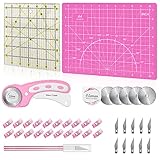
Overview: This comprehensive 39-piece rotary cutter kit provides an all-in-one cutting solution for quilters and sewing enthusiasts seeking professional tools at an entry-level price. The pink-themed set combines essential cutting instruments with safety features and accessories for immediate project startup.
What Makes It Stand Out: The kit’s exceptional completeness stands out—combining a 45mm rotary cutter with five replacement blades, a self-healing A4 mat, acrylic ruler, craft knife with ten blades, and 20 sewing clips. The ambidextrous rotary cutter features a safety lock button and SKS-7 steel blades that maintain sharpness through multiple fabric layers. The double-sided cutting mat’s self-healing property protects surfaces while extending blade life.
Value for Money: At a budget price point, this set delivers $80+ worth of tools individually purchased. The inclusion of five rotary blades and ten craft knife blades ensures years of use before replacements are needed. For beginners, it eliminates the trial-and-error of selecting compatible accessories, while experienced crafters appreciate having backup tools. Comparable Fiskars or Olfa sets cost 2-3 times more for fewer components.
Strengths and Weaknesses: Strengths: Incredible component variety; safety features ideal for beginners; ambidextrous design; sharp, durable SKS-7 steel; self-healing mat protects surfaces; exceptional price-to-value ratio. Weaknesses: A4 mat size limits large projects; rotary cutter ergonomics less refined than premium brands; no blade case included; pink color may not suit all users; craft knife blades wear faster on heavy materials.
Bottom Line: This rotary cutter set is the ultimate starter kit for quilting, sewing, and general crafts. It provides every essential cutting tool with thoughtful safety features at an unbeatable price. While serious quilters may eventually upgrade individual components, the set’s completeness and quality make it perfect for beginners, casual crafters, or as a travel kit for workshops. The value proposition is simply unmatched.
10. Fiskars 45mm Rotary Cutter for Fabric with Ergonomic Loop Grip, Premium Steel Rotary Fabric Cutter Blade for Precise Cuts, Arts and Crafts, Sewing Supplies and Quilting Tools

Overview: The Fiskars 45mm Rotary Cutter represents the industry standard for precision fabric cutting, trusted by quilters and sewists worldwide. This ergonomic tool delivers reliable performance through its premium steel blade and intuitive design, making it a staple in professional and home sewing rooms.
What Makes It Stand Out: Fiskars’ signature loop handle design provides superior comfort and control during extended cutting sessions, reducing hand fatigue significantly. The precision-ground, premium steel blade maintains sharpness through multiple layers of fabric, vinyl, and felt. The quick-change blade system allows tool-free replacement in seconds, while the sliding lock button securely retracts the blade for safe storage—a safety standard that competitors emulate.
Value for Money: Priced moderately higher than generic brands, the Fiskars cutter justifies its cost through exceptional durability and ergonomic engineering. A single blade often outlasts three cheaper alternatives, while the comfortable grip prevents strain injuries that could derail projects. For professionals who cut daily, the time saved and physical comfort provide ROI within weeks. It’s an investment in longevity rather than a disposable tool.
Strengths and Weaknesses: Strengths: Unparalleled ergonomic comfort; premium steel blade longevity; trusted brand reputation; excellent safety lock mechanism; quick, tool-free blade changes; cuts multiple layers cleanly; widely available accessories. Weaknesses: Higher initial cost; handle may feel bulky for small hands; blade replacement price premium; no mat or ruler included; limited color options.
Bottom Line: The Fiskars 45mm Rotary Cutter remains the gold standard for serious fabric artists. Its ergonomic design and blade quality justify the modest price premium over budget alternatives. While beginners might balk at the cost, those who spend hours cutting will immediately appreciate the comfort and precision. Pair it with a self-healing mat for the essential quilting toolkit that will serve reliably for years.
Understanding Electronic Cutting Machines for Quilting
Electronic cutting machines for quilting are specialized devices that use digital files to precisely cut fabric shapes, patterns, and templates with minimal manual intervention. Unlike their manual predecessors, these machines operate using either a small blade that moves across a stationary material or a rolling mechanism that feeds material through a fixed blade position. The technology has evolved significantly from early craft cutters, with modern quilting-specific models offering enhanced cutting force, specialized rotary blades, and software that understands quilting conventions like seam allowances and grain lines.
The quilting community has embraced these tools not as replacements for traditional skills, but as amplifiers of creative potential. They excel at repetitive cuts for piecing, intricate applique shapes that would be tedious by hand, and precise templates for English paper piecing. Understanding the fundamental mechanics—how these machines interpret your designs and translate them into physical cuts—is the first step toward making an informed investment that aligns with your quilting ambitions.
Key Features That Transform Your Quilting Workflow
Cutting Precision and Accuracy Standards
When evaluating electronic cutting machines for quilting, precision isn’t just a buzzword—it’s the difference between perfectly aligned points and frustrating seam mismatches. Look for machines that advertise cutting accuracy within 0.1mm tolerance. This level of precision ensures that when you cut 48 identical half-square triangles, they actually are identical. The machine’s ability to maintain consistent pressure throughout the entire cutting process prevents the “drift” that can occur with less robust models, particularly when cutting multiple layers of lightweight quilting cotton.
Speed Settings for Different Materials
A common rookie mistake is assuming faster is always better. High-quality quilting cutters offer variable speed controls that let you slow down for delicate silks or speed up for stable substrates like freezer paper templates. The sweet spot for most quilting cottons falls in the medium-speed range, allowing the blade to slice cleanly without dragging or distorting the fabric. Machines that automatically adjust speed based on material detection represent the next generation of smart cutting technology, though manual override capabilities remain essential for quilters who work with unconventional textiles.
Blade Technology Deep Dive
Rotary Blades vs. Drag Blades
The blade type fundamentally determines what your machine can achieve with fabric. Rotary blades, which spin as they cut, mimic the action of a handheld rotary cutter and excel at slicing through multiple layers of fabric without lifting or shifting the material. They handle curves gracefully and rarely cause fraying along cut edges. Drag blades, which pivot as they’re pulled through material, can achieve incredible detail but may struggle with thicker quilting sandwiches or loosely woven fabrics. For dedicated quilters, machines that accommodate both blade types offer the greatest versatility, letting you switch between intricate paper piecing templates and bulk strip cutting.
Blade Material Composition and Longevity
Blade material directly impacts both cut quality and replacement frequency. Premium machines utilize tungsten carbide or even ceramic blades that maintain sharpness through hundreds of hours of cutting. While these cost more initially, their extended lifespan translates to better value for high-volume quilters. Consider also the blade housing design—models that fully enclose the blade edge when not in use prevent accidental nicks and extend sharpness. Some advanced systems even include blade wear sensors that alert you when cutting quality degrades, eliminating the guesswork about when to replace components.
Material Compatibility and Testing Protocols
Your quilting practice likely extends beyond standard quilting cotton to include batiks, flannels, fusible webs, and perhaps even leather for labels. A machine’s true value emerges in its ability to handle this spectrum without constant adjustment. Before committing, investigate the maximum cutting thickness and the range of materials the manufacturer officially supports. More importantly, understand the testing protocol: reputable manufacturers provide detailed settings matrices showing optimal blade depth, pressure, and speed combinations for dozens of material types.
Create your own material swatch book once you purchase a machine. Cut small test shapes from every fabric in your stash, noting the exact settings that produced clean edges versus frayed disasters. This reference becomes invaluable when you return to that slippery silk or thick wool felt six months later. Pay special attention to how machines handle pre-fused fabrics—some struggle with the adhesive residue that builds up on blades, while others include non-stick blade coatings specifically for this challenge.
Software Ecosystem and Design Libraries
File Format Support and Compatibility
The machine’s hardware is only half the equation; the software determines your creative ceiling. Prioritize machines that natively accept SVG files—the universal language of vector graphics—without requiring proprietary format conversion. This compatibility opens doors to thousands of free and paid quilting patterns available online. Additionally, look for software that preserves scaling information, ensuring a 6" finished block cuts at exactly 6" regardless of the device you’re using to send the file.
Cloud vs. Desktop Applications
Modern cutting machines offer either cloud-based or desktop software, each with distinct implications for quilters. Cloud platforms provide automatic updates and access to extensive design libraries but require a stable internet connection. Desktop applications offer offline reliability and often more sophisticated design tools for creating complex quilting patterns from scratch. The hybrid approach—desktop software with optional cloud syncing—provides the best of both worlds, letting you design on your laptop at a retreat without WiFi while still accessing the manufacturer’s pattern library when back home.
Cutting Area Dimensions and Project Scaling
The maximum cutting width directly influences what you can accomplish in a single pass. Machines with 12" width handle standard quilting cotton folded in half (typically 22" wide) but require multiple passes for border strips or continuous bias binding. Wider format machines—those offering 24" or more—eliminate this limitation but demand significantly more workspace and investment.
Consider your typical project scale. If you primarily make lap quilts and wall hangings, a standard width suffices. However, if you regularly create queen-sized quilts with large-scale applique or cut backing fabrics, the efficiency gains from a wider machine justify the additional cost and floor space. Remember that cutting area also affects template production; being able to cut a full-size foundation paper piecing template in one piece versus tiling multiple sheets saves time and improves accuracy.
Machine Feeding Mechanisms Explained
Roll-Fed Systems for Continuous Cutting
Roll-fed machines pull material from a spindle, making them ideal for cutting lengthy strips or multiple copies of the same shape without manual repositioning. This mechanism shines when producing binding strips, sashing, or repetitive block components. However, the feeding process can stretch lightweight fabrics if not properly tensioned, requiring quilters to use stabilizers or starch to maintain grain integrity.
Flatbed Systems for Precision Control
Flatbed machines require you to place material on a cutting mat that moves back and forth beneath a stationary blade. This setup offers superior control over fabric placement and grain line orientation—critical for directional prints and bias-cut pieces. The mat provides stable support, preventing distortion even with delicate materials. The trade-off is manual material reloading between cuts, which slows down high-volume production but often yields better results for intricate, precision-dependent quilting patterns.
Connectivity and Integration Options
Wired vs. Wireless Data Transfer
USB connections provide reliable, fast file transfers without network dependency—crucial when working with large, complex quilting designs that contain thousands of cut lines. Wireless connectivity offers convenience, letting you send patterns from your tablet while lounging on the sofa, but introduces potential lag and connection drops at critical moments. The most robust systems offer both, allowing you to choose based on your immediate needs.
Mobile App Functionality
Some manufacturers now provide smartphone apps that let you monitor cutting progress, adjust settings remotely, and even access simplified design tools. For quilters, this means starting a cut and walking away to press seams, receiving a notification when the machine completes its work. Evaluate whether the app offers full functionality or merely basic controls—true productivity gains come from apps that match desktop software capabilities.
Operational Noise and Studio Environment
Cutting machines generate noise through motor operation, blade movement, and material feeding mechanisms. Decibel levels typically range from 50dB (comparable to a quiet conversation) to over 70dB (similar to a vacuum cleaner). This matters significantly if you quilt in a shared living space or during hours when family members sleep.
Machines with enclosed cutting heads and sound-dampening materials operate more quietly but may trap heat, affecting motor longevity. Consider your studio setup: a dedicated craft room can accommodate louder machines, while a corner of the living room demands quieter operation. Some quilters build simple sound-dampening enclosures using acoustic foam, though this requires ensuring adequate ventilation to prevent overheating.
Maintenance Schedules and Best Practices
Daily and Weekly Cleaning Routines
Fabric lint and dust are the silent killers of cutting machine precision. Establish a routine of brushing lint from the blade housing and track mechanisms after each quilting session. Weekly, remove the blade and soak it in adhesive remover if you’ve been cutting fusible fabrics. Use compressed air to clear debris from sensors and motor compartments—just hold the can upright to prevent moisture discharge.
Calibration and Alignment Checks
Even the best machines drift out of alignment over time. Monthly calibration using the manufacturer’s test patterns ensures your 2½" strips remain exactly 2½". Pay special attention to the cutting mat itself; mats develop permanent grooves after repeated cuts, which can cause blades to catch and fabric to shift. Rotate your mat regularly and replace it when cuts no longer release cleanly. Some advanced systems include auto-calibration features that run diagnostic cuts and adjust settings automatically—a worthwhile feature for quilters who prioritize consistency over tinkering.
Investment Analysis for Serious Quilters
Total Cost of Ownership
The sticker price rarely tells the full story. Factor in blade replacement costs (typically $15-40 every 3-6 months with heavy use), cutting mats ($20-60 annually), and software subscriptions if applicable. High-end machines often include starter material packs and extended warranties that offset initial costs. Calculate your cost per cut: a $400 machine used weekly for two years costs under $4 per session, while a $2,000 machine used daily for five years costs about $1 per session.
ROI for Different Quilting Styles
Your quilting style determines value. Applique artists who cut hundreds of intricate shapes see immediate ROI through time savings and reduced fabric waste. Art quilters working with fused fabrics gain precision impossible with manual cutting. However, if you primarily piece simple squares and rectangles, a cutting machine’s value proposition diminishes—unless you factor in ergonomic benefits and the ability to batch-process cutting while you sew. Consider also the resale market; machines from established brands retain 40-60% of their value after three years, effectively reducing your long-term investment.
Skill Development and Learning Resources
Community Knowledge Bases
The quilting community’s collective wisdom often surpasses official manufacturer documentation. Facebook groups, Reddit communities, and brand-specific forums contain thousands of posts troubleshooting specific fabric types, sharing optimal settings, and offering creative workarounds. Before purchasing, lurk in these communities to gauge responsiveness and the types of issues users encounter. A vibrant, helpful community indicates strong user satisfaction and provides an invaluable support network.
Tutorial Availability and Quality
Manufacturers who invest in comprehensive tutorial libraries demonstrate commitment to user success. Look for video series covering not just basic operation but advanced techniques like creating offset paths for seam allowances, nesting shapes for efficient fabric use, and troubleshooting common fabric distortion issues. The best resources include project-based tutorials that walk through complete quilt patterns, showing how cutting integrates with piecing and assembly.
Safety Features for Home Studios
Physical Safeguards
Any machine with exposed blades poses risks, especially in homes with curious children or pets. Premium models include blade retraction mechanisms that instantly withdraw the blade when the machine pauses or detects resistance. Emergency stop buttons should be prominent and immediately accessible. Consider machines with locking covers that prevent operation when open—this protects fingers during blade changes and material loading.
Thermal and Electrical Protection
Overheating protection prevents motor burnout during marathon cutting sessions for quilt-alongs or pre-retreat preparation. Surge protection guards against power fluctuations that could corrupt cutting data mid-pattern. Some machines now include auto-shutoff features that power down the device after a period of inactivity, reducing fire risks and energy consumption in home studios where quilters might forget to switch off equipment after a long day.
Space Management and Portability Factors
Footprint and Vertical Clearance
Measure your intended workspace carefully, accounting not just for the machine’s base dimensions but also the clearance needed to open covers, load material rolls, and access side ports. Machines with front-loading material paths fit better against walls than those requiring side access. Consider vertical space too—some models stand tall with material spindles, while others remain low-profile for storage under sewing tables.
Weight and Transportability
If you attend retreats or guild meetings, a machine under 25 pounds becomes manageable for transport. However, lightweight often means less robust construction and smaller cutting areas. Look for models with integrated handles and protective cases designed specifically for travel. Some quilters maintain a smaller, portable machine for events while keeping a larger workshop model at home—a strategy that maximizes flexibility but requires learning two different software ecosystems.
Environmental Impact and Sustainability
Energy Consumption Patterns
Quilting machines draw surprisingly little power during active cutting—typically 50-100 watts, less than a standard light bulb. However, standby power consumption varies significantly. Machines that completely power down after use consume zero standby energy, while those maintaining wireless connections or display screens can draw 5-10 watts continuously. For environmentally conscious quilters, this difference becomes meaningful over thousands of hours of operation.
Material Waste Reduction
Ironically, the precision of electronic cutting can reduce fabric waste by 20-30% compared to manual cutting, as software nests shapes with mathematical efficiency impossible by eye. Some machines even include “scrap mode” that analyzes leftover fabric pieces and suggests small shapes to cut from otherwise discarded remnants. Consider also the machine’s longevity—models with upgradeable firmware and replaceable motor components stay out of landfills longer, while those sealed shut become e-waste when a single component fails.
Frequently Asked Questions
How long does it typically take to learn a new electronic cutting machine for quilting?
Most quilters achieve basic proficiency within 2-3 weeks of regular use, mastering simple shapes and straight cuts. However, developing expertise in complex applique, custom pattern creation, and troubleshooting material-specific issues typically requires 3-6 months. The learning curve steepens with software sophistication—machines with streamlined, quilting-specific interfaces prove faster to master than general-purpose craft cutters with overwhelming feature sets.
Can electronic cutting machines handle pre-washed and starched fabrics effectively?
Absolutely, and they often perform better with properly prepared fabrics. Light to medium starching stabilizes fabric grain, preventing distortion during cutting. Pre-washing removes sizing that can cause blades to gum up. The key is ensuring fabrics are completely dry and pressed flat before cutting, as moisture and wrinkles interfere with sensor accuracy and cause inconsistent cuts. Some quilters prefer to cut unwashed fabric then wash after piecing, but either approach works with proper settings adjustments.
What’s the realistic maximum number of fabric layers these machines can cut simultaneously?
While manufacturer claims often advertise 8-12 layers, realistic quilting applications top out at 3-4 layers of high-quality quilting cotton. Attempting more typically results in frayed edges on bottom layers and accelerated blade dulling. For strip piecing and mass production of simple shapes, stacking works beautifully. For intricate applique or pieces requiring absolute precision, single-layer cutting yields superior results. The sweet spot for most quilters is 2 layers—doubling productivity without sacrificing quality.
Do I need a computer science degree to operate the design software?
Not at all. Modern quilting software prioritizes user experience, often including drag-and-drop interfaces and pre-loaded quilting shape libraries. Basic operations require no more technical skill than using a smartphone app. The complexity emerges when creating original designs from scratch or manipulating vector paths, but thousands of free tutorials break these processes into digestible steps. If you can operate a sewing machine’s computerized functions, you can master cutting machine software.
How often will I actually use this machine compared to my rotary cutter?
Usage patterns shift dramatically after the initial honeymoon phase. Most quilters report using electronic cutters for 60-70% of their cutting tasks within six months of purchase. The rotary cutter remains essential for quick trims, squaring up blocks, and cutting shapes too large for the machine’s capacity. Many quilters develop a hybrid workflow—machine cutting for complex or repetitive pieces, manual cutting for improvisation and final adjustments. The machine becomes indispensable for applique and foundation paper piecing, while simple strip piecing might still happen manually.
What happens when the machine miscuts—do I lose expensive fabric?
Miscuts happen, but they’re rarely catastrophic. Most errors occur during the first cut of a new material type when settings aren’t dialed in. Savvy quilters always test on scrap fabric first. When miscuts do occur, they’re typically clean, complete cuts that waste just that single piece rather than the jagged, partial cuts common with manual errors. Some machines include “test cut” functions that cut a small square in the fabric’s corner, letting you verify settings before committing to the full pattern.
Are these machines suitable for cutting batting and fusible fleece?
Yes, with caveats. Low-loft cotton batting cuts cleanly with rotary blades and medium pressure. High-loft polyester batting may compress and spring back, resulting in inaccurate cuts. Fusible fleece and interfacing cut beautifully but leave adhesive residue on blades, necessitating frequent cleaning with adhesive remover. Always place interfacing adhesive-side-down when cutting to minimize blade gumming. For best results, consider investing in a separate blade dedicated solely to adhesive materials.
How do electronic cutters handle directional prints and fabric grain?
This is where software control becomes crucial. Quality quilting software includes grain line indicators and rotation tools that let you align pattern pieces precisely on directional prints. You can visually position each piece on a digital fabric scan before cutting, ensuring motifs face the right direction. For grain-critical pieces like bias binding or pieces requiring stretch control, the ability to lock piece orientation relative to the fabric’s weave is non-negotiable. Always cut directional fabrics single-layer to maintain control.
What’s the lifespan of a well-maintained electronic cutting machine?
With proper care, expect 5-7 years of reliable service from a mid-range machine and 8-10 years from a professional-grade model. The limiting factor is often software compatibility—older machines may not support newer operating systems. Machines with replaceable motors and upgradeable firmware extend usable life significantly. Blade housings and feeding mechanisms typically show wear first; choosing models with readily available replacement parts prevents premature retirement. Regular maintenance matters more than purchase price in determining longevity.
Can I share digital patterns with friends who own different machine brands?
Generally, yes for basic SVG files, which most machines import. However, proprietary features like built-in seam allowances or pre-optimized cut settings may not transfer between brands. Some manufacturers use encrypted file formats that lock you into their ecosystem. When building a pattern library, prioritize universally compatible formats and maintain original SVG files. For collaborative quilt projects, establish a shared file format standard early—SVG ensures everyone can participate regardless of machine brand, while preserving your pattern investment if you switch manufacturers later.
See Also
- 10 Best Craft Cutting Machines for Multi-Material Projects This Year
- 10 Best Cutting Machines for DIY Craft Projects This Year
- We Tested 50 Electronic Cutting Machines - Here are the 10 Best for Vinyl Projects
- 10 Best Vinyl Cutting Machines for Home Crafters This Year
- The 10 Best Digital Cutting Machines for DIY Projects in 2026