Table of Contents
There’s something deeply satisfying about creating your first leather project—that moment when your design takes physical form and you need clean, precise holes for stitching, hardware, or decoration. But here’s the reality check that stops many budding leatherworkers in their tracks: professional-grade leather punch tools can cost more than your entire starter material budget. The good news? You don’t need to drop a fortune to get reliable, accurate results. For hobbyists exploring leather crafting as a creative outlet, budget-friendly punch tools under $30 can deliver surprisingly professional results when you know what to look for.
The key is understanding that “budget” doesn’t have to mean “disposable.” The market has evolved dramatically, with manufacturers now offering decent-quality entry-level tools that prioritize the features hobbyists actually need while trimming the premium extras that professionals demand. Whether you’re crafting your first wallet, repairing a beloved belt, or experimenting with leather jewelry, the right sub-$30 punch tool can be your faithful companion for dozens of projects. This guide cuts through the marketing noise to help you identify the quality indicators, avoid the common pitfalls, and make an informed decision that keeps both your wallet and your leatherwork happy.
Top 10 Leather Punch Tools For Hobbyists
Detailed Product Reviews
1. General Tools Leather Hole Punch Tool - 6 Multi-Hole Sizes for Leather, Rubber, & Plastic - Hobbies & Crafts 8.5 inches
 Tool - 6 Multi-Hole Sizes for Leather, Rubber, & Plastic - Hobbies & Crafts 8.5 inches](https://m.media-amazon.com/images/I/3134AB94voL._SL160_.jpg)
Overview: The General Tools Leather Hole Punch is an 8.5-inch plier-style tool engineered for punching clean holes in leather, rubber, plastic, and fabric. It features six hardened steel punches from 5/64" to 3/16" on a revolving turret, allowing rapid size changes. The plated steel construction and comfortable grips make it suitable for extended hobby or light commercial use, handling belts, straps, and craft projects efficiently.
What Makes It Stand Out: Its revolving punch head delivers unmatched convenience—rotate to select your size without tool changes. The self-opening mechanism automatically resets after each punch, accelerating repetitive tasks. General Tools’ precision engineering ensures sharp, non-clogging hollow punches that create clean holes. This design excels for belts, watch bands, and pet collars where consistency matters.
Value for Money: This mid-range tool consolidates six punches into one, offering significant savings over buying individual hollow punches. The heavy-duty plated steel construction ensures years of service, making it a smart investment for DIYers. Light commercial users benefit from its durability and speed for small production runs.
Strengths and Weaknesses: Strengths include quick size transitions, ergonomic comfort, versatile material handling, and robust build quality. Weaknesses are limited precision on thick leather, no metric markings, and potential alignment issues on curved surfaces. It may not replace a mallet-driven punch for heavy saddle work.
Bottom Line: An outstanding choice for general-purpose hole punching. Perfect for DIY enthusiasts working on belts, bags, and crafts. While not ideal for industrial applications or precision leather artistry, it delivers reliable, convenient performance for 90% of common projects.
2. UNCO- Hollow Leather Hole Punch Set, 6 pcs, Steel, Leather Hole Punch Tool, Leather Punch Tool, Hole Punch for Leather Punch Set, Hollow Punch Set, Gasket Hole Punch Set, Hollow Hole Punch Set

Overview: The UNCO Hollow Leather Hole Punch Set comprises six individual carbon steel punches sized from 1.5mm to 4mm. Unlike plier-style tools, these traditional hollow punches require a mallet and offer superior control for precision leatherwork. The knurled handles provide secure grip, while the rust-resistant construction ensures longevity. This set caters to both professional leatherworkers and serious hobbyists seeking clean, accurate holes for belts, bags, and accessories.
What Makes It Stand Out: Each punch operates independently, allowing targeted pressure application and exceptional accuracy on delicate projects. The knurled handle design prevents slippage during use, crucial for maintaining hole alignment. Carbon steel construction offers excellent edge retention, while the size range covers most fine leatherworking needs. This traditional approach provides tactile feedback impossible with plier mechanisms.
Value for Money: This affordable set delivers professional-grade quality at a budget-friendly price point. Individual replacement is economical if one punch dulls. For artisans prioritizing precision over speed, this set outperforms multi-tools. The carbon steel durability ensures a long service life, representing excellent long-term value.
Strengths and Weaknesses: Strengths include pinpoint precision, individual tool control, superior material feel, and replaceable components. Weaknesses involve requiring a mallet, slower workflow for multiple holes, and potential for uneven pressure from inexperienced users. Storage organization is less convenient than integrated tools.
Bottom Line: Ideal for dedicated leather crafters who value precision and control above speed. Perfect for fine accessories, detailed work, and professional results. Not suited for quick belt adjustments or high-volume punching, but unmatched for quality craftsmanship.
3. Aiskaer Leather Stitching Punch Set, Diamond Chisel Tools, 4mm White Steel 1/2/4/6 Prong for Leather Craft DIY
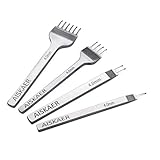
Overview: The Aiskaer Leather Stitching Punch Set is a specialized tool for creating diamond-shaped holes for hand-stitching, not round holes. It includes 1, 2, 4, and 6-prong chisels with 4mm spacing, crafted from white steel. Each 100mm tool features polished handles and sharp rhombus teeth for effortless punching. The set comes with a plastic box, velvet bag, and manual—ideal for both beginners and experts in leathercraft.
What Makes It Stand Out: These diamond chisels produce slotted holes that allow saddle stitching to sit flush, creating professional-grade seams. The multiple prong configurations enable both straight lines and curves. White steel construction offers exceptional hardness and edge retention. The 4mm spacing matches traditional leatherworking standards, ensuring compatibility with common thread sizes. This design creates stronger, more beautiful seams than awls.
Value for Money: As a specialized tool set, it offers excellent value for leatherworkers focused on hand-stitching. The four configurations eliminate the need for separate purchases. While pricier than basic round punches, the quality justifies the cost for serious artisans. Beginners gain professional tools that won’t need upgrading as skills advance.
Strengths and Weaknesses: Strengths include creating perfect stitching holes, multiple prong options, premium white steel, and comprehensive kit. Weaknesses are the initial oil coating requiring cleaning, unsuitability for round holes, and potential for prong misalignment on thick leather. Not a general-purpose hole punch and requires practice.
Bottom Line: Essential for hand-stitching leather projects like wallets, bags, and sheaths. Delivers professional seam quality unavailable with round punches. Not suitable for general hole punching needs, but indispensable for its intended purpose. A must-have for serious leather artisans.
4. Revolving Punch Plier Kit, XOOL Leather Hole Punch Set for Belts, Watch Bands, Straps, Dog Collars, Saddles, Shoes, Fabric, DIY Home or Craft Projects, Heavy Duty Rotary Puncher, Multi Hole Sizes Make

Overview: The XOOL Revolving Punch Plier Kit is a heavy-duty plier-style tool designed for punching round holes in leather, fabric, plastic, and rubber. It features six sharp tapers from 2mm to 4.5mm on a rotating head. Constructed from plated steel with a brass safety pad, it incorporates a double-lever mechanism for enhanced power. The ergonomic, anti-slip handle and safety lock make it suitable for extended DIY or light commercial use.
What Makes It Stand Out: The double-lever mechanism multiplies force, requiring minimal hand strength while delivering powerful penetration. A brass safety pad protects users and ensures clean punches. The safety lock at the bottom allows compact storage. Six sharp tapers handle various materials efficiently, and the one-handed operation enables excellent control. The spray lacquer finish prevents oxidation.
Value for Money: Positioned competitively, this tool offers professional features at a consumer price. The added safety features and cleaning rod enhance value. For users with limited hand strength or high-volume needs, the ergonomic design justifies the cost over basic models. It replaces multiple individual tools economically.
Strengths and Weaknesses: Strengths include effortless operation, safety features, ergonomic comfort, and versatile sizing. Weaknesses involve occasional alignment issues on thick materials, the 4.5mm maximum may be small for some applications, and the plier mechanism requires more storage space than individual punches. Not for industrial leather thickness.
Bottom Line: An excellent choice for users prioritizing ease of use and safety. Perfect for belts, dog collars, and craft projects. The ergonomic design suits those with arthritis or limited strength. While not for heavy industrial leather, it delivers reliable performance for most home and craft applications.
5. TLKKUE Adjustable Leather Hole Punching Tool Automatic Puncher with Wooden Handle Hollow Hole Punch with 6 Tips Size (1.5mm/2mm/2.5mm/3mm/3.5mm/4mm) for Leather Belt, Bag, Wristband

Overview: The TLKKUE Adjustable Leather Hole Punch is a Japanese-style screw punch featuring a wooden handle and six interchangeable tips from 1.5mm to 4mm. The brass connecting rod resists rust while providing smooth operation. Users press vertically to create clean holes in leather, paper, plastic, and rubber. This 130mm tool emphasizes precision and user comfort, making it suitable for detailed craft work and DIY projects where control is paramount.
What Makes It Stand Out: The traditional wooden handle offers superior comfort and aesthetic appeal compared to plastic alternatives. The screw mechanism ensures perfectly perpendicular holes every time, eliminating angle inconsistencies. Interchangeable tips provide versatility while maintaining a compact footprint. The brass rod adds durability and smooth action. This design excels in delicate work where precision trumps speed.
Value for Money: This specialized tool offers good value for crafters needing precision over volume. The wooden handle and brass components justify a slightly higher price than basic steel punches. For leatherworkers creating fine accessories or paper crafts, the accuracy prevents material waste. It’s an investment in quality for specific applications.
Strengths and Weaknesses: Strengths include exceptional precision, comfortable wooden grip, perpendicular punching action, and quality materials. Weaknesses involve slower workflow for multiple holes, potential for tip loss, and requiring more skill than plier tools. Not ideal for thick leather or high-volume production. Tip changes interrupt workflow.
Bottom Line: Perfect for artisans focused on precision work like leather jewelry, fine bags, or paper crafts. The Japanese design delivers accuracy impossible with plier tools. Not suited for quick belt adjustments or heavy materials, but indispensable for detailed projects where hole quality is critical. A specialized tool for discerning crafters.
6. JIDOLAR Leather Circle Cutter Tool Set, 13 Pieces Small Circle Punch Tools 1/3/5/7/9/11/13/15/17/19/21/23/25mm, High Carbon Steel Round Cutting Dies - Leather Hole Punch Tool Kit for DIY Leathercrafts

Overview: The JIDOLAR Leather Circle Cutter Tool Set is a comprehensive 13-piece kit engineered for precision leatherwork. With punch sizes spanning from 1mm to 25mm, this high carbon steel collection handles everything from delicate detail work to substantial grommet holes. Each punch measures 24mm in height for stable grip and 0.71mm in thickness for professional-grade durability, making it suitable for both beginners and experienced crafters.
What Makes It Stand Out: The premium aluminum storage case distinguishes this set, providing organized portability that prevents loss. The innovative 2-in-1 rubber ruler mat solves two common problems: quick size identification and workbench protection. Unlike competitors, JIDOLAR’s ultra-sharp edges deliver consistently clean cuts without ragged edges. The stepped size increments eliminate guesswork, while the multi-material compatibility extends beyond leather to heavy fabrics and polymer clay.
Value for Money: This kit justifies its price through professional-grade construction and exceptional range. Purchasing 13 individual punches of comparable quality would cost substantially more. The included storage case and protective mat add significant value, making it a cost-effective investment for serious leathercrafters who require versatility and precision in one package.
Strengths and Weaknesses: Strengths include the extensive 1-25mm range, razor-sharp cutting edges, premium storage solution, and protective mat. The high carbon steel ensures longevity. Weaknesses involve the fragility of the smallest 1mm punch, which demands careful handling. The size markings on punches could be more prominent, and the metric-only sizing may not suit imperial-focused users.
Bottom Line: Perfect for dedicated leathercrafters, jewelry makers, and professionals needing versatility and precision. The JIDOLAR set delivers exceptional quality and organization that justifies the investment for serious DIY enthusiasts.
7. Diyife Professional Leather Hole Puncher, Full Set Punch Tool Kits for Belt, Watch Band, Shoe, Crafting, Handbag Straps, Fabric, with Extra Punch Plates and Ruler, Multi Hole Sizes Make - Blue

Overview: The Diyife Professional Leather Hole Puncher is a rotary-style plier tool designed for comfort and efficiency. Featuring six sizes from 2mm to 4.5mm, this blue-handled tool targets common leatherworking tasks like belts, watch bands, and handbag straps. The double lever mechanism and PVC handles prioritize user experience for both occasional and frequent use across various materials.
What Makes It Stand Out: The ergonomic double lever design dramatically reduces hand fatigue, making it ideal for users with arthritis or limited grip strength. The rotating head enables instant size changes without tool swapping. The comprehensive kit includes two spare punch plates, a screwdriver, and a clear ruler—everything needed for immediate project starts. The safety lock buckle provides secure storage and space-saving convenience.
Value for Money: This tool offers excellent value for frequent users who prioritize comfort. While costing more than basic punch sets, the ergonomic benefits and included accessories justify the price. The plated steel construction with anti-oxidation coating ensures long-term reliability, making it a smart investment for regular leatherworkers who value efficiency and hand comfort.
Strengths and Weaknesses: Strengths include effortless operation, comfortable non-slip handles, safety lock feature, and comprehensive accessory package. The brass plating adds safety. Weaknesses include the limited six-size range, which may not suit projects requiring very small or large holes. The tool may struggle with extremely thick leather despite its leverage advantage, and the blue finish may wear over time.
Bottom Line: An outstanding choice for hobbyists and professionals who punch holes regularly. The Diyife puncher excels in comfort and convenience, making leatherwork accessible and enjoyable for users of all skill levels and hand strengths.
8. OWDEN Professional 6Pcs. Leather Hollow Punch Set. Size: 1.0-5.0mm for Belt, Watch Band and Strap Gasket. with a Free mini Cutting mat.

Overview: The OWDEN Professional 6-Piece Leather Hollow Punch Set delivers precision in a slim, streamlined package. With sizes from 1.0mm to 5.0mm, this set focuses on the most commonly needed dimensions for belts, watch bands, and detailed leatherwork. Each punch features laser-marked sizing and a rust-resistant black finish. The set arrives in a red PVC pouch with a free mini cutting mat for workbench protection.
What Makes It Stand Out: The slim profile design ensures superior verticality and control during punching, reducing the risk of angled holes that plague bulkier tools. Laser-etched size markings remain permanently visible, unlike stamped markings that wear away. The black finish provides excellent rust prevention, while the mini cutting mat offers basic surface protection. Each punch bears the OWDEN logo for authenticity.
Value for Money: This moderately priced set offers professional quality without unnecessary extras. The focused size range prevents paying for diameters you’ll never use, making it a cost-effective choice for craftspeople specializing in fine leatherwork. For targeted applications like watch repair and belt adjustments, this represents a smart investment that prioritizes precision over quantity.
Strengths and Weaknesses: Strengths include the precise sizing, comfortable slim design, permanent laser markings, and effective rust prevention. The size range is perfect for detailed work. Weaknesses include the limited six-size range, which lacks versatility for larger projects. The mini mat is smaller than ideal for bigger workpieces, and the basic PVC pouch offers minimal protection compared to hard cases. The small sizes require careful handling.
Bottom Line: Ideal for watchmakers, belt repair specialists, and detail-oriented crafters. The OWDEN set prioritizes precision and durability in a compact, professional package that delivers exactly what fine leatherworkers need without unnecessary bulk or cost.
9. Spurtar 12 PCS Steel Hollow Leather Punch Set 1/8’’-3/4’’(3-19mm) Heavy Duty Round Hole Punch Set Leather Hole Tool for Watch Cloth Belt Gaskets w/Storage Bag

Overview: The Spurtar 12-Piece Steel Hollow Leather Punch Set offers heavy-duty performance across a comprehensive inch-based size range. From 1/8" to 3/4" (3-19mm), these heat-treated carbon steel punches handle gaskets, leather, canvas, and rubber with ease. The knurled bodies provide secure grip during use, while precision-ground flutes ensure clean cuts. The canvas roll pouch enables easy storage and transport.
What Makes It Stand Out: The inch-based sizing caters to traditional craftspeople and industrial applications where imperial measurements remain standard. The knurled grip pattern ensures slip-free operation even with oily hands. The canvas roll pouch provides excellent portability and quick visual identification of sizes. Heat treatment guarantees long-term sharpness and durability under heavy use that exceeds standard carbon steel tools.
Value for Money: This set delivers exceptional value for those needing imperial measurements. The heavy-duty construction suits both professional and DIY use. While lacking premium features like a storage case or mat, the core quality and wide range justify the affordable price point, making it accessible for budget-conscious buyers who need reliable performance without frills.
Strengths and Weaknesses: Strengths include durable heat-treated steel, secure knurled grip, wide 12-size range, and portable roll pouch. The metric conversions add convenience. Weaknesses include potential frustration for metric-only users. No protective mat is included, and punches lack prominent size markings. The largest sizes require significant hammer force and a sturdy backing surface. The canvas pouch offers minimal impact protection.
Bottom Line: A robust, practical choice for general purpose punching and gasket work. The Spurtar set excels in durability and imperial sizing versatility for traditional craftspeople, mechanics, and DIYers who value function over fancy packaging.
10. UNCO- Leather Hole Punch Tool Set, Red Handle, Multi Punch Sizes, Belt Hole Puncher for Leather, Belts, Straps, Pet Collars, Shoes, Saddles, Canvas & DIY Crafts, with Grommet Eyelet Kit 100 Set

Overview: The UNCO Leather Hole Punch Tool Set combines a rotary punch with a 100-piece grommet and eyelet kit. The red-handled tool features multiple punch sizes for leather, belts, straps, pet collars, shoes, and canvas. This all-in-one solution targets DIY enthusiasts and professionals who need both punching and finishing capabilities in a single package for diverse crafting and repair projects.
What Makes It Stand Out: The inclusion of 100 grommets and eyelets transforms this from a simple punch tool into a complete hole-finishing system. The ergonomic red handle provides excellent leverage and visibility in a busy workspace. The rotary design enables quick size changes without tool swapping, while the durable construction ensures reliable performance across various materials from delicate fabrics to thick saddlery leather.
Value for Money: This kit offers outstanding value by combining two essential functions. Purchasing punches and grommets separately would cost significantly more. The convenience of having everything in one package justifies the price for DIYers tackling multiple projects, from belt adjustments to pet collar customization, making it a budget-friendly complete solution.
Strengths and Weaknesses: Strengths include the integrated grommet kit, comfortable ergonomic handle, versatile applications, and rotary convenience. The safety lock adds storage security. Weaknesses include unspecified punch sizes in the title, requiring further investigation. The grommet quality and size variety are unknown. The tool may not match the precision of individual hollow punches for delicate work, and the red finish may show wear over time.
Bottom Line: Perfect for hobbyists and DIYers seeking a complete solution for leather projects. The UNCO set excels in convenience and versatility, making it ideal for customizing belts, pet accessories, and crafting projects where hole reinforcement is essential, offering unmatched utility for the price.
Understanding Leather Punch Tools
Before diving into budget considerations, you need to understand the fundamental mechanics of how leather punches work. Unlike simple paper punches that crush material between blades, quality leather punches use sharp, tubular cutting edges that shearingly separate fibers, creating clean holes without tearing or stretching the material. This cutting action is what separates a $5 disappointment from a $25 workhorse that’ll last for years.
What Makes a Leather Punch Different?
Leather punches are specifically engineered for fibrous, dense materials. The cutting edges are typically angled and sharpened to a precise bevel that slices rather than compresses. This matters because leather’s layered structure responds poorly to crushing force—you’ll end up with elongated, ragged holes that weaken your project. Budget tools that respect this principle use carbon steel or hardened stainless steel tubes, even if they cut corners elsewhere. The diameter tolerances are also tighter than generic hole punches, ensuring your holes match hardware specifications exactly.
Types of Leather Punches
The term “leather punch” actually encompasses several distinct tool categories, each serving different purposes. Drive punches are solid metal tubes you strike with a mallet, offering maximum power for thick leather. Rotary punches feature a wheel of different-sized tubes, providing convenience for multiple sizes. Plier-style punches work like hand-held hole punchers, perfect for thin to medium leather and quick projects. Tube punches with lever action offer a middle ground between drive and plier styles. Understanding these categories helps you prioritize which tool type aligns with your typical projects before even looking at price tags.
Why Budget Tools Make Sense for Hobbyists
Investing hundreds in professional tools before you know if leather crafting is your passion is like buying a professional chef’s knife set before you’ve boiled your first egg. Hobbyists typically work on smaller-scale projects—wallets, key fobs, journal covers—that don’t require industrial-grade durability. A well-chosen budget tool handles these applications perfectly while letting you develop your technique and preferences. Many seasoned leatherworkers keep their first budget punch in their kit years later for quick prototypes or travel crafting sessions.
The economics are compelling: for the price of one premium punch, you can acquire an entire starter set of budget tools, giving you versatility to experiment. This is particularly valuable when you’re still discovering whether you prefer thick, rustic projects or delicate, detailed work. Budget tools also remove the psychological barrier of “ruining expensive equipment”—you’re more likely to practice and take creative risks when you’re not worried about wearing out a $100 tool.
Key Features to Evaluate
When every dollar counts, you need a systematic approach to evaluating features. Focus on the non-negotiables that directly impact performance, and learn which compromises are acceptable at this price point.
Material Quality and Durability
Even under $30, material quality varies dramatically. Look for punches made from high-carbon steel rather than mystery metal alloys. Carbon steel holds an edge better and resists deformation under pressure. Check product descriptions for terms like “hardened,” “tempered,” or specific steel grades like 45# steel (a common budget-friendly grade). Avoid anything described merely as “metal” or “steel alloy” without specifics—these often translate to soft, quick-dulling tools.
The handle material matters too. Solid wood or reinforced polymer handles outlast hollow plastic ones. For plier-style punches, check if the handles are riveted or bolted together rather than simply pressed—riveted joints withstand repetitive squeezing force far better.
Punch Size Variety
A single punch is limiting; a set with multiple sizes expands your creative possibilities exponentially. Budget sets typically include 2mm to 5mm sizes, covering most hardware and stitching needs. Pay attention to how sizes are distributed—a set with 2mm, 2.5mm, 3mm, 4mm, and 5mm offers more practical versatility than one with 1mm jumps between each size. The 2.5mm and 3mm sizes are workhorses for standard rivets and stitching, so ensure these are included in any multi-size set you consider.
Handle Ergonomics
Your hands will thank you for prioritizing ergonomics, especially during longer crafting sessions. Look for handles with slight contouring or padding, even at budget prices. The distance between handles when open should match your grip strength—too wide and you’ll fatigue quickly; too narrow and you lose leverage. For mallet-driven punches, the top surface should be flat and slightly wider than the tube to prevent glancing blows and protect your fingers.
Cutting Mechanism Design
Examine how the cutting tube aligns with the base or anvil. Precision alignment ensures clean cuts and prevents the tube from dulling prematurely against metal. In rotary punches, check that the wheel locks securely into each size position without wobbling. For plier styles, the hinge should operate smoothly without lateral play. These mechanical details separate frustrating tools from reliable ones.
Spring-Loaded vs Manual Action
Many budget plier-style punches include return springs that automatically open the handles after each punch. While convenient, these springs are often the first component to fail in sub-$30 tools. Manual-action punches without springs typically last longer and offer better tactile feedback. If you opt for spring-loaded, ensure the spring is accessible for replacement or removal—some budget tools use enclosed springs that can’t be serviced when they inevitably break.
Price vs Performance Expectations
Setting realistic expectations prevents disappointment. At the under $30 price point, you’re shopping for tools that perform reliably for intermittent hobby use, not daily professional production. A $25 rotary punch might handle 20-30 projects beautifully before showing wear, while a $200 professional model is built for 200+ projects.
The performance gap narrows significantly for thin to medium leather (2-6 oz). Budget tools excel here, often matching premium tools cut-for-cut. Where you’ll notice limitations is in thick leather (8+ oz), where budget tubes may deform slightly or require more force. Edge retention is another difference—budget steel needs more frequent sharpening, but that’s a skill worth learning anyway.
Think of budget tools as high-performance trainers. They’ll teach you proper technique, help you understand your preferences, and produce excellent results. When you eventually upgrade, you’ll know exactly which features justify the premium because you’ve lived without them.
Essential Punch Sizes for Beginners
Building your first toolkit strategically saves money and frustration. Start with these three must-have sizes before expanding:
2.5mm (3/32 inch): The universal stitching hole size for most projects. Works with standard waxed thread and creates holes large enough for needles to pass through easily without weakening the leather.
3mm (1/8 inch): Perfect for small rivets, snaps, and decorative studs. This size also works well for lacing on thinner leather.
4mm (5/32 inch): Handles larger hardware like bigger rivets and Chicago screws. Essential for belt holes and strap adjustments.
Once you have these three, consider adding a 2mm for fine detail work and a 5mm for heavy-duty hardware. This progression ensures you’re buying sizes you’ll actually use rather than collecting a full set where half the tools gather dust.
Build Quality Indicators
Learning to spot quality through product photos and descriptions is crucial when shopping online for budget tools. Several tell-tale signs reveal whether a tool is a hidden gem or a waste of money.
Steel Grading Basics
Budget tools rarely advertise premium steel grades, but you can infer quality from specific terminology. Look for “SK5 high carbon steel” or “chrome vanadium steel”—these are legitimate budget-friendly grades used in decent tools. “Heat-treated” or “hardened to HRC 55-60” indicates proper tempering. Be wary of vague terms like “industrial steel” or “tool-grade metal”—these are marketing fluff that often disguises low-quality materials.
The finish also tells a story. A clean, consistent plating (black oxide or nickel) suggests better manufacturing than patchy or thin coatings. However, don’t dismiss uncoated carbon steel—it develops a protective patina and often indicates the manufacturer prioritized the cutting edge over cosmetic finishing.
Handle Construction
For plier-style punches, examine the pivot point in product images. A visible rivet or bolt with a washer indicates stronger construction than a simple pressed pin. The handles should close parallel to each other without twisting—any visible misalignment in photos will be magnified under use.
Wooden handles should show end-grain on the top surface, indicating the wood was cut properly to prevent splitting along the grain. Plastic handles should feel solid (check reviews for “hollow” complaints) and have a slight texture to prevent slipping.
Maintenance and Care
A $20 tool maintained properly will outlast a $30 tool neglected. Budget leather punches reward care with surprising longevity, often serving for years with minimal upkeep.
Cleaning Your Punches
After each use, wipe the cutting tube with a dry cloth to remove leather dust and oils. Monthly, apply a drop of mineral oil or sewing machine oil to the cutting edge and hinge points. Avoid WD-40—it leaves a residue that attracts dust. For stuck leather bits inside the tube, use a wooden toothpick never metal, which can scratch the interior and affect cutting performance.
If you work with dyed leather, the pigment can stain and slightly dull the cutting edge over time. A cotton swab dipped in isopropyl alcohol cleans this buildup without damaging the steel. Always dry thoroughly after any liquid cleaning to prevent rust.
Sharpening Techniques
Even budget punches need occasional sharpening. The good news: it’s easier than you think. Use a slip stone or chainsaw file (both under $10) to gently hone the interior bevel of the tube. Work in circular motions, maintaining the existing angle—typically 20-25 degrees. Five to ten light strokes are usually sufficient.
Test sharpness by punching a scrap of leather; a sharp tool cuts with minimal pressure and leaves clean edges. Sharpen when you notice increased effort or ragged holes. Over-sharpening wears down the tube faster, so sharpen only when performance drops.
Storage Solutions
Proper storage prevents the #1 cause of budget tool failure: impact damage. Store punches in a roll-up tool wrap or dedicated slots in a tool box where they won’t bang against other metal tools. For rotary punches, engage the lock mechanism when not in use to prevent the wheel from rotating and dulling the tubes against the base.
A simple DIY solution: cut sections of foam pool noodle or pipe insulation to slide over each punch tube. This protects the edges and prevents accidental finger pokes. For plier-style tools, wrap a rubber band around the handles to keep them closed, reducing stress on the hinge.
Common Mistakes to Avoid
Learning from others’ errors saves you time, money, and frustration. These are the pitfalls that specifically plague hobbyists shopping in the budget category.
Choosing Too Many Sizes Initially: It’s tempting to buy a 10-size set for $25, but you’ll likely use only 3-4 sizes regularly. The unused punches waste money and clutter your workspace. Start with the essential trio mentioned earlier.
Ignoring Leather Thickness Ratings: Budget tools often specify maximum leather thickness. Exceeding this bends the tubes and ruins the tool permanently. A punch rated for 6oz leather will struggle with 8oz belt leather. Be realistic about your project needs.
Overlooking Replacement Parts: Some budget rotary punches have replaceable tubes; others are disposable. Check if replacement tubes are available before buying. A $20 tool with $5 replacement tubes is more economical long-term than a $15 disposable tool.
Prioritizing Comfort Over Function: Ergonomic grips are nice, but not if the cutting mechanism is poorly made. A slightly uncomfortable tool that cuts cleanly is fixable with padded gloves; a comfortable tool that makes ragged holes is useless.
Safety Considerations
Budget tools don’t include the safety features of professional models, so you must be more vigilant. Always punch on a self-healing cutting mat or nylon pounding board—never wood, which dulls edges instantly. For drive punches, hold the tool perpendicular to the leather and strike with a polymer or rawhide mallet, not a metal hammer that can shatter the punch top.
Wear safety glasses, especially with drive punches. A glancing blow can send the punch flying. Keep fingers at least 2 inches from the cutting tube; budget tools may not have finger guards. When punching thick leather, make several lighter taps rather than one heavy blow—this reduces the chance of the punch slipping and gives you better control.
Store tools out of reach of children. The sharp tubes look intriguing but can cause serious injury. A simple padlock through the handles of plier-style tools prevents curious hands from opening them.
Project-Specific Recommendations
Different leather projects demand different punch characteristics. Matching your tool choice to your primary project type ensures better results than a one-size-fits-all approach.
Best for Thin Garment Leather
Working with soft, thin leather (2-4 oz) for items like earrings, flowers, or clothing accents requires precision over power. A spring-loaded plier punch with smaller sizes (1.5mm-3mm) excels here. The spring action speeds repetitive punching, and the controlled pressure prevents crushing delicate leather. Look for models with a see-through alignment window—a feature appearing on some budget tools—that helps you position holes perfectly.
Best for Thick Belt Leather
Belts, straps, and heavy bags (8-10 oz leather) need serious cutting power. Here, drive punches are your best budget bet. A set with 3mm, 4mm, and 5mm sizes gives you versatility for hardware and buckle holes. The manual mallet action provides the force needed without stressing a mechanical hinge. Choose punches with reinforced tops that won’t mushroom under repeated hammering—look for a slightly flared or thickened striking surface in product photos.
Where to Shop for Budget Tools
Not all retailers are created equal when hunting for sub-$30 leather tools. Online marketplaces like Amazon and eBay offer the widest selection and price comparison, but filter for 4+ star ratings and read recent reviews critically. Look for reviewers who mention specific project types similar to yours.
Craft store chains (Michaels, Joann, Hobby Lobby) stock budget-friendly options and frequently offer 40-50% off coupons, bringing $35 tools under your $30 threshold. The advantage here is easy returns if the tool disappoints.
Hardware stores sometimes surprise with hidden gems in their punch and awl sections. Their tools are often more durable than craft-specific budget brands because they’re designed for general utility use.
Direct-from-manufacturer websites occasionally run clearance sales on previous generation models. Signing up for newsletters from tool companies can alert you to these deals, though shipping may eat into your savings.
Avoid dollar stores and discount bins—these tools are universally too soft to be useful and will frustrate you into quitting. Spend the extra $10-15 for something serviceable.
Warranty and Return Policies
A warranty on a sub-$30 tool speaks volumes about manufacturer confidence. Look for at least a 90-day warranty against defects. Some budget brands offer 1-year warranties, which is exceptional at this price point. Read the fine print—many warranties don’t cover normal wear or misuse, which includes punching leather thicker than rated.
Return policies are your safety net. Purchase from retailers with 30-day return windows and keep all packaging until you’ve tested the tool thoroughly. Test on scrap leather similar to your project thickness within the first week. If it struggles or shows defects, return it immediately rather than “making it work.”
Save digital receipts and take photos of the tool upon arrival. This documentation helps with warranty claims if the tool fails months later. Some manufacturers require registration within a specific timeframe to activate warranty coverage—a step worth taking for tools you plan to keep long-term.
DIY Alternatives and Hacks
Sometimes the best budget tool is a modified item you already own. While not replacements for proper punches, these hacks can fill gaps in your toolkit.
Modified Nail Set: A hardened steel nail set (the kind used for finishing nails) can punch small holes in thin leather. Grind the tip to a slight bevel and polish it. Cost: $3-5 if you don’t have one.
Copper Pipe Cutter: A small tube cutter from the plumbing section, used without the cutting wheel, can create clean holes in soft leather up to 4 oz. The sharp edge of the tube acts like a drive punch when tapped. Cost: $8-12.
Sharpening Rod Guide: Use a ceramic sharpening rod as a mandrel to maintain tube shape while you sharpen the interior bevel of a dull punch. This prevents ovaling the tube during sharpening.
Leather Pad “Anvil”: Glue layers of thick leather scraps together to create a forgiving punching surface that protects your tools better than wood but costs nothing.
These hacks work in a pinch but lack the precision and durability of even budget punches. Use them to supplement, not replace, your primary tools.
Frequently Asked Questions
What thickness of leather can budget punches handle?
Most sub-$30 punches reliably handle leather from 2 oz (thin garment) to 6 oz (medium weight). Rotary and plier-style budget tools typically max out at 6 oz, while drive punches can manage 8 oz if struck properly. Always check the manufacturer’s rating, and when in doubt, test on scrap first. Pushing beyond the rated thickness permanently deforms the cutting tube.
How long do budget leather punches typically last?
With proper care and use within their limits, expect 1-3 years of regular hobby use. A $20 punch used weekly for small projects often lasts 2+ years before needing replacement. The cutting edge dulls gradually; sharpening extends life significantly. The most common failure points are springs in plier models and bent tubes from punching too-thick leather.
Can I sharpen a budget punch myself, or do I need professional service?
Absolutely sharpen it yourself. Budget punches are actually easier to sharpen than premium ones because the steel is softer. Use a $8 chainsaw file or slip stone, working the interior bevel with 5-10 light strokes. It’s a 2-minute job that saves replacement costs. Professional sharpening costs more than the tool itself, making it uneconomical for budget tools.
Why do my holes have ragged edges even with a new punch?
Ragged edges indicate either dull cutting edges (even new tools can have factory edges that need honing), punching through too-thick leather, or inadequate backing material. Ensure you’re punching onto a self-healing mat or nylon board, not wood. Try sharpening the punch slightly and reduce leather thickness. Also, check that you’re punching perpendicular to the leather—angled punches tear fibers.
Are rotary punches or plier-style punches better for beginners?
For most beginners, a plier-style punch offers better control and immediate feedback. They’re easier to align and require less setup than rotary punches. However, if you need multiple sizes frequently, a rotary punch eliminates swapping tools. Choose based on your project type: plier-style for precision work, rotary for versatility on simple projects.
What’s the difference between a leather punch and a leather hole punch?
The terms are often used interchangeably, but “leather punch” typically refers to tools that create holes for stitching or lacing, while “hole punch” usually means creating holes for buckles and hardware. Functionally, they’re the same tool family. The distinction matters more in sizing—stitching holes are often smaller (1.5-2.5mm) while buckle holes are larger (3.5-5mm).
Can I use metal hole punches from the office supply store on leather?
Office paper punches crush rather than cut, and their dull edges will tear leather fibers, creating weak, ugly holes. Even on paper-thin leather, they produce poor results. The few dollars you save aren’t worth the ruined material. Proper leather punches have sharpened tubular edges designed specifically for fibrous materials.
How do I know if a budget punch is too cheap to be functional?
Red flags include: no specified steel type, handles that feel hollow or flex when squeezed, tubes that wobble at the base, and prices under $10 for multi-size sets. Also beware of “10-size” sets where the tubes are just barely different—quality sets have meaningful size jumps. Check reviews specifically mentioning leather use; generic “works great” reviews often refer to paper or fabric.
Should I buy individual punches or a set?
Start with a set containing 2.5mm, 3mm, and 4mm sizes. This gives you versatility for about $15-20. Once you identify your most-used size, consider buying a slightly higher-quality individual punch in that size for $8-12. This hybrid approach maximizes both versatility and performance within budget. Avoid 8+ piece sets initially—many sizes will go unused.
Is it worth buying a $30 punch instead of a $15 one?
At the budget level, the $15-20 range offers the best value. The jump from $15 to $30 often buys incremental improvements rather than transformative quality. However, if you find a $28-30 tool with replaceable tubes and a 1-year warranty, it’s worth the extra cost over a $15 disposable model. The key is evaluating features: replaceable parts, specified steel grade, and solid construction justify the higher price within the budget category.
