Table of Contents
Precisionis the heartbeat of paper artistry. Whether you’re crafting intricate quilling patterns, hand-binding journals with Japanese stab stitching, or scoring delicate origami creases, the difference between amateur and expert-level work often lies in the tools you can’t see in the final piece. Among these unsung heroes, the humble awl stands as perhaps the most transformative instrument in a paper artist’s arsenal—a tool that can elevate your craft from frustrating to fluid with a single well-placed point.
Yet walk into any craft store or browse online marketplaces, and you’ll be met with dozens of variations that look nearly identical to the untrained eye. Bookbinding awls, leatherworking awls, woodworking awls, and general-purpose awls all vie for your attention, but paper is a unique medium with specific demands. Using the wrong awl is like trying to paint watercolor with oil brushes—you might make marks, but you’ll fight your tool every step of the way. This guide dismantles the confusion, equipping you with the knowledge to identify the perfect awl for your paper craft without relying on brand names or sponsored recommendations.
Top 10 Awls For Paper Artists
Detailed Product Reviews
1. FUXAFU 39 Pcs Bookbinding Tools Kit with Bone Folder, Waxed Thread, Binding Ribbon, Glue Brush, Awl, Needles, Ruler for DIY Bookbinding, Paper Crafts, and Book Repair

Overview: The FUXAFU 39 Pcs Bookbinding Tools Kit is a comprehensive starter set for anyone venturing into the art of bookbinding, paper crafts, or book repair. This all-in-one collection delivers an impressive array of 39 tools including bone folders, waxed threads in multiple colors, various needles, an awl, steel ruler, and specialized binding accessories. Designed for both novices and experienced crafters, the kit provides everything needed to create handmade journals, restore vintage books, or embellish scrapbooking projects without hunting down individual components.
What Makes It Stand Out: What truly distinguishes this kit is its remarkable completeness—few competitors offer this many specialized tools in a single package. The inclusion of four wax thread rolls in different colors allows for creative binding patterns, while the dual bone folders and multiple needle types accommodate various binding techniques from Coptic to Japanese stab binding. The gourd and pointed awls enable precise hole punching through multiple paper layers, and the thoughtful addition of finger sleeves and a thimble shows consideration for user safety and comfort during extended crafting sessions.
Value for Money: At its price point, purchasing these items separately would cost significantly more, making it an exceptional value for beginners testing the waters of bookbinding. The kit eliminates the guesswork of tool selection and provides immediate gratification for DIY enthusiasts. While professional binders might eventually upgrade specific tools, this set offers an economical entry point that doesn’t compromise on versatility.
Strengths and Weaknesses: Strengths include comprehensive tool variety, multi-color thread options, safety accessories, and wide application across paper crafts. Weaknesses involve potential quality inconsistencies with some budget components, lack of detailed instructions for absolute beginners, and storage solutions that could be improved for long-term organization.
Bottom Line: This FUXAFU kit is an ideal launchpad for creative minds eager to explore bookbinding. It delivers exceptional variety and value, making it a smart purchase for hobbyists, students, and craft enthusiasts who want professional results without professional investment.
2. FocLoc 2 Pack Tracing Paper Embossing Stylus Stainless Steel Leather Scriber Pen Scratch Awl Tool for Scribe Layout Work Tracing Graphite Transfer Paper Artist Lettering Sketch Drawing Patterns

Overview: The FocLoc 2 Pack Tracing Paper Embossing Stylus set provides two precision stainless steel tools designed for leather crafting, pattern transfer, and detailed artistic work. Each pen measures 4.7 inches and features a non-slip textured handle for controlled maneuvering. With one ballpoint tip for smooth tracing and one sharp point for scoring or embossing, this minimalist duo addresses the core needs of leatherworkers, illustrators, and crafters working with transfer paper or soft materials.
What Makes It Stand Out: The dual-tip design offers immediate versatility without cluttering your workspace with multiple tools. The stainless steel construction ensures durability and resistance to wear, while the ergonomic textured grip provides superior control during intricate detailing sessions. Unlike plastic alternatives, these metal styluses maintain their precision points over time, making them reliable for professional applications where accuracy is paramount. The compact size fits comfortably in hand for extended use without fatigue.
Value for Money: This two-piece set represents excellent value, providing specialized tools at a fraction of the cost of individual professional styluses. The robust construction means these tools won’t require frequent replacement, offering long-term savings. For leatherworkers and artists who need reliable pattern transfer instruments, investing in these durable stainless steel options proves more economical than repeatedly replacing cheaper plastic versions that dull quickly.
Strengths and Weaknesses: Strengths include durable stainless steel build, dual-tip versatility, comfortable non-slip grip, and compact portability. Weaknesses are the limited two-piece set (may need additional tools for complex projects), lack of protective caps for the sharp tips, and potential scratching on delicate surfaces if used improperly.
Bottom Line: These FocLoc styluses are essential for leather crafters and artists seeking precision and durability. Their simple, effective design and sturdy construction make them a worthwhile investment for anyone regularly working with pattern transfer or detailed surface marking.
3. Strathmore 300 Series Tracing Paper Pad, Tape Bound, 9x12 inches, 50 Sheets (25lb/41g) - Artist Paper for Adults and Students

Overview: The Strathmore 300 Series Tracing Paper Pad delivers 50 sheets of highly transparent, medium-weight parchment designed for artists and students requiring reliable overlay work. Measuring 9x12 inches and weighing 25lb (41gsm), this USA-made pad accepts pencil, marker, and ink without excessive bleed-through. The tape-bound construction allows sheets to detach cleanly, making it ideal for tracing reference images, preliminary sketching, and creating layered design iterations in professional and academic settings.
What Makes It Stand Out: Strathmore’s reputation for consistent quality shines through in this tracing paper’s exceptional transparency and smooth surface texture. Unlike flimsy alternatives that tear easily, the medium weight provides durability while maintaining clarity for accurate line transfer. The generous 50-sheet count offers substantial workspace before restocking, and the standard 9x12 size accommodates most sketchbook and project dimensions. The paper’s versatility across different media types makes it more functional than single-purpose tracing films.
Value for Money: As a premium yet accessible option, this pad balances professional quality with student-friendly pricing. Made in the USA under strict quality controls, each sheet performs predictably, reducing wasted material from inconsistent batches. Compared to specialty drafting films that cost significantly more, Strathmore’s offering provides nearly equivalent performance for most tracing applications at a fraction of the price, making it a smart choice for budget-conscious classrooms and studios.
Strengths and Weaknesses: Strengths include excellent transparency, durable medium weight, versatile media compatibility, generous sheet count, and reliable brand reputation. Weaknesses involve the 25lb weight being too light for heavy ink applications, lack of wet media suitability, and tape binding that may wear with frequent use.
Bottom Line: This Strathmore tracing pad is a studio essential for artists, designers, and students needing dependable overlay paper. Its quality, quantity, and performance make it an outstanding value for anyone serious about their preliminary work.
4. eZAKKA Book Binding Kits with Waxed Thread, Needle,Binder Paper Clips, Awl and Cradle for DIY Bookbinding Crafts and Sewing Supplies, 1+14PCS

Overview: The eZAKKA Book Binding Kit distinguishes itself with a bamboo binding cradle/punch guide plus 14 essential tools for DIY bookmaking and restoration. The 12.9x3.7 inch bamboo cradle provides stable support for folding and punching signatures, while included waxed thread, bone folder, awl, large-eye needles, and ruler cover fundamental binding techniques. Designed for both beginners and experienced crafters, this eco-conscious set emphasizes quality over quantity, focusing on core tools that deliver professional results for handmade books, journal creation, and delicate page repair.
What Makes It Stand Out: The bamboo cradle is the star component—an eco-friendly alternative to plastic guides that offers superior stability and natural durability. This thoughtful inclusion demonstrates a commitment to sustainable crafting while dramatically improving hole-punching accuracy and consistency. The premium materials extend to the smooth bone folder and sharp awl, providing tactile feedback that budget kits lack. Unlike all-in-one sets that overwhelm with rarely-used pieces, eZAKKA’s curated selection ensures every tool earns its place.
Value for Money: While priced higher than basic kits, the bamboo cradle alone justifies the cost, functioning as a specialized tool that typically sells separately for nearly the kit’s total price. The durable construction ensures years of reliable service, making it a sound investment for serious hobbyists. For beginners, this kit teaches proper technique using quality tools, preventing frustration from inferior equipment. The eco-friendly materials add intangible value for environmentally conscious consumers.
Strengths and Weaknesses: Strengths include the sturdy bamboo cradle, premium tool quality, eco-friendly materials, focused tool selection, and suitability for coptic stitching. Weaknesses involve fewer total pieces than some competitors, limited thread colors, and the cradle’s fixed size restricting very large projects.
Bottom Line: The eZAKKA kit is perfect for crafters prioritizing quality and sustainability. The bamboo cradle elevates this from a starter set to a long-term investment, making it ideal for dedicated bookbinding enthusiasts.
5. Strathmore 300 Series Palette Paper Pad, Tape Bound, 9x12 inches, 40 Sheets (41lb/67g) - Artist Paper for Adults and Students
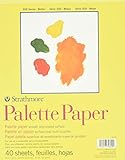
Overview: The Strathmore 300 Series Palette Paper Pad provides 40 disposable 9x12 inch sheets of poly-coated paper designed as a convenient paint-mixing surface. At 41lb weight, these sheets offer a non-absorbent, smooth platform for blending acrylics, oils, and watercolors without the cleanup hassle of traditional palettes. Manufactured in the United States, this pad targets painters who prioritize efficiency and studio hygiene over reusable palette maintenance.
What Makes It Stand Out: The primary advantage is immediate convenience—tear off a sheet, paint, then discard, eliminating time-consuming scraping and solvent cleaning. The poly-coating prevents paint absorption, ensuring true color mixing and easy palette knife work. Strathmore’s consistent sizing means sheets lie flat and stable during use, while the 40-sheet count provides ample supply for extended painting sessions or workshops. The tape-bound pad format keeps unused sheets protected and organized.
Value for Money: For artists painting frequently, the time saved on cleanup translates to tangible value. While seemingly more expensive than a permanent palette over time, the convenience factor justifies the cost for busy studios, art teachers managing multiple students, or plein air painters seeking lightweight solutions. The reasonable per-sheet cost makes it accessible for regular use, and the quality coating prevents paint waste through absorption, stretching paint mileage.
Strengths and Weaknesses: Strengths include effortless cleanup, true color mixing surface, convenient pad format, stable sheet construction, and time-saving design. Weaknesses involve environmental concerns from disposability, ongoing cost versus one-time palette purchase, and limited suitability for paint conservation techniques.
Bottom Line: This palette paper pad excels for painters valuing convenience and speed. It’s an excellent studio staple for acrylic and oil artists who’d rather paint than clean, making it particularly valuable for high-output creators and educational settings.
6. 65 Pcs Bookbinding Tools Kit with Bone Folder, Waxed Thread, Binding Ribbon, Glue Brush, Awl, Needles, Ruler, Storage Bag, and More for DIY Bookbinding, Paper Crafts, and Book Repair
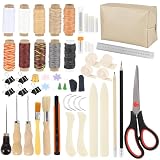
Overview: This comprehensive 65-piece bookbinding kit delivers a complete workshop-in-a-box for DIY enthusiasts, scrapbookers, and book repair hobbyists. The collection spans from basic necessities like a steel ruler and utility knife to specialized tools including leather needles, curved binding needles, and a plastic bone folder. With ten 30-meter rolls of waxed polyester thread in assorted colors, the set provides enough material for numerous projects before needing replenishment.
What Makes It Stand Out: The sheer comprehensiveness sets this apart from starter kits that typically include only 20-30 pieces. The inclusion of four distinct needle types—hand sewing, curved, leather, and gourd cones—addresses multiple binding techniques. The thoughtful addition of safety features like needle bottles and leather finger sleeves demonstrates consideration for user protection. Ten rolls of waxed thread offer both quantity and color variety rarely found in competing sets.
Value for Money: Purchasing these items individually would cost significantly more, making this kit exceptional value for beginners building their tool collection. The bulk thread alone justifies a substantial portion of the price. While professional binders might upgrade specific components later, the kit eliminates the research burden and provides immediate project capability.
Strengths and Weaknesses: Strengths include comprehensive tool variety, generous thread supply, organized storage bag, and safety accessories. Weaknesses involve the plastic bone folder lacking the durability of genuine bone, potential quality inconsistency across 65 pieces, and overwhelming complexity for absolute beginners who might not recognize every tool’s purpose.
Bottom Line: Ideal for intermediate crafters and serious beginners committed to learning bookbinding. The kit’s breadth enables exploration of multiple techniques without additional investment. While professionals may prefer premium individual tools, this collection offers unmatched convenience and value for hobbyists and educators teaching book arts.
7. SHINEOFI 16pcs Paper Quilling Tool with Slotted Pen and Awl Colorful Curling and Rolling Needles for DIY Card Making Paper Crafting and Artistic Quilling Projects Versatile Craft Supplies

Overview: This vibrant 16-piece quilling tool set provides the essential instruments for paper filigree artistry, packaged in an eye-catching colorful assortment. Designed for card makers and paper crafters, the collection centers around a slotted needle tool and curling pen, complemented by multiple rolling needles in four appealing colors. The set targets beginners and intermediate crafters seeking an affordable entry point into quilling without overwhelming complexity.
What Makes It Stand Out: The thoughtful color-coding system distinguishes tools by function while adding visual appeal to the crafting experience. Unlike monochromatic tool sets, these bright blue, light blue, rose red, and pink instruments make technique differentiation intuitive. The inclusion of both slotted and needle tools enables both tight coils and freeform shapes, covering fundamental quilling methods in one compact package.
Value for Money: This set delivers remarkable affordability for specialized quilling tools that typically command premium prices when purchased separately. The 16-piece count strikes an optimal balance between comprehensiveness and cost, avoiding the expense of rarely-used accessories. For crafters testing quilling’s appeal, this represents minimal financial risk while providing genuine capability.
Strengths and Weaknesses: Strengths include user-friendly design, attractive color organization, essential tool coverage, and suitability for all skill levels. The slotted pen’s ergonomic handling reduces hand fatigue during extended sessions. Weaknesses include the absence of paper strips requiring separate purchase, limited advanced tools for complex techniques, and basic build quality that may not satisfy professional paper artists.
Bottom Line: Perfect for newcomers to quilling and casual paper crafters creating greeting cards and decorative elements. The set’s accessibility and focused tool selection enable immediate creative exploration. While serious quillers will eventually upgrade to precision tools, this collection provides an excellent, affordable foundation for discovering the craft’s meditative appeal.
8. Strathmore 200 Series Tracing Paper, Tape Bound Pad, 9x12 inches, 40 Sheets (25lb/41g) - Artist Paper for Adults and Students
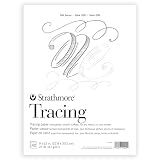
Overview: Strathmore’s 200 Series Tracing Paper Pad offers 40 sheets of economical transparent parchment in a convenient 9x12 inch format. This lightweight 25lb paper provides a smooth surface that readily accepts pencil, marker, and ink, making it a staple for designers, illustrators, and students. The tape-bound construction keeps sheets secure while allowing easy removal, positioning it as a practical choice for iterative drawing and design development.
What Makes It Stand Out: The Strathmore brand carries decades of reliability in artist papers, ensuring consistent quality that off-brand alternatives often lack. The paper’s transparency strikes an ideal balance—sufficiently clear for accurate tracing while maintaining enough opacity for standalone sketches. Its smooth surface prevents graphite smudging better than rougher tracing papers, preserving clean line work.
Value for Money: This pad delivers professional-grade paper at a student-friendly price point. The cost per sheet undercuts most competitors, making it economical for high-volume use in classrooms or design studios. While not archival, the quality exceeds typical bargain-bin tracing paper, providing genuine value for everyday applications.
Strengths and Weaknesses: Strengths include trusted brand consistency, excellent media versatility, convenient sizing, and smooth erasability. The tape binding prevents sheet loss while enabling clean removal. Weaknesses involve the lightweight 25lb stock buckling under heavy ink applications, limited suitability for wet media, and non-archival composition unsuitable for permanent artwork.
Bottom Line: An excellent workhorse for students, architects, and illustrators requiring reliable tracing paper for development work. It performs admirably for its intended purpose while remaining budget-conscious. Reserve archival projects for heavier papers, but for daily tracing, overlay work, and preliminary sketches, this pad represents outstanding practical value.
9. Newbested 100-Piece Set of 12 x 8 Inch White 100% Rag Cotton Cold Press Watercolor Paper - Ideal for Watercolorists, Students, and Beginning Artists
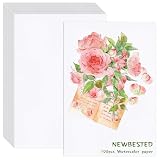
Overview: Newbested delivers exceptional value with this bulk pack of 100 sheets of 100% rag cotton watercolor paper, sized at 12x8 inches. The cold-pressed surface provides moderate texture suitable for both wet and dry media, targeting students and practicing artists. This acid-free, pH-neutral paper promises longevity while offering the superior water absorption and pigment adhesion that only genuine cotton fibers provide.
What Makes It Stand Out: Finding 100% cotton paper at this price point and quantity is remarkably rare. The 100-sheet bulk packaging eliminates the hesitation of “wasting” expensive paper during practice sessions. The cold-pressed texture accommodates diverse techniques from detailed botanical work to bold washes, while the 100lb weight offers surprising durability without the premium cost of heavier 140lb papers.
Value for Money: This set dramatically undercuts established brands like Arches and Fabriano for cost-per-sheet, making it accessible for daily practice. The bulk quantity encourages experimental freedom, crucial for skill development. While not marketed as professional exhibition-grade, the 100% cotton composition provides legitimate archival properties at a fraction of typical costs.
Strengths and Weaknesses: Strengths include genuine cotton content, generous quantity, versatile cold-pressed texture, acid-free stability, and size convenient for smaller studies. Weaknesses involve occasional inconsistency in surface sizing, lighter 100lb weight limiting heavy wash techniques, and a lesser-known brand name that may concern professionals.
Bottom Line: Outstanding for students, beginners, and intermediate artists seeking affordable, high-quality practice paper. The cotton composition ensures authentic watercolor behavior, making it superior to wood-pulp alternatives. Use it confidently for learning, sketching, and personal projects, reserving premium brands for final works. This pack removes financial barriers to artistic practice.
10. Durable Art Easel Paper Roll for Crafts, Drawing & Painting | Ideal for Kids Projects | 17.75 inches x 100 feet What are Paper roll for Painting

Overview: This generous easel paper roll delivers 100 feet of heavyweight drawing surface at 17.75 inches wide, designed for high-volume creative environments. The non-bleed, smooth-textured paper accommodates markers, crayons, watercolors, and finger paints, making it versatile for kids’ projects, classroom activities, and professional sketches. Made in the USA from responsibly sourced, acid-free stock, it balances durability with environmental consciousness.
What Makes It Stand Out: The roll format provides unprecedented length for mural-scale projects, banners, and continuous drawing sessions, eliminating the sheet-by-sheet limitation of pads. Its heavyweight construction resists tearing and bleed-through, a critical feature when using markers or wet media. The eco-friendly, non-toxic composition ensures safe handling by children while supporting sustainable forestry practices.
Value for Money: Measuring cost per square foot, this roll significantly outperforms standard easel pads. The 100-foot length translates to hundreds of individual sheets, making it economical for classrooms, daycare centers, and active families. The multi-purpose capability replaces separate purchases of banner paper, craft paper, and easel sheets, consolidating expenses.
Strengths and Weaknesses: Strengths include massive quantity, heavyweight durability, eco-friendly sourcing, versatile media compatibility, and compatibility with standard easels. The roll storage is space-efficient. Weaknesses involve paper curl requiring flattening, potential difficulty cutting clean edges without a dispenser, non-archival quality unsuitable for permanent art, and width limitations on oversized easels.
Bottom Line: Excellent investment for parents, teachers, and facilitators of group art activities. The sheer volume encourages uninhibited creativity while the heavyweight quality prevents frustrating bleed-through. For professional archival work, choose dedicated artist papers, but for practice, play, and large-scale projects, this roll delivers unmatched convenience and economy.
Why Awls Are Indispensable Tools for Paper Artists
Paper artists understand that control is everything. Unlike scissors or craft knives that remove material, awls manipulate paper’s structure without subtraction. They create microscopic perforations that guide complex folds, establish pilot holes for thread in bookbinding, and score fibers for crisp, tear-free bends. The right awl becomes an extension of your creative intention, translating hand pressure into precise architectural changes within the paper’s cellular structure. When you’re working with 80gsm Japanese tissue or 300gsm cotton cardstock, the tool’s ability to penetrate without tearing or bulging determines whether your piece becomes gallery-worthy or landfill-bound.
Understanding Awl Anatomy: What Makes a Great Paper Crafting Tool
Before diving into features, you must speak the language of awl construction. Every awl consists of three critical components: the handle, shank, and point. The handle’s geometry dictates grip security during repetitive motions. The shank’s length and taper affect visibility and access in tight spaces. The point’s profile—its angle, sharpness, and micro-serrations—determines how paper fibers separate rather than crush. Premium paper-specific awls feature a gradual taper from handle to tip, avoiding abrupt shoulders that can catch and tear delicate fibers. The metallurgy matters too; high-carbon steel maintains its micro-point longer, while stainless steel resists corrosion from hand oils during marathon crafting sessions.
The Evolution of Awls in Paper Artistry
The awl’s journey from cobbler’s bench to paper studio mirrors the renaissance of analog crafts. Traditional bookbinders repurposed leatherworking awls, accepting their limitations. As paper art exploded into specialized disciplines—conservation, pop-up engineering, botanical pressing—artists demanded tools engineered specifically for cellulose fibers rather than animal hides. Modern paper awls emerged from this necessity, featuring finer points, ergonomic handles designed for horizontal work surfaces, and weight distribution that prevents hand fatigue during eight-hour studio days. Today’s tools reflect an understanding that paper is neither wood nor leather but a responsive, layered medium requiring surgical precision.
Key Features to Look for in a Paper Artist’s Awl
Tip Geometry and Sharpness Gradation
The ideal paper awl tip isn’t merely sharp—it’s intelligently sharp. Look for a point ground to a 15-20 degree included angle, fine enough to separate fibers without acting like a drill bit. The tip should transition from its needle-like point to the main shank over 5-7mm, creating a gradual widening that allows you to control penetration depth precisely. Avoid awls with chisel-ground or diamond-shaped points unless you’re specifically scoring straight lines; these tend to tear in circular motions.
Handle-to-Shank Connection Integrity
The junction where handle meets metal separates disposable tools from lifetime investments. Seek awls where the shank runs completely through the handle (full tang construction) rather than stopping partway. For paper work, a seamless transition without decorative ferrules or collars prevents catching loose paper fibers. The connection should feel solid when you gently twist the handle against the shank—any wiggle foreshadows failure during delicate work.
Micro-Texture and Finish Quality
Examine the shank’s surface under magnification if possible. The best paper awls feature a micro-polished finish that glides between fibers. Matte or sandblasted finishes create unnecessary friction, while mirror polishes can feel slippery. That sweet spot—smooth but not reflective—indicates manufacturing precision that translates directly to your craft’s cleanliness.
Handle Materials and Ergonomics
Wood Handles: Traditional Warmth with Modern Engineering
Hardwood handles—rosewood, ebony, or stabilized maple—offer tactile warmth and natural moisture absorption during long sessions. For paper artists, the key is density; softer woods like pine compress over time, loosening the shank. Look for handles turned with a slight bulb at the end, preventing the tool from rolling off slanted drafting tables. The finish matters: Danish oil penetrates and hardens within the wood, while lacquers can become sticky with hand oils.
Resin and Composite Handles: Contemporary Precision
Modern composites like G10 or stabilized resin offer consistent grip even with sweaty palms. These materials can be cast with micro-textures that improve control without abrasion. For paper artists who work in humid climates or whose hands perspire during intense focus, composites maintain dimensional stability where wood might swell. The trade-off? They lack the organic warmth that some artists crave for intuitive grip feedback.
Metal Handles: Weight and Balance Considerations
Solid metal handles provide unmatched balance and longevity but require knurling or rubberized sections for grip. For paper work, aluminum offers the best weight-to-strength ratio; brass and steel can feel fatiguing during repetitive piercing. If you choose metal, ensure the handle includes a slight waist—an hourglass shape—that naturally seats in your grip’s webbing.
Blade Types and Their Specific Applications
Tapered Round Points: The Universal Workhorse
The gradually tapering round point serves 80% of paper crafting needs. It creates clean pilot holes for binding, scores curved fold lines, and perforates delicate tissue without ripping. The round profile pushes fibers radially outward in all directions, maintaining the paper’s structural integrity. When selecting one, ensure the taper begins immediately from the tip—no cylindrical section that acts like a miniature drill bit.
Flat Chisel Points: Scoring and Creasing Specialists
Chisel-ground awls excel at creating straight score lines for folded cards and box construction. The flat face acts like a microscopic bone folder, crushing fibers along a precise line. However, the sharp edges can cut rather than separate fibers if used improperly. Reserve these for heavyweight cardstock where you need crisp, consistent folds across multiple pieces.
Curved or Bent Points: Accessing Tight Corners
In pop-up engineering and intricate box making, straight awls can’t reach internal angles. A gently curved point—think 15-20 degrees over the final centimeter—allows you to work inside assembled structures. The curve must be subtle; dramatic bends reduce control and increase tearing risk.
Weight Distribution and Balance Considerations
A perfectly balanced awl pivots at its midpoint when rested on your finger. For paper artists, this equilibrium means the tool responds to subtle hand movements rather than fighting them. Front-heavy awls require constant muscular correction, leading to tremors during microscopic work. Rear-heavy designs feel unstable, as if they’ll slip from your grip. The ideal balance point sits 5-10mm behind the handle-shank junction, allowing the point to feel responsive while the handle provides stabilizing mass.
Safety Features Every Paper Artist Should Consider
Protective Caps and Retractable Mechanisms
Unlike awls stored in tool rolls, paper artists often keep their primary awl on the workbench. A ventilated cap prevents accidental stabs while allowing moisture to escape—critical if you work in humid environments. Some modern designs feature retractable tips; ensure the mechanism locks positively and doesn’t rely on friction alone, which can fail mid-use.
Ergonomic Strain Prevention
Look for handles with a diameter between 12-15mm—narrow enough for precise finger control, wide enough to prevent white-knuckle gripping. Some premium awls feature subtle flares at the butt end, preventing the tool from sliding forward in your palm during push strokes. If you have arthritis or repetitive strain injuries, consider handles with slight compressibility, like those wrapped in cork or leather.
Awl Maintenance and Care for Longevity
Cleaning Protocols for Paper Residue
Paper dust and sizing chemicals accumulate on the shank, increasing friction. After each session, wipe the shank with a microfiber cloth slightly dampened with isopropyl alcohol. Never use steel wool or abrasive pads—they create micro-scratches that catch fibers. For stubborn adhesive residue from tape or glue, a brief soak in acetone followed by immediate drying preserves the metal’s temper.
Sharpening Techniques for Micro-Tips
Paper awls rarely need aggressive sharpening; instead, they require periodic stropping. Use a leather strop loaded with fine polishing compound, drawing the awl backward (spine-first) at the same angle as the original grind. This realigns the micro-burr that forms during use. If the tip becomes truly dull, use a fine diamond stone (1200 grit or higher) with minimal pressure—paper awls need refinement, not regrinding.
Storage Solutions That Prevent Damage
Never toss your awl in a drawer. Store it point-up in a dedicated holder, or in a tool roll where each awl has an individual sleeve. For travel, use a cork or wooden plug in the tip rather than a cap, which can trap moisture. If you own multiple awls, consider a magnetic strip mounted away from direct sunlight—UV exposure degrades handle materials over time.
Common Mistakes to Avoid When Choosing an Awl
The most frequent error is selecting an awl based on woodworking or leatherworking reviews. These tools feature steeper tip angles and heavier construction that brutally tear paper fibers. Another pitfall is prioritizing aesthetics over function—a beautifully turned handle with poor shank seating is jewelry, not a tool. Avoid awls with decorative finger guards or collars near the tip; these obstruct your view during microscopic work. Finally, don’t assume one awl serves all purposes. The tool that perfects bookbinding will likely fail at micro-perforations for quilling strips.
How Different Paper Types Influence Awl Selection
Lightweight Papers (20-60gsm)
Tissue, tracing paper, and chiyogami require awls with extremely fine points and minimal shank taper. The tool should pierce without stretching the paper, creating holes that essentially close when the awl withdraws. A needle-like point with a 10-degree included angle works best, but requires careful handling to avoid bending.
Medium Weight Papers (80-120gsm)
Standard cardstock and drawing paper offer the most flexibility in awl choice. A versatile round-point awl with moderate taper handles scoring, piercing, and detail work effectively. This weight range is where balance becomes critical—you’ll use the awl for extended periods, so ergonomic design prevents fatigue.
Heavyweight and Textured Papers (200gsm+)
Watercolor paper, handmade cotton rag, and museum board demand robust awls with stronger shanks. The tip angle can increase to 25 degrees to prevent snapping, and the handle should provide substantial grip for the force required. For heavily textured papers, consider awls with micro-serrated tips that grip and separate fibers rather than gliding over surface peaks.
Specialty Awls for Advanced Paper Techniques
Micro-Awls for Miniature Work
When creating 1:144 scale architectural models or microscopic origami, standard awls become crowbars. Micro-awls feature shanks under 1mm diameter and handles designed for three-finger grips. The challenge is maintaining rigidity at this scale; look for high-carbon steel shanks that have been cryogenically treated for enhanced strength.
Double-Ended Awls for Versatility
Some advanced tools feature different tip profiles on each end—perhaps a round point and a chisel point. For paper artists, these compromise balance and often include a bulky center ferrule. Instead, consider a modular system where you swap shanks within a single handle, maintaining ergonomics while expanding capability.
Heated Awls for Thermoplastic Scoring
In experimental paper art, some artists use low-temperature heated awls to score synthetic papers like Tyvek. This requires specialized tools with temperature control and insulated handles. Never repurpose a standard awl with a flame—uneven heating destroys temper and creates dangerous weak points.
Budget vs. Premium: Understanding the Value Spectrum
Entry-Level Awls: What You Actually Get
Sub-$10 awls typically feature stamped steel shanks inserted into mass-turned handles with epoxy. They work adequately for occasional scrapbooking but lack the refinement for professional work. The primary compromise is tip consistency—mass production grinding creates uneven angles that catch fibers. However, they serve as excellent “beaters” for tasks that might damage your primary tool, like punching through adhesive-backed paper.
Mid-Range Investments: The Sweet Spot for Serious Artists
Between $20-40, you’ll find awls with individually ground tips, better handle materials, and proper full-tang construction. This range offers 90% of the performance of premium tools at a fraction of the cost. The key differentiator is quality control—each tool is inspected rather than batch-tested. For most paper artists, a carefully selected mid-range awl becomes a decade-long companion.
Premium Artisan Tools: When and Why to Invest
Hand-forged awls from specialty makers ($60+) offer incremental improvements: custom tip geometries, exotic handle materials, and perfect balance. The value emerges for professionals who use the tool 40+ hours weekly—ergonomic gains compound over time. These tools often include reconditioning services, where the maker resharpen and rebalances the awl. For hobbyists, the law of diminishing returns applies strongly here.
Building Your Awl Collection: A Strategic Approach
Start with a single medium-taper round-point awl in the mid-range price bracket. Use it exclusively for three months, noting which tasks feel awkward or produce subpar results. This reveals your second purchase: perhaps a fine-point micro-awl for detail work, or a chisel-point for scoring. Resist buying sets—they include tools you’ll rarely use. Instead, curate a personal collection of 3-4 awls that cover 95% of paper techniques. Store them properly, maintain them religiously, and they’ll outlast your current studio. Remember, the goal isn’t to own many awls, but to own the right awls that disappear in your hand, leaving only your creative intention.
Frequently Asked Questions
What’s the primary difference between a bookbinding awl and a general paper crafting awl?
Bookbinding awls typically feature longer shanks to penetrate multiple signatures, with slightly blunter tips to prevent tearing sewing holes. Paper crafting awls prioritize precision over depth, with finer points for scoring and detail work. For hybrid artists, a medium-length awl (around 3 inches) serves both purposes adequately.
How often should I sharpen my paper awl?
With proper stropping after each use, you’ll rarely need true sharpening. Strop every session, and only sharpen when you notice fibers tearing rather than separating—typically after 100+ hours of active use. Over-sharpening wears away the tip faster than actual use.
Can I use a leatherworking awl for paper crafts in a pinch?
Only for very heavy cardstock (300gsm+) where you’re creating large holes. Leather awls have triangular or diamond cross-sections that cut rather than separate fibers, leaving ragged edges on most papers. They’re also typically too heavy for the control paper artistry demands.
What’s the ideal handle length for paper artists?
Most artists prefer handles between 4-5 inches. Shorter handles force a cramped grip; longer handles feel unwieldy for detailed work. The sweet spot allows your hand to relax in a neutral position while providing enough mass for controlled pressure.
How do I prevent paper from tearing when using an awl?
Always work on a self-healing cutting mat, not hard surfaces. Support the paper’s underside with a scrap piece when piercing. For scoring, use minimal pressure with multiple light passes rather than one heavy stroke. Ensure your awl tip is clean and properly stropped—dull tips tear.
Should I choose a round or octagonal handle?
Round handles allow rolling between fingers for quick tip repositioning, ideal for organic curves. Octagonal handles prevent rolling on slanted desks and provide tactile orientation for straight scoring. Most paper artists prefer round handles with a single flat side—a hybrid solution.
What’s the best way to test an awl before purchasing?
If buying in person, bring sample papers from your typical projects. Test scoring and piercing on scrap pieces. Feel for balance, check the handle for comfort during a 30-second grip, and examine the tip under the store’s magnifier. Online, rely on detailed metallurgy and construction descriptions rather than marketing photos.
How does humidity affect awl performance?
High humidity swells wood handles and can cause slight tip corrosion on non-stainless steels. It also makes paper more fibrous and resistant to clean piercing. In humid climates, favor composite handles and stainless or coated steels. Store tools with silica gel packets in enclosed cases.
Can I modify an awl for specialized paper techniques?
Gentle modifications are possible: lightly polishing the shank with fine-grit paper reduces friction, and careful strop work can customize tip angles. Never grind the tip on power tools—the heat destroys temper. For major changes, consult the manufacturer or a toolsmith; DIY grinding usually creates more problems.
What’s the safest way to transport awls to workshops?
Use a rigid tube (like a modified pen case) rather than a soft tool roll for transport. The tube should have internal padding and a ventilated cap. If using a tool roll, ensure each awl has an individual pocket and slide a cork or silicone tip protector over the point. Always pack awls point-down to prevent accidental punctures when unrolling.
See Also
- The 10 Best Decorative Edge Scissors Every Paper Crafter Needs This Year
- The 10 Best Paper Punches Every Scrapbooker Needs This Year
- The 10 Best Adhesive Paper Every DIY Enthusiast Needs This Year
- The 10 Best Origami Kits Every Paper Artist Needs in 2026
- The 10 Best Heat Press Die Cutting Machines Every Maker Needs This Year