Table of Contents
Thecraft plotter landscape has evolved dramatically by 2026, with manufacturers finally bridging the gap between budget-friendly price points and professional-grade performance. What once required a four-figure investment now sits comfortably in the sub-$300 range for capable entry-level machines, while mid-tier options under $600 deliver features that would have been considered premium just three years ago. This democratization of precision cutting technology means hobbyists, small business owners, and educational institutions can access tools that produce commercial-quality results without draining their budgets.
But here’s the challenge: not every affordable plotter earns its price tag. Some cut corners in ways that become painfully obvious six months into ownership—weak motors that stall on thicker materials, proprietary software that locks you into expensive ecosystems, or flimsy frames that vibrate themselves out of alignment. The key isn’t finding the cheapest option; it’s identifying which budget-conscious machines preserve the non-negotiable quality markers that separate frustrating paperweights from reliable creative partners. Let’s decode what matters most when your wallet is tight but your standards aren’t.
Top 10 Craft Plotters For Home Use
Detailed Product Reviews
1. Dynta Double Sided Adhesive Sheets for Arts Craft Scrapbooking Photo Albums Home Decorative 25Pcs, 8.3 x 11.7 Inch
 Adhesive Sheets for Arts Craft Scrapbooking Photo Albums Home Decorative 25Pcs, 8.3 x 11.7 Inch](https://m.media-amazon.com/images/I/41q4nNQkoxL._SL160_.jpg)
Overview: Dynta’s double-sided adhesive sheets deliver a versatile crafting solution with 25 clear PET sheets measuring 8.3 x 11.7 inches. Designed for scrapbooking, photo albums, and home décor projects, these adhesive sheets provide a clean, strong bond across multiple materials without the mess of liquid glues or spray adhesives.
What Makes It Stand Out: The ability to custom-cut any shape or size sets this product apart. Unlike pre-cut foam dots or tape runners, you can tailor the adhesive precisely to intricate die-cuts, delicate paper elements, or bulky embellishments. The transparent PET construction ensures durability while remaining discreet beneath your projects, and the high-tack adhesive forms reliable bonds on paper, plastic, fabric, metal, and cardstock.
Value for Money: With 25 substantial sheets offering over 240 square inches of adhesive surface, this pack represents excellent economy for serious crafters. Individual adhesive sheets from premium brands often cost $1-2 each, making this bulk offering competitive at approximately half that price per sheet. The versatility eliminates need for multiple specialized adhesives.
Strengths and Weaknesses: Strengths include exceptional versatility, strong permanent bond, clean application without wrinkling, and suitability for diverse materials. The transparent finish maintains project aesthetics. Weaknesses: adhesive may be too aggressive for lightweight papers, causing tears; not repositionable once applied; and the protective liner requires careful handling to avoid premature sticking.
Bottom Line: These adhesive sheets excel for crafters needing customizable, strong bonding solutions. Perfect for mixed-media artists, scrapbookers creating dimensional layouts, and DIY home décor enthusiasts. The value and versatility outweigh minor handling considerations, making it a workshop essential for intermediate to advanced crafters.
2. Frisco Craft Glossy Black Permanent Vinyl Sheets – Waterproof Adhesive Vinyl Roll, Home Decor, Silhouette, Decals, Signs, Indoor & Outdoor, Weather-Resistant, DIY Projects 12” x 30 FT
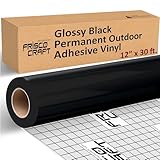
Overview: Frisco Craft’s glossy black vinyl roll delivers professional-grade adhesive material for both indoor and outdoor applications. This 12-inch by 30-foot permanent vinyl offers robust weather resistance and reliable adhesion for signage, decals, and home décor projects requiring longevity.
What Makes It Stand Out: The siliconized backing provides exceptionally clean weeding and application, protecting cutting mats and preventing adhesive residue transfer. Unlike many economy vinyls that curl or shrink, this product maintains dimensional stability across temperature variations. The waterproof construction withstands rain, UV exposure, and handling without peeling or fading.
Value for Money: At 30 linear feet, this roll provides substantial material for multiple large projects. Compared to Cricut-brand permanent vinyl costing $8-12 per 12x24 inch sheet, Frisco’s pricing per square foot represents significant savings—approximately 60-70% less expensive while delivering comparable performance for most applications.
Strengths and Weaknesses: Strengths include superior weather resistance, clean release backing, strong permanent adhesion, and compatibility with all major cutting machines. The glossy finish provides professional appearance. Weaknesses: not suitable for fabric or dishwasher use; requires 24-hour cure time before washing; and extreme temperatures during application can compromise adhesion. Limited color options in this listing.
Bottom Line: Ideal for crafters creating outdoor decals, vehicle graphics, or permanent signage. The durability and ease of use make it perfect for small business owners and serious hobbyists. While unsuitable for textiles, it excels on hard surfaces where longevity matters most.
3. Likcut Vinyl Cutter Machine S501 - Smart Compact Sticker Maker for Vinyl & Paper Crafts, Portable Plotter DIY Cutting Machine for Sticker Joy Craft & Party Supplies, Gifts for Crafters
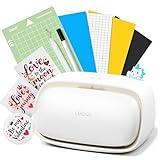
Overview: The Likcut S501 is a compact, smart cutting machine designed for vinyl and paper crafts. With Bluetooth 5.0 and USB connectivity, it offers crafters a portable solution for creating custom stickers, decals, and party supplies without requiring bulky equipment or extensive technical knowledge.
What Makes It Stand Out: The machine’s impressive cutting speed of 3.2 inches per second and blade longevity of over 4,610 meters distinguish it from entry-level cutters. The integrated front cover storage compartment solves workspace organization challenges—a thoughtful design element rarely seen in this price category. Access to over one million designs and 1,200 fonts through the Likcut Design Store provides exceptional creative resources.
Value for Money: Positioned as a mid-range cutter, the S501 undercuts premium brands like Cricut and Silhouette by 30-40% while offering comparable cutting force and speed. The included design library subscription adds significant value, eliminating additional font and graphic purchases that can quickly exceed $100 annually.
Strengths and Weaknesses: Strengths include rapid connectivity, fast cutting speeds, extensive material compatibility (50+ types), dual cutting/drawing functionality, and integrated storage. The compact footprint suits small spaces. Weaknesses: limited community support compared to established brands; software learning curve for advanced features; and smaller cutting width may restrict some projects.
Bottom Line: Perfect for intermediate crafters and small business owners producing party supplies or custom stickers. The speed, connectivity, and design resources make it a strong value proposition. Beginners may prefer more established ecosystems, but the S501 delivers professional results for dedicated users.
4. TECKWRAP Holographic Opal Craft Vinyl 12" x 12" 7 Sheets/Pack for Craft Cutters,Sign Plotters
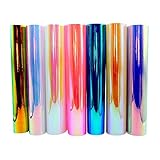
Overview: TECKWRAP’s holographic opal vinyl collection adds iridescent brilliance to craft projects with seven 12x12 inch sheets featuring color-shifting chrome effects. This premium adhesive vinyl transforms ordinary items into eye-catching creations through light-reflecting properties that change with viewing angle.
What Makes It Stand Out: The seven distinct opal finishes—ranging from Green Malachite to Hyacinth Blue—provide diverse aesthetic options in one package. The genuine holographic effect, created through precision film technology, delivers depth and movement unmatched by printed metallic alternatives. The vinyl’s smooth, glossy surface ensures crisp cuts and clean weeding, even with intricate designs.
Value for Money: Specialty holographic vinyl typically costs $4-6 per sheet from premium brands. This seven-sheet pack offers substantial savings at approximately 30-40% less per sheet while maintaining professional-grade quality. The variety pack eliminates purchasing multiple individual colors for testing different effects.
Strengths and Weaknesses: Strengths include vibrant color-shifting effects, strong permanent adhesive, water resistance, excellent cutting machine compatibility, and versatility across smooth surfaces. The finish resists fading and peeling. Weaknesses: limited to flat, clean surfaces; not suitable for textured materials; and the iridescent effect may obscure fine design details. Requires careful application to avoid air bubbles.
Bottom Line: Essential for crafters specializing in tumblers, car decals, or decorative items requiring visual impact. The variety and quality make it ideal for small business owners creating premium products. While not for everyday projects, it excels when maximum visual appeal is paramount.
5. Likcut Vinyl Cutter Machine, Smart Sticker Maker Glee S501 for DIY Joy, Portable Cutting Tool for Crafting Beginner, Compact Design for Home & School Craft Projects, DIY Home Decor, Gifts for Crafters

Overview: The Likcut Glee S501 targets crafting newcomers with an approachable sticker maker that combines compact portability with intuitive operation. This smart cutter machine simplifies vinyl and paper projects for home décor, school assignments, and personalized gifts through streamlined software and robust connectivity.
What Makes It Stand Out: Unlike competitors that overwhelm beginners with complex features, the Glee emphasizes guided creativity through built-in tutorials and an active online community. The three-second Bluetooth 5.0 connection eliminates frustrating setup processes, while the front-cover storage keeps essential tools accessible—addressing real workspace challenges novice crafters face.
Value for Money: As an entry-to-mid-level machine, the Glee undercuts Cricut Joy and similar beginner cutters by 20-30% while offering larger cutting capacity and faster speeds. The included tutorial library and community support provide educational value that premium brands often charge extra for through subscription services.
Strengths and Weaknesses: Strengths include beginner-friendly software, rapid connectivity, portable compact design, integrated storage, and supportive learning resources. The machine handles 50+ materials effectively. Weaknesses: smaller cutting area limits project size; brand ecosystem is less established than Cricut; advanced users may find software limitations restrictive; and replacement parts availability is uncertain.
Bottom Line: Ideal for beginners and students seeking an affordable, supportive entry into vinyl cutting. The community focus and portability make it perfect for casual crafters and classroom settings. Serious hobbyists may outgrow its capabilities, but it delivers exceptional value for those prioritizing ease of learning over advanced features.
6. TECKWRAP Metallic Chrome Matte Adhesive Craft Vinyl Permanent Vinyl Sheets 12" x 12" 11 Assorted Colors for DIY Craft, Arts Work with Craft Cutters, Sign Plotters

Overview:
The TECKWRAP Metallic Chrome Matte collection delivers premium satin-like finishes across 11 sophisticated colors. These 12"x12" adhesive sheets transform ordinary crafts into elegant creations with their light-reflecting properties. Designed for compatibility with Cricut, Silhouette, and professional sign plotters, this set targets serious DIY enthusiasts and small business owners creating high-end decorative pieces.
What Makes It Stand Out:
The matte metallic finish distinguishes itself from glossy alternatives, offering a subtle luxury that elevates wedding decor, personalized gifts, and home accents. The 11-color palette includes on-trend rose gold, champagne, and classic metallics, providing exceptional variety for cohesive project design. The vinyl’s clean release from cutting mats and medium-tack adhesive ensures professional results without frustrating residue or transfer issues.
Value for Money:
At approximately $2 per sheet, this pack undercuts premium brand singles while delivering comparable quality. Individual metallic sheets often retail for $3-5, making this assortment economical for multi-color projects. The collection eliminates the need to purchase full rolls of rarely-used metallic shades, optimizing both budget and storage space for occasional crafters.
Strengths and Weaknesses:
Pros include the diverse color selection, superior adhesion, clean weeding, and compatibility across machine types. The matte finish resists fingerprints better than glossy metallics. Cons involve the limited 11-sheet quantity for large projects and the requirement for separate transfer tape purchase. Some users report the maroon red appears more burgundy than expected.
Bottom Line:
Perfect for creating sophisticated event decor and premium personalized items, this metallic collection offers professional-grade results at a compelling price point. Ideal for crafters who value finish quality and color variety over bulk quantity.
7. TECKWRAP Glow in Dark Matte Neon Adhesive Craft Vinyl Precut Sheets 12" x 12" 6 Sheets/Pack for Craft Cutters,Sign Plotters

Overview:
TECKWRAP’s Glow in Dark Matte Neon vinyl introduces a playful luminescent element to crafting with six vibrant 12"x12" sheets. This specialty vinyl absorbs ambient light to create eye-catching glowing effects, perfect for seasonal decorations, children’s room decor, and party accents. The matte finish reduces glare while maintaining vivid neon colors in both light and dark conditions.
What Makes It Stand Out:
The dual-phase visual impact sets this apart—bright neon hues by day transform into glowing designs after dark. Six on-trend colors including mint, peach, and lime green offer modern palette options beyond typical green-only glow vinyl. The product performs reliably across popular cutting machines, delivering precise cuts for intricate designs without tearing the delicate photoluminescent layer.
Value for Money:
Priced competitively for specialty vinyl, the six-sheet pack provides enough material for multiple small projects. While costing more per sheet than standard vinyl, the unique glow effect justifies the premium. It eliminates the expense and complexity of alternative lighting solutions for decorative elements, offering built-in ambiance.
Strengths and Weaknesses:
Pros include the novel glow effect, easy cutting, strong adhesion, and versatile color range. The vinyl charges quickly under natural or artificial light. Major cons are the explicit outdoor use warning—UV exposure degrades the glow—and the gradual brightness fade over several hours. The glow intensity varies between colors, with green and yellow performing best.
Bottom Line:
An excellent choice for adding wow-factor to indoor projects. Best suited for party decorations, nightlights, and craft fair products where the glow effect creates memorable impact. Avoid for outdoor applications.
8. Outline Plotter for Woodworking Projects with Ergonomic Grip and Precisions Metal Body Compatible with Irregular Shape Marking for DIY Craft and Home Workshop Gold Tone with Pencil(2pcs)

Overview:
This Outline Plotter two-pack provides woodworking enthusiasts with precision marking tools for replicating irregular shapes. Featuring ergonomic grips and durable metal bodies, these plotters transfer complex contours onto wood surfaces with accuracy. The gold-tone finish adds workshop aesthetic appeal while the included pencils ensure immediate usability for custom furniture, trim work, and DIY carpentry projects.
What Makes It Stand Out:
The ergonomic design reduces hand fatigue during extended use, a critical feature for detailed projects. Unlike traditional contour gauges, this plotter’s mechanism allows for single-handed operation while maintaining stability. The precision metal construction ensures consistent performance and durability compared to plastic alternatives that flex and degrade over time.
Value for Money:
Offering two units at a price point typically commanding a single premium marking tool, this pack delivers solid value. The durability of metal components translates to long-term cost savings versus replacing inferior plastic tools. For woodworkers regularly tackling custom fitting tasks, the efficiency gains justify the investment.
Strengths and Weaknesses:
Pros include comfortable ergonomics, accurate contour transfer, lightweight portability, and robust metal construction. The tool excels at scribing countertops, moldings, and irregular joints. Cons involve vague sizing guidance in the product description and limited utility beyond woodworking applications. The included pencils are standard quality and require frequent sharpening for fine lines.
Bottom Line:
A worthwhile addition to any serious DIYer’s toolkit. Particularly valuable for renovation projects requiring precise custom cuts. While specialized, its accuracy and comfort make it indispensable for woodworking applications.
9. TECKWRAP Matte Navy Blue Adhesive Vinyl Roll 12" x 10ft Matte Blue Permanent Vinyl for Decals, Signs, Scrapbooking, DIY Home Decor, Indoor & Outdoor Use

Overview:
The TECKWRAP Matte Navy Blue Vinyl Roll provides 10 feet of premium adhesive material in a rich midnight blue hue. This versatile roll format accommodates both small decals and large-scale projects, from custom tumblers to window signage. Engineered for clean cutting and effortless weeding, the vinyl adheres reliably to glass, wood, plastic, and metal surfaces for indoor and outdoor applications.
What Makes It Stand Out:
The substantial 10-foot length offers project flexibility unmatched by sheet packs, reducing material waste on larger designs. The matte navy finish provides a sophisticated alternative to basic black or glossy blues, delivering professional results for corporate signage and elegant home decor. Its water-resistant adhesive maintains bond integrity through weather exposure and washing.
Value for Money:
Per-foot pricing compares favorably to individual 12"x12" sheets, especially for users requiring consistent color across multiple projects. The roll format eliminates seams and pattern matching issues present in sheet-based projects. For small business owners creating branded products, the bulk packaging reduces per-unit material costs significantly.
Strengths and Weaknesses:
Pros include generous length, indoor/outdoor durability, clean cutting performance, and removable adhesive that won’t damage surfaces. The navy color maintains richness after application. Cons center on the single-color commitment—users needing variety must purchase additional rolls. The 10-foot length may exceed casual crafters’ storage capacity.
Bottom Line:
An excellent investment for makers focused on navy-themed projects or commercial production. The roll format and outdoor durability make it ideal for signage, vehicle decals, and personalized product lines requiring consistent branding.
10. TECKWRAP Sparkle Holographic Silver Vinyl Glitter Permanent Chrome Adhesive Vinyl 1ft x 5ft

Overview:
TECKWRAP’s Sparkle Holographic Silver Vinyl delivers dazzling visual impact through its glitter-infused chrome finish. This 1ft x 5ft roll features a protective film that preserves the holographic pattern during cutting and weeding. Designed for premium decorative applications, the vinyl adds luxury to everything from drinkware to vehicle accents with its light-catching prismatic effect.
What Makes It Stand Out:
The holographic sparkle creates a dynamic three-dimensional appearance that shifts with viewing angle, surpassing standard glitter vinyl’s flat sparkle. UV and water resistance ensure the finish remains vibrant through outdoor exposure and repeated washing. Compatibility with major cutting machines allows precise execution of intricate designs without losing the holographic integrity.
Value for Money:
While priced higher than basic vinyl, the specialty finish costs significantly less than professional chrome wraps or custom printing. The 5-foot length provides adequate material for multiple high-impact projects, making it economical for small business applications like personalized tumblers or craft fair inventory. The durability eliminates replacement costs associated with inferior decorative films.
Strengths and Weaknesses:
Pros include stunning visual effect, outdoor durability, clean cutting, and strong permanent adhesion. The protective film prevents scratching during fabrication. Cons involve the mandatory film removal step that adds production time and the premium price point. The holographic pattern can complicate weeding for novices due to visual distraction.
Bottom Line:
Perfect for creators seeking premium, eye-catching results. Ideal for personalized gifts, product branding, and decorative accents where visual impact drives value. Worth the investment for serious crafters and small business owners.
What “Affordable” Actually Means in 2026’s Market
The term “affordable” shifted significantly after the 2024 semiconductor shortage resolution and the rise of modular manufacturing. In 2026, affordable craft plotters fall into three distinct tiers: entry-level ($150-$280), mid-range ($280-$550), and advanced hobbyist ($550-$800). Entry-level machines now routinely include automatic material detection and Bluetooth connectivity—features that were premium add-ons in 2023. The sub-$200 category has become genuinely viable for serious crafters, not just casual hobbyists, thanks to improved stepper motor efficiency and open-source software adoption.
Understanding these tiers helps set realistic expectations. A $180 plotter won’t match the cutting force of a $700 machine, but it should reliably handle vinyl, cardstock, and thin leather without constant babysitting. The sweet spot for most users lies in the $320-$450 range, where you’ll find servo motors, optical registration systems, and cross-platform software support that rivals machines costing twice as much.
Key Quality Indicators That Matter More Than Price
Price tags distract from what truly determines a plotter’s value: component durability, software flexibility, and precision consistency. A quality affordable plotter in 2026 should feature a minimum of 250 grams of cutting force, 0.1mm positional accuracy, and a die-cast aluminum carriage head. Plastic carriages might shave $50 off the cost, but they develop play within months, destroying fine detail work.
Look for machines with tool-free blade adjustment mechanisms—these indicate thoughtful engineering that prioritizes user experience over manufacturing shortcuts. The presence of a manual cut-off slider, while seemingly minor, suggests the manufacturer actually uses their own product and understands workflow friction points. Check for firmware update histories; a plotter receiving quarterly updates demonstrates ongoing support that protects your investment long-term.
Understanding Cutting Force and Why It’s Critical
Cutting force, measured in grams, determines what materials your plotter can handle. In 2026, affordable machines start around 210g and climb to 800g+ in the advanced hobbyist tier. This isn’t just about cutting thicker materials—it’s about consistency. A 250g plotter might technically cut basswood, but it’ll require multiple passes that introduce alignment drift and blade wear.
For most crafters, 350-500g offers the best versatility-to-price ratio. This range tackles adhesive vinyl, heat transfer vinyl (HTV), cardstock up to 400gsm, craft foam, and thin chipboard without premature motor burnout. Machines advertising “adjustable pressure” through software should still maintain mechanical force minimums; software can’t compensate for physical motor limitations. Be wary of plotters that list maximum force but don’t specify the motor type—stepper motors deliver consistent torque while cheaper DC motors lose power as they heat up.
The Software Ecosystem: Your Creative Command Center
By 2026, the software conversation has shifted from proprietary lock-in to ecosystem compatibility. Quality affordable plotters support SVG, DXF, and PDF natively without requiring conversion through manufacturer-specific apps. Look for machines that work seamlessly with popular design software like Inkscape, Silhouette Studio (free tier), or Cricut Design Space (basic features) while also offering their own robust native application.
Cloud-based design tools have become standard, but the best machines offer offline functionality for when Wi-Fi fails. Check for mobile app capabilities that don’t feel like afterthoughts—true iOS/Android apps should allow full design and cut control, not just basic shape libraries. Machine learning-assisted weeding path optimization, now common in mid-tier plotters, can reduce weeding time by 40% and is worth prioritizing. Avoid plotters requiring subscription fees for basic cutting functionality; subscription models should only unlock premium design assets, not core machine operation.
Material Compatibility: Beyond Basic Vinyl
A common mistake is buying a plotter based on current project needs without considering future material exploration. In 2026, quality affordable machines handle at least 15+ material types out of the box: permanent/removable vinyl, HTV, stencil film, thin leather, balsa wood, adhesive foil, magnet sheets, and printable vinyl. The presence of a adjustable pinch roller system indicates broader material support, allowing you to customize roller spacing for irregular substrates.
Pay attention to cutting mat requirements. Machines requiring proprietary mats at $15-20 each quickly erase initial savings. Quality plotters accept generic third-party mats or offer matless cutting for supported materials. The matless cutting algorithm has improved significantly, using optical sensors to detect material edges and prevent shifting. For textile work, check if the plotter supports perforation cutting for easy tear-away patterns—a feature that’s become standard in the $400+ range but is worth seeking even in budget models.
Cutting Width vs. Overall Size: Space Planning
Manufacturers often advertise maximum cutting width while downplaying the machine’s physical footprint. A 12-inch cutting width might sound compact, but the actual unit could be 24 inches wide with material feeding clearance requirements pushing that to 36 inches. In 2026, compact “craft desk friendly” models have emerged with fold-out feed arms that reduce storage depth by 60%.
Consider your typical project size. A 12-inch width handles 95% of vinyl crafting needs, but sign makers will want 15-inch or 24-inch capabilities. The key spec is “usable cutting area”—some machines advertise 12-inch width but only deliver 10.5 inches after margins and sensor zones. For home-based businesses, look for vertical storage options; some newer models include wall-mounting kits that save precious workspace while keeping the machine ready to use.
Precision Metrics: What Tolerance Ratings Really Mean
Precision specs like “0.1mm accuracy” tell only part of the story. The critical metric is repeatability—how consistently the plotter returns to the same position across multiple passes. In 2026, quality affordable machines achieve ±0.05mm repeatability, essential for multi-layer vinyl projects where registration errors become visibly obvious. Ask for the “bidirectional repeatability” spec; unidirectional accuracy is easier to achieve but doesn’t reflect real-world use.
Optical registration systems using camera-based alignment have trickled down to the $250+ range. These systems read registration marks printed on material and automatically compensate for feed distortion. However, camera resolution matters—a 5MP camera performs significantly better on reflective materials than a 2MP sensor. For print-then-cut applications, look for machines with integrated color sensors that can detect marks on glitter or metallic surfaces where standard black-and-white cameras fail.
Connectivity Options in the Modern Craft Room
USB connectivity remains the reliability champion, but wireless options have matured considerably. Bluetooth 5.3, now standard in most 2026 models, offers stable connections up to 30 feet with minimal latency. Wi-Fi Direct capability lets you cut directly from tablets without routing through cloud servers—a crucial feature for users with privacy concerns or unreliable internet.
Ethernet ports, once reserved for industrial machines, have appeared in some $500+ hobbyist models, enabling direct network integration for small businesses. When evaluating wireless connectivity, check if firmware updates can be applied via wireless methods; machines requiring USB tethering for updates often indicate immature software architecture. NFC pairing for mobile devices has emerged as a convenience feature, letting you tap your phone to the plotter to establish connection instantly.
The Blade System: Unsung Hero of Plotter Performance
The blade holder and blade quality separate frustrating machines from reliable workhorses. Quality affordable plotters use standardized 45°/60° blade angles with off-the-shelf replacements costing under $5 each. Avoid machines with proprietary blade shapes that lock you into expensive manufacturer refills. The blade holder should feature visible depth adjustment with click-stop increments—guessing games with set screws lead to inconsistent cuts and material waste.
Auto-blade detection, where the plotter automatically adjusts pressure based on blade type, has become reliable in mid-tier machines. This prevents the common mistake of forgetting to adjust settings when switching from vinyl to cardstock. For deep-cut applications, check if the machine supports extended-length blades (up to 2mm exposure) and whether the carriage can accommodate them without modification. Some budget machines advertise deep-cut capability but require aftermarket modifications that void warranties.
Tracking and Feed Mechanisms Explained
Material tracking determines whether your 24-inch cut stays straight or drifts into a parallelogram. In 2026, affordable plotters employ either grit-roller or pinch-roller systems. Grit-rollers, with their sandpaper-like surface, grip materials more securely but can mark delicate surfaces. Quality machines use polished steel pinch-rollers with adjustable tension—gentle on materials but requiring proper calibration.
Look for machines with at least three pinch rollers; this triangular support prevents material pivoting during long cuts. The rollers should be independently positionable across the full width, not locked into preset positions. Advanced models include laser alignment guides that project cutting paths onto material before cutting, helping you position designs accurately and avoid wasted material. Feed accuracy specs should be under 0.3% over a meter; anything higher will cause registration drift in large projects.
Noise Levels: The Overlooked Dealbreaker
Cutting plotters are inherently noisy, but decibel levels vary dramatically. A machine operating at 65dB can be used in shared living spaces without domestic discord, while 75dB+ models require isolated workshops. In 2026, brushless servo motors have become common in the $350+ range, reducing noise by 40% compared to traditional stepper motors while improving precision.
Listen for resonance frequencies—the high-pitched whine some machines develop at specific speeds. Quality manufacturers dampen these frequencies with rubber isolation mounts and balanced carriages. If buying online, check video reviews with audio samples; manufacturers rarely publish noise specs. Some newer models include “quiet mode” settings that sacrifice 20-30% cutting speed for reduced noise, perfect for late-night crafting sessions.
Community and Support: Your Post-Purchase Lifeline
A plotter is only as good as the community behind it. In 2026, the most valuable support resource isn’t the manufacturer’s help desk—it’s the user community. Machines with active Facebook groups, Discord servers, and Reddit communities solve problems 10x faster than official channels. Look for communities with 10,000+ members and daily activity; this indicates sufficient user base to sustain knowledge sharing.
Check YouTube tutorial availability before purchasing. A machine with hundreds of user-created tutorials demonstrates approachable learning curve and committed user base. Manufacturer support quality matters too: look for companies offering live chat support with sub-5-minute wait times and technicians who can remotely diagnose issues via diagnostic logs. Avoid brands that outsource support to generic call centers; they rarely understand craft-specific workflows.
Total Cost of Ownership: Looking Beyond the Sticker Price
The purchase price is just the entry fee. Quality affordable plotters keep ongoing costs manageable: replacement blades under $5, cutting mats under $10, and no mandatory subscription fees. Calculate the cost-per-minute of cutting time—a $300 machine that lasts 3,000 hours costs $0.10/minute, while a $150 machine lasting 800 hours costs $0.19/minute. The “expensive” machine is actually cheaper long-term.
Factor in material waste from failed cuts. A plotter with 95% first-cut success rate versus 85% saves $50-$100 in wasted vinyl annually for active users. Energy consumption matters too: modern machines use 30-50 watts versus 80-120 watts for older models. Over a year of regular use, that’s a $15-$25 difference in electricity costs. Some manufacturers offer trade-in programs; a $50 credit toward your next upgrade reduces effective ownership cost.
Warranty and Return Policies: Reading the Fine Print
Affordable plotters in 2026 typically offer 1-year warranties, but the devil lives in the details. Quality manufacturers cover mechanical components, motors, and motherboards while excluding consumables like blades and mats. Be suspicious of “lifetime warranties” that require registration within 7 days or exclude commercial use—most craft businesses technically qualify as commercial operations.
Return policies reveal manufacturer confidence. A 60-day return window suggests the company expects low return rates, while 14-day windows indicate higher anticipated failure rates. Check if return shipping is covered; a $40 return shipping fee on a $200 plotter makes returns economically impractical. Some retailers offer extended warranties for 15-20% of purchase price—these rarely make financial sense for sub-$500 machines, as the cost approaches replacement value.
Future-Proofing Your 2026 Investment
Technology moves fast, but certain features ensure longevity. USB-C connectivity with Power Delivery support means your plotter won’t need adapters in two years. Firmware update capability via smartphone apps indicates modern architecture that can evolve. Machines with expandable tool heads—supporting pens, scoring tools, and rotary cutters—grow with your skill set.
Look for plotters with published API documentation or plugin architectures. These invite third-party developers to extend functionality long after manufacturer support wanes. Cloud design platforms should offer project export in standard formats; proprietary lock-in becomes a paperweight when companies pivot or fold. The most future-proof feature is modular design: machines where motors, belts, and sensors are user-replaceable without specialized tools extend usable life by years.
Setting Up Your First Plotter: A Realistic Timeline
Unboxing excitement often collides with setup reality. Plan for 90-120 minutes from box to first successful cut, not the 15 minutes advertised. Quality affordable plotters include quick-start guides with QR codes linking to video tutorials—use them. The setup process involves physical assembly, software installation, firmware updates, blade calibration, and test cuts. Rushing any step creates compounded problems.
Designate a permanent space before unboxing. Plotters perform best when left stationary; repeated setup/teardown introduces calibration drift. Download software and watch setup videos while waiting for delivery—being prepared shaves 30 minutes off the process. Join the user community before purchasing; veterans often share setup checklists and calibration files that streamline initial configuration. Keep a log of your first ten cuts, noting settings and results; this becomes your personal reference guide and helps community members troubleshoot if issues arise.
Common Beginner Mistakes and How to Avoid Them
The most expensive mistake is using wrong blade depth—setting it visually rather than with test cuts wastes countless materials. Always perform a “kiss cut” test on new material: cut a small square and ensure the blade scores the material without cutting through the backing. Second mistake: neglecting to clean the cutting strip. That sacrificial strip under the blade accumulates adhesive and debris, causing drag and inconsistent cuts. Clean it weekly with isopropyl alcohol.
Third error: overloading cutting width. Leave at least 0.25-inch margins on each side; forcing full-width cuts causes material drift and blade holder stress. Fourth: ignoring environmental factors. Plotters operate best at 40-60% humidity; dry winter air increases static electricity that makes lightweight materials stick to everything except the mat. Fifth: buying cheap generic blades that shatter and damage the carriage. Save $2 per blade but risk a $150 repair—quality blades cost less long-term.
Frequently Asked Questions
What minimum cutting force should I look for in a 2026 budget plotter?
For versatile crafting, aim for at least 350 grams of cutting force. This handles vinyl, cardstock, and thin leather reliably. Machines below 300g struggle with anything beyond basic vinyl and often require blade replacements twice as frequently due to excessive pressure compensation.
Can affordable plotters really handle print-then-cut projects accurately?
Yes, but verify the camera resolution. Budget machines with 2MP cameras achieve ±0.5mm registration accuracy, while mid-tier models with 5MP+ cameras hit ±0.2mm. For professional decal work, this difference matters; for hobbyist projects, 2MP is sufficient. Always use matte finish registration marks on glossy materials.
How long should a quality affordable plotter last with regular use?
Expect 2,000-3,000 cutting hours from a well-maintained machine in the $300-$500 range. That translates to 5-7 years for average hobbyists (5-10 hours weekly) or 2-3 years for small businesses (20+ hours weekly). Clean the machine monthly and replace blades every 40-60 hours of cutting time.
Are wireless connections reliable enough for large cutting jobs?
Bluetooth 5.3 and Wi-Fi Direct have solved most reliability issues. For cuts over 30 minutes, Wi-Fi Direct is more stable than Bluetooth. Keep the plotter within 15 feet of your router and avoid 2.4GHz Wi-Fi channels congested by microwaves and baby monitors. For mission-critical jobs, keep a USB cable handy as backup.
What’s the real difference between stepper and servo motors in budget machines?
Servo motors offer 40% quieter operation, 25% faster cutting speeds, and better precision at high speeds. In 2026, servo motors appear in machines starting around $350. Stepper motors remain reliable and cost-effective; choose servo if noise is a concern or if cutting intricate designs faster matters for your workflow.
How do I know if a plotter’s software is truly user-friendly?
Download the software before buying—most manufacturers offer free versions. Create a simple test project: import an SVG, add text, and simulate a cut. If you complete this in under 5 minutes without tutorials, the UI is intuitive. Check for dark mode, keyboard shortcuts, and undo/redo functionality—these indicate mature software design.
Is it worth paying extra for auto-blade detection?
For beginners, absolutely. Auto-blade prevents the #1 cause of material waste: incorrect blade settings. The feature pays for itself within 2-3 months for active users. Advanced users who memorize settings for dozens of materials may find it less critical, but it remains a quality-of-life improvement that speeds up workflow.
Can I cut fabric with an affordable craft plotter?
Yes, but with limitations. Use bonded fabric (fusible interfacing applied) and a fabric-specific blade. Cutting force of 400g+ is recommended. The results won’t match a dedicated digital cutter like a Cricut Maker, but for appliqué shapes and quilting templates, a budget plotter performs adequately. Always use a fresh mat and reduce cutting speed by 50%.
What maintenance tasks should I perform monthly?
Clean the cutting strip with isopropyl alcohol, remove debris from the carriage rail with compressed air, check belt tension (should deflect 3-5mm when pressed), inspect blades for chips under magnification, and update firmware. Lubricate the carriage rail every 3 months with PTFE-based dry lubricant—never use oil-based products that attract dust.
How do I avoid buying a discontinued model with no future support?
Check the manufacturer’s website for firmware release dates. Models receiving updates within the last 90 days are actively supported. Avoid machines with product pages that haven’t been updated in over a year. Search for “[model name] 2026 firmware” to confirm recent activity. Reputable manufacturers announce end-of-support 12 months in advance, giving you warning to stock up on parts.